Knee Deep In Adjectives
By
Leo de Natale
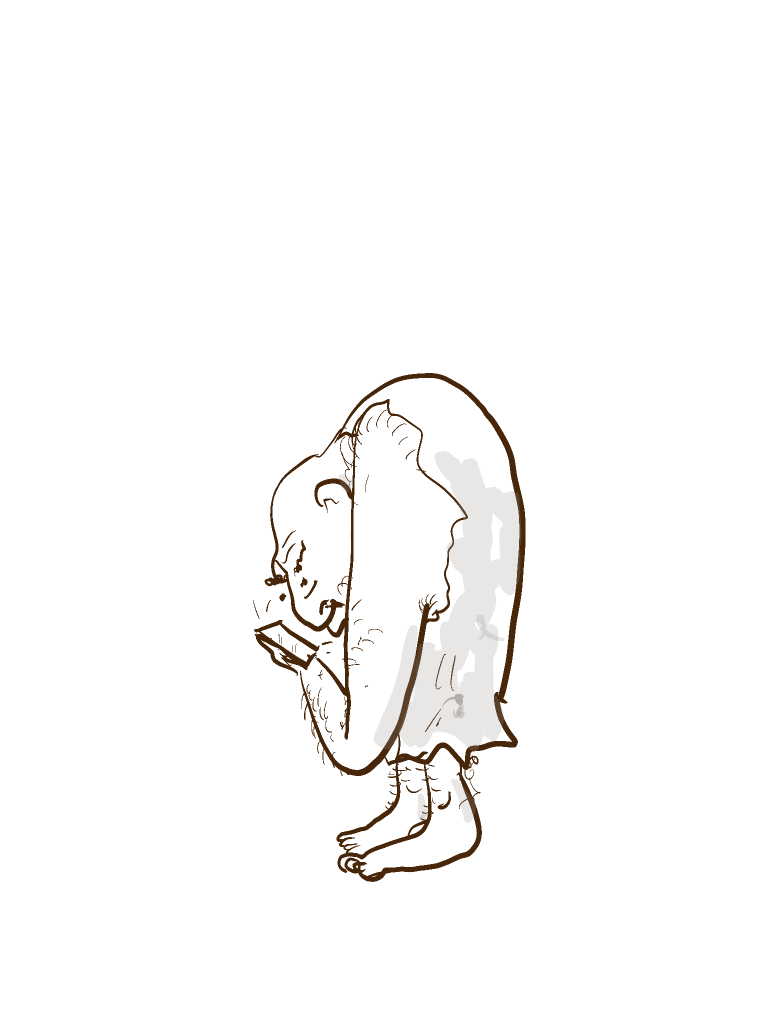
My name is Charles “Charlie” Woodson. I am a soon-to-be retired high school English teacher. My school is located in an affluent, tony suburb west of Boston. I’m actually looking forward to my retirement because I’m burnt out and my career as an educator is running on empty. I am nearing 60. I’ve lost most of my hair and developed a slight paunch. My students considered me antediluvian because I continue to wear a shirt and tie, Harris tweed blazers (yes with the elbow patches) and spit-shined shoes. For years I wore a professorial beard but ditched it in favor of the clean-shaven look. I don’t miss the facial hair.
The students, too, were different. The school had a dress code. No blue jeans, no mini-skirts. Girls had to wear skirts or slacks.
Now the kids dress like slobs and sluts. The boys wear baggy jeans, many of them don’t wear belts. The pants drop to almost below the buttocks and reveal Tommy Hilfiger or Calvin Klein boxer shorts. The girls wear tight jeans or denim mini-skirts that hover just below the pubic line. Their blouses squeeze their bosoms and, naturally, expose lots of cleavage. The politically correct school administration is wont to impose dress codes. Exhibitionism is rampant in the hallways. Both males and females are transfixed by their cell phones and wander the hallways unaware of the carnal display surrounding them. Drug and alcohol abuse has exponentially increased. There are many problems facing these children. I worry for the new generations who’ll be attending school long after I’m gone.
I have witnessed a dumbing down of students and, from talking with colleagues, such robotic behavior transcends schools from elite to blue collar communities. It is no more evident than in my discipline, the English language.
There was a time not long ago when speaking and writing English was something to be revered. I admittedly was a martinet when it came to teaching. I emphasized the importance of the holy trinity: grammar, spelling and vocabulary. Thirty-five years ago, it was fairly easy to drill my students with basic erudition. My students learned the fundamentals of sentence structure. Many got the message and became facile with writing and speaking. Many were good students. They were compliant. I developed the reputation of a tough but fair teacher. I would praise good work but eviscerate students who were lazy or showed indifference to the Mother Tongue.
I continually stressed the importance of knowing how to speak and write proper English. Many college-track students from this public school fared exceptionally well. Each class would produce a bevy of students who were accepted to Ivy League schools and such smaller elite schools as Bowdoin, Amherst, Williams and Wesleyan. I was happy for those kids, especially their when they scored well in the SAT’s language tests.
An aside: occasionally, a handful of them would drop by and thank me for the discipline needed to score well. Receiving complements ipso facto is the most treasured experience a teacher can enjoy. Yes, I did make a difference. For example, it’s fulfilling to know you’ve influenced a student’s mind and intellect. It’s true because I one day returned to my high school and visited Patricia Coree, my 12th grade English teacher. When I was a senior, she was pregnant and taught only through Christmas break. But boy, did I learn so much from her.
I remember her reading an article regarding the fate of English.
“There are three things that are ruining our language,” she said. “Jargon, euphemisms and gobbledygook.”
She was so right and during our visit I reminded her of that particular lecture. She, of course, remembered the author who wrote the article. I told her how much her class affected me and how much I appreciated her truncated course. She was flattered and touched by my reaching out and visiting her. Her response was heartfelt and I presume my visit made her day. Mine, too.
After about ten years’ teaching, I noticed discernible changes within the school system. The aforementioned dress codes changed . The jeans prohibition was relaxed. The faculty went casual, too. No shirt or tie required. Female teachers weren’t require to wear formal clothing. Grunge had arrived in suburbia but the students were still performing academically. It is my strong belief the digital age was the fountainhead of the swift decline in language skills. Texting created a new lexicon. Use of the internet became ubiquitous. I began noticing how many writing assignments were exercises in cut and paste. Students became less interested in writing meaningful essays. It was easier to Google a subject and massage the data. I considered that behavior quasi, if not full blown, plagiarism.
Even conversations were affected. The word “like” has become a verbal crutch. I heard one female student using that word in nearly every sentence uttered. “You know” is another phrase that has spread like a Corona virus. The de- emphasis of using language correctly has become a low or even non-existenent concern. The art of well-spoken, scintillating conversation has been lost.
Here are some examples: between he and I; Us vs. we; “u” vs. you – that’s definitely a barbarism derived from texting; vulgarity – pushing the envelope has coarsened our speech and society. Expletive words such as suck, pissed, balls and bitch are heard daily on sports talk radio. The curse words and others such as fuck, dick, asshole and spilled into the accepted lexicon thanks to social media – Twitter, Facebook and Instagram. We have devolved into a linguistic dystopia.
There are many grammatical and usage errors that drive me crazy. English is the only Western language that is gender neutral. The Romance Languages, German and Slavic tongues all have masculine and feminine word designations. Learning French frustrated me because I often forgot which gender was applied to nouns. I mention this because out of ignorance and political correctness an egregious error has seeped into English, specifically, subject/pronoun errors. If a singular word, everyone, is used it is logically supposed to refer to either the his or her pronouns. One of the most frequent barbarism is the phrase, “Everyone has their own opinion”. Traditionally, the male pronoun, he, was used.
But you can’t do that today. In deference to purported gender neutrality, “he” is not used. Hence “ their or they” have become a default solution. None dare offend the identity politics of gender neutrality, a concept that has adversely affected language. There is a seminal book entitled “The Elements of Style” by William Strunk and edited by the famous man of letters, E.B.White. It is a pithy 78-page primer that contains the essence of English usage. White was a student at Cornell where Professor Strunk taught English. Strunk compiled elemental rules of grammar and usage. It is timeless classic that contains all the knowledge to write well. It is a relevant today as it was when Strunk published the book in 1919. White carved a Herculean career at the New Yorker magazine and was a superb writer and considered the arbiter of English usage.
The book addressed the above gender conundrum. During these past years I compromised with my students and allowed them to use a modification: “Everybody can decide what he or she wants”. One public school teacher cannot change the world. It’s Sysiphean. I constantly hear the bastardization and turn my head.
I’ll now list other grammatical errors that make me want to hit my head against a wall:
“Between you and I, us vs. we, me vs. him” – between is a preposition and requires an objective pronoun –me, us, them. Another favorite is the “its vs. it”s”. This common error is the use the possessive pronoun “its” instead of the contraction of “it is” and an example of either ignorance or laziness. Regarding euphemisms, the most egregious example—I can remember Mrs. Coree mentioning this– concerns death. People today feel uncomfortable saying “he died” and replaced it with “passed away”. Most people use the term and it is even included in funeral home death notices.
Below is an example of the drek we teachers face. The following is an excerpt from a creative writing assignment by a corpulent high school senior who considered herself a 21st Century Emily Dickinson. The following is a portion of her writing:
Flight of the Snow Dragon
By
Destiny O’Rourke
(sic)
Samantha arose from her ice-encrusted bed. It was 6 am and she had much work to do. She was tired because of the goddamnd cold that surrounded her. She was living in Azimuth and she was scared of the pending invasion of the Tropes that were a marauding horde of North Monsters who were retrning for their annual harvesting of us, the Eloi.
“Ho!,” she cryed(sic). “We have much to do and not to much time to protect ourselves.”
“The Eloi were surface dwellers and they knew they were gonna be eaten if they didn’t hide themselves real quick. Of course the Black Queens of the inner planet might be able to help them, but the BQs had their own way of destroying us. Its no secret they had other purposes for us but not as bad as the SDs. It was certain death for them for us. God it was fuckin getting cold in this goddam freezer. How can I stand it?”
Young Ms. O’Rourke was considered exceptionally talented among her peers. I’ve talked to fellow teachers at various conferences. There’s a consensus among colleagues who are in my age group. We all agree today’s youth can’t write. It is seen in elite private and public schools. It spills over to college and university students. We educators are the culprits. Once the rules and regulations are diluted, it’s a slippery slope to where we are today. We’ve allowed political correctness to permeate all aspects of education. Even penmanship has been abandoned. Students aren’t taught cursive writing. Most students use printing on homework assignments. Oh, for the days of ink wells, blotters and fountain pens!
I know, someone reading this screed is saying “Just another geezer complaining about change and living in the past”. This may be partially true but we’re concerned over slouching towards mediocrity. Perhaps it’s the predictable course of decaying societies. We’ve seen it in the past: Ancient Greece, the Roman Empire, Spanish Imperialism, the British Empire the Soviet Union and America. Each has a shelf life, including our effete society.
 leodenatale.com