Time Passages
By
Leo de Natale
“You see this watch, Moss?” asks actor Alec Baldwin in his tour de force performance in the film Glengarry Glen Ross.
Baldwin, as he verbally emasculates fellow actor Ed Harris, flashes his Rolex and says, “This watch cost more than your car, pal. And you are nothing.”
When the classic film was released in 1992, owning a $25,000 Rolex meant something and was indeed more expensive than Harris’s Hyundai. The watch symbolized success, wealth, and a grandeur to which many aspired. In the film, Baldwin’s coarse, vulgar character had made it. He was a successful real estate hustler earning $900,000 per year. The wrist watch went along with his $80,000 BMW.
And in another movie, Casino Royale, the femme fatale named Vesper Lynd mockingly asks Daniel Craig’s James Bond if he’s wearing a Rolex. “Omega!” sneers Bond in an attempt to show he’s not that predictable with prestige watches or most everything.
Throughout the 20th Century, such baubles did provide status symbols among the rich, famous and parvenus. Celebrities would model Rolexes in coffee table magazines. Professional football player Tom Brady endorsed the equally famous Swiss Movado watch.
We, however, are now in the year 2020 and the landscape of time has changed. Traditional wrist watches have become passe. With the new generations of cell phones, fewer men and women wear time pieces. They merely glance at phones that are glued to their hands. Rolexes are antediluvian and have been replaced by a different time piece: the Apple watch. It is the second coming of comic book character Dick Tracy’s famous radio watch. Cartoonist Chester Gould was a visionary. Who knew in 1946 his fictitious character’s timepiece would become a reality?

Digital wrist gadgets have outflanked traditional chronometers. They can send and receive texts, emails, telephone calls, Twitter feeds and other social media information. They also provide weather reports and numerous other features required by the younger generations. Oh, they also tell time. It could be conventional time pieces may be headed towards extinction. This trend was accelerated by the 2020 pandemic. Millions were unemployed and self-quarantined. Why wear any watch when you’re confined?
Those lucky enough to retain employment are working from home. Wearing a wristwatch at a work desk or dining room table becomes irrelevant. The ubiquitous computer includes a clock and the nearby cell phone always displays the correct time.
Timekeeping devices date back to the 16th Century. Rudimentary clocks underwent minification and two centuries later the pocket watch evolved. Design advances continued and men’s pocket watches followed the Industrial Revolution. Switzerland became the vanguard of watch manufacturing and perfected the design. As an obsessive/compulsive people, the Swiss are very clever but lacking joie de vivre. Time and punctuality are their hallmarks. They’re not jolly people. It’s difficult to imagine a Swiss doing stand-up comedy. The country is divided among French, Italian and German-speaking folk. The notable movie Bread and Chocolate addresses Swiss xenophobia. Nevertheless, the Swiss embraced the concept of watchmaking and developed it into a national industry.
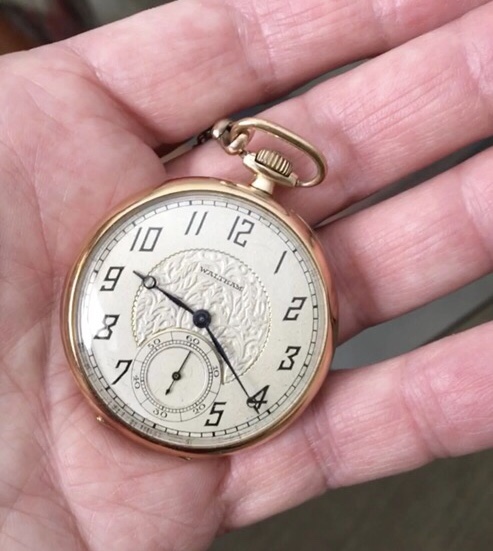
Here in the United States, The American Watch Company, located in Waltham, Massachusetts began mass producing pocket watches after the Civil War. Another war, World War I, spelled the death knell for pocket watches. Trench warfare made them impractical. The wrist watch was popularized during and after the carnage. Fashion House Cartier’s famous Tank Watch, “The Most Iconic Watch on the Planet”, was inspired by the military vehicle. After the war, American companies- Hamilton, Bulova et al began competing with the Swiss and produced wrist watches that were well made and affordable. Some were expensive and prices competed with the Swiss.
After World War II, a company named Timex began manufacturing an accurate but inexpensive watch. It was famous for television pitchman John Cameron Swayze subjecting Timex watches with physical abuse – mud, dirt, water. The watches survived with Swayze uttering the slogan, “Timex takes a licking and keeps on ticking!”.
The last half of the 20th Century took a predictable course. Most American watch manufacturers suffered the fate of cheap overseas labor. The Japanese first appeared and competed with the Americans. “Made in Japan” once was a pejorative term. The Japanese quality, however, dramatically improved. Seiko watches became world class but then along came China who sucker-punched everyone. Most wrist watches from the cheap Timex – the name has survived—to the smart watches are manufactured in Chinese factories.
The genius of Steven Jobs and his Apple Corp. spawned high tech innovations. First computers and, borrowing a page from Sony Corp.’s Walkman, the company changed the way the world listens to music. The iPod vaporized CD players and supplanted the Walkman but Apple wasn’t through. It essentially invented the cell phone and developed numerous generations of now iconic iPhones that transformed how humans communicate—and tell time. And along came the Apple Watch, designed in America but manufactured in – you guessed it – China.
These devices changed the communication industry. We’re all Apple junkies. During the first stages of the pandemic, all malls and retail electronics stores were closed. People panicked because their phones, computers and watches needed replacement or repair. Today, most malls have reopened. Except for Apple stores, they are ghost towns. The junkies are there and lining up with the six-foot social distancing and ready for their fix.
“Like, I needed a new phone, man,” a millennial says while standing on a floor stripe for six-foot separation. “Like, I’m sooo glad Apple’s open.”
Twenty or thirty years from now – perhaps sooner – younger people, when asked about Rolexes, will say “Like, man, those things are, like, so old. Why did anyone own one?” Perhaps someone will create a Rolex museum where Alec Baldwin’s Oyster Perpetual will be displayed.
‘It’s all about time, man,” some dolt will say. “And, man, like, time passages. Wasn’t there a song about that, man?”.
This essay is dedicated to Dr. Robert J. Connors
 leodenatale.com
Good one Leo!
There’s a back story to Waltham watch. Back in the early 80s the CEO was a patient of Dad’s and lived in Marblehead. The change to digital was killing them and he got dumped and jail time for embezzling money.
I don’t really remember him very well but he was a Rotarian and spoke at one of the meetings about watch making.
Sent from my iPhone
LikeLike
Neat story! Growing up in Belmont I remember the factory and it’s too bad they closed. Embezzlement will do that. By the way that pocket was my maternal grandfather’s. I used to wear it to the office once or twice a year (with a vest of course). Still keeps perfect time. It’s one of my most cherished possessions. Glad you liked the blog.
LikeLike