Bespoke
By
Leo de Natale
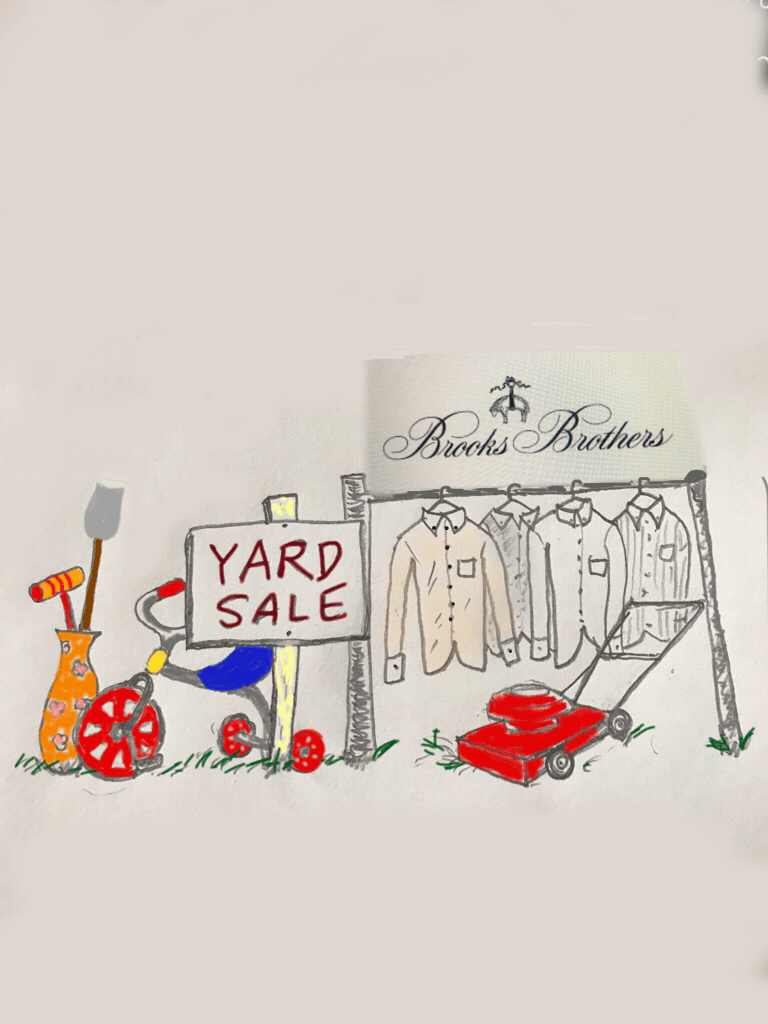
Illustration by Vince Giovannucci
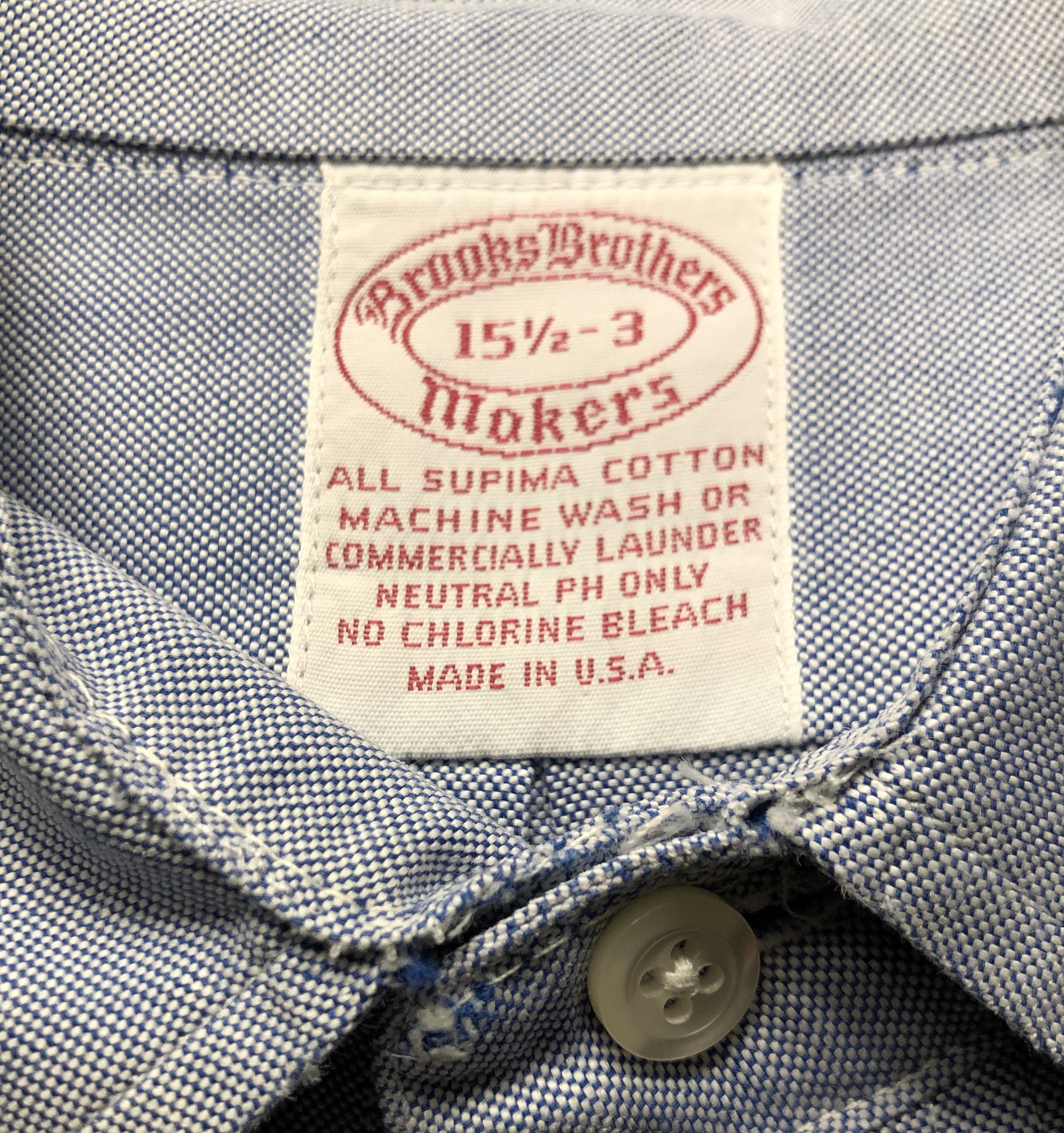
The author’s Brooks Brothers blue oxford shirt purchased in April, 2002
It was the late 1950’s, early 60’s. Harvard University has always cast a long shadow on Metro Boston communities. Many kids dreamed of matriculating there. Renowned academics continued to burnish its reputation. A book entitled Love With a Harvard Accent was published in 1962 and detailed the life of students who went there and found love and happiness within the ivy-covered walls.
Harvard has historically had a patrician cachet. It reeks of intellectual aristocracy. Part of this emanated from the prep school atmosphere. I grew up in that era and the unofficial student dress included tweed sports jackets, chinos, Weejun loafers, neckties and the most iconic item: Brooks Brothers button down oxford shirts. Students merely extended the garb, the “uniform” of so many feeder schools. It was the bespoke wardrobe of elite students.
Surrounding the university were stately homes on leafy streets. Brattle Street was the most famous. Many professors lived in these affluent residences. The area was also inhabited by superannuated WASPS, who by geographic location, were Yankees. The male Yankees considered Brooks Brothers shirts and its famous sack suits de rigueur. They sauntered around Harvard Square and were the type who could say “terrific” without moving their jaws. But Yankees were infamous for their parsimony. Trust fund babies sometimes would behave as paupers. Their cuisine was meager. As my father used to say “A good meal would kill a Yankee.”
In a recent essay, academic Samuel Goldman recounts the rise and fall of Brooks Brothers, the iconic American haberdashery. Founded in 1818, the New York clothing company established the sartorial style generations of American men. Lawyers, bankers, politicians, movie actors and parvenus embraced the look. During the 19th Century and into the 20th Brooks Brothers was the arbiter of men’s clothing. It was family-owned until 1946 and was bought and sold several times.
One of the signature products was the button down shirt. Brooks Brothers invented the shirt after a family member observed English polo players’ attaching pins to their shirts. The pins prevented the collars from flopping while horse and rider galloped across polo fields. This makeshift alteration inspired the Brooks scion and , returning home, the button down oxford shirt was invented. The shirt’s appeal was twofold. Its neat appearance made it suitable for work but could be worn in more casual environment. Many men, however, preferred the traditional spread collar.
I was a college bound kid, just like others who lived in one of the surrounding communities. Attending Harvard or the now-defunct Radcliffe College was the common pipe dream among male and female high school students. Many applied but few were chosen. I had no delusions about where I was headed. A “B” student with so-so SAT scores didn’t stand a chance but it didn’t stop me from projecting the image.
My immigrant grandfather was a barber who worked at the Ritz Carlton hotel. My father would visit him at work. He would observe upper class gentlemen and was impressed with their looks, their dress and their comportment. Dad was the first in his family to attend college, became an accountant for a Big Three CPA firm. Financially he did very well. And he dressed the part. His pet phrase was “Clothes make the man” and he embraced the Brooks Brothers look. That was the beauty of America. Anyone can succeed with intelligence, hard work and luck. He passed along this mindset to my older brother and me even down to suits and spit-shined shoes.
My late mother was a Depression Era child. Nothing was ever wasted. She was incredibly adept at clothing repairs requiring a sewing machine. I owned dress shirts whose collars did fray. Mom would enter her sewing room and, 30 minutes later, the collar had been flipped. Another few years of wear. And when the cuffs began fraying she would “send them to summer camp”. The long sleeves became short sleeves. Truly a stitch in time saved nine. That, unfortunately, is from another era and I miss it.
Dad bought me my first Brooks Brothers shirt when I was 15. The shirt was the classic button down. Wearing it made me feel special because the shirts looked and felt good. The company used the finest cotton and wool in their products. I enjoyed my occasional trips with him to the main Boston store located at the corner of Berkeley and Newbury Streets.
There was an air of refinement with shelves neatly stacked with button downs. Circular wooden tables with elegant silk rep ties were displayed and arranged in a kaleidoscope fashion of colors and patterns. The store smelled of luxurious fabrics and old-fashioned light fixtures emitted a soft hue. The experience was akin to quaffing brandy in an English men’s club. The store was the quintessence of ambience.
I appreciated Brooks Brothers’s manufacturing philosophy. The shirts were made under strict quality control and the design, unlike today’s “slim fit apparel”, was generous. Dad said the shirts “wore like iron”. It’s true. I had this quirky habit of marking my shirts with the year they were purchased. Inside the bottom left placket, I’d print the month and year with a Sharpie pen. I still own a blue oxford shirt purchased April, 2002. After hundreds of commercial washings, the shirt still has no collar or cuff fraying.
From youth through adulthood I traveled to Newbury St. but as I grew older, many customers, myself included, tired of fighting Boston traffic and parking. The company’s owners were intelligent and began opening branch stores in a select number of suburban malls. The elegant atmosphere remained unchanged regardless of location.
Brooks Brothers retained its classic look that continued but something was changing. During the past decade, apparel within the workplace was transforming. The “casual look” had become the new norm. Neckties were becoming a rare species except in banks, insurance companies and upper echelon law firms. Fewer women wore dresses, skirts and accompanying nylon stockings.
The slacks/pantsuits were now commonplace. Casual became very casual, especially in the high-tech industries and academia. Harvard students, alas, have gone grunge. The 50’s, 60’s prep school look has vanished.
And the poor necktie. Once considered a centerpiece of men’s dressing, the necktie has become a pariah. Physicians and health care workers, for example, stopped wearing neckties -they are now considered contagion magnets. That’s a legitimate concern. Airborne diseases can nest in a necktie along with the coffee and soup stains or greasy mayonnaise droppings.
The year 2020 has had a tremendous impact on work and clothing. The Covid 19 pandemic closed most businesses for months. Malls became ghost towns. Brooks Brothers sack suits collected dust. Working from home was the “new normal” and a company named Zoom exploded onto the scene. It filled a vacuum and harnessed the virtual marketplace. Most group business meetings are connected through Zoom. In health care, patients haven’t physically seen their primary care physicians since March. They get Zoomed. Of course, masks have become ubiquitous.
The virtual meeting lifestyle has obviously affected dress codes. Employees can join a meeting in jeans, sweatshirts or jogging clothes and sneakers. Why dress up when you’re working from home?
Regrettably, Brooks Brothers declared bankruptcy earlier this year and was bought by the corporation owning the Simon mall empire. The venerable clothier was “Simonized”. Like so many businesses, the company’s recent fate was catalyzed by Covid 19 and its devastating effect on the economy.
Covid forced my retirement. My last day of work was March 2, 2020. Like most Americans, I hunkered down and was forced into isolation. At home, it was just my wife and I and our German Shepherd Dog, Kaiser. We didn’t socialize with friends, donned masks, and experienced the nationwide depression that accompanies a plague. We suspended our gym memberships and rarely ventured into grocery stores. By summer people suffering from cabin fever finally emerged from their cocoons.
In June we dined outdoors with my best friend and his wife. That was an elixir. Malls eventually reopened but they remained ghost towns. I needed a cell phone upgrade and ventured into a nearby mall. There was a Brooks Brothers store there. I stopped and stared. Perhaps one customer was visible. What a feeling of sadness. I scanned the shirting section and, yes, the button downs were still there. The company faces unchartered waters. I hope it somehow survives with new ownership.
Returning home after my errand, I entered my closet and gazed at the 32 dress shirts – the majority of them are Brooks Brothers– that haven’t been worn for seven months. I’ll probably rarely wear them but they remain a bookmark of who I was and how I dressed. Bespoked. Gone, but not forgotten.
 leodenatale.com