Paradise, Sicilian Style
By
Leo de Natale
Drawing by Vince Giovannucci
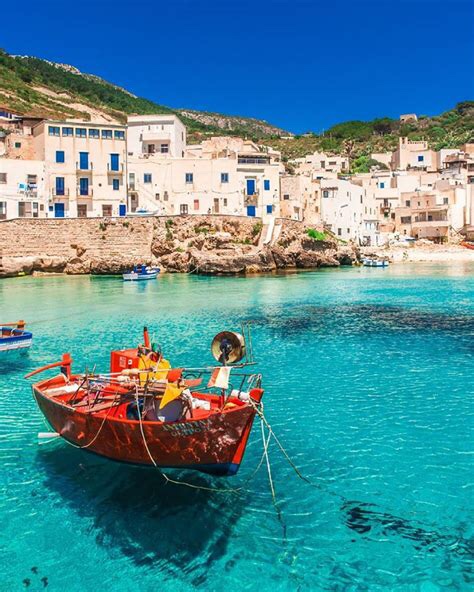
On the eastern coast of Sicily lies a small village that has been luring inhabitants for millennia. Its name is Taormina and is located on a coastal roadway between Messina and Catania. The village is actually located more than 800 feet above the azure Ionian Sea. The views are breathtaking.
Sicily has a semi-arid climate. Warm enough to make winters bearable. In spring and fall, the sun shines daily. The only glitch is summer when the Sirocco winds blowing from Arabia bring a blast furnace of wind-intensified heat. For the rest of the year, natives and countless tourists enjoy the vistas of the sea and, of course, the brooding volcano, Mt. Etna.
Taormina has one major street. It is narrow and is actually a dead end. No automobiles are allowed access. The famous Hotel Timeo is located to the right just before the biggest surprise and treat: an ancient Greek theater. Under the warm Sicilian sun this treasure is a classic amphitheater with 50 rows of seating.
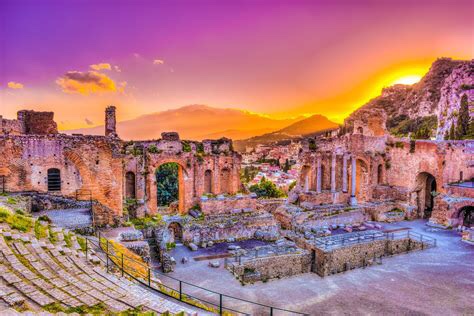
It is so well preserved the local artisans produce plays throughout the tourist season. The acoustics are still magnificent but the view is more enthralling. Perfomances are accentuated by the ocean backdrop. Plays performed there are the highlight of any vacation. It’s incredibly sensual. The smell of the salty air is combined with the aromas of nearby restaurants. During evening performances, Etna provides background fireworks.
“Rome may be the eternal city, but Taormina is the eternal town,” says tourist guide Domenico Buonfiglio. “Just think of the hundreds of thousands of human beings who have walked along these streets since the ancient Greeks.”
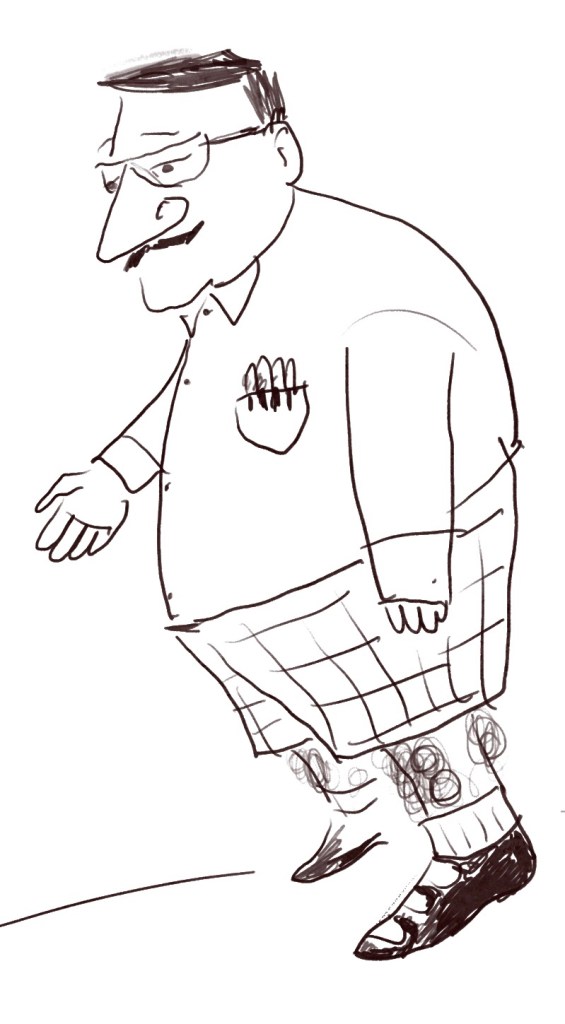
In his walking tour, Buonfiglio, whose Italian accent adds charm to his anecdotes, recounts the town’s rich but tumultuous history. He was born in Rome and educated there. Italy has historically been a balkanized country, he said. After the fall of the Roman Empire and the Vandal hordes, Italy became a nation of city states and the regionalism persists. Milan is culturally different from Venice which is different from Florence. Each region has different cuisine and language, or dialect. It’s impossible for a Roman to understand a Sicilian. They speak in sub-languages.
After graduating from college, Buonfiglio’s curiosity about the various regions lured him into a career of discovering the differences in a country so rich in history and tradition. He was entrepreneurial and transferred his fascination with Italy into a tourist business. At age 56 Buonfiglio owns the largest agency in Italy. He fell in love with Taormina along the way and is the place that has captured his heart and spirit.
Of all Italian regions, Sicily has been the biggest political football. The ancient Greeks first colonized the island. In fact, many historians claim the best Greek ruins are found in Sicily, not Greece. Sicilians often debate which city has the most and the best. Most agree it’s a tossup between Catania and Syracuse. The Roman Empire succeeded Greece. Following Rome, Sicily has been ruled by Moslems, French, the Vatican and the Holy Roman Empire. Each nation left an indelible imprint of the food, language and culture.
For example, the Moors were known for their sweets. Marzipan was created in Sicily. Taormina is famous for this delectable candy.
During World War II, the Nazis occupied the town and General
Albert Kesselring established headquarters in Castelmola, a stunning hilltop town overlooking Taormina. He didn’t stay long there because the Allies invaded Sicily and der gute General hightailed it up the boot of Italy.
“Let’s put it this way, “Buonfiglio said. “The Sicilians did not like the Germans and were ecstatic when they were forced to leave. Their hatred of the Germans equaled their animus for Mussolini.”
The beauty of Taormina is its survival of all unwelcomed political regimes. It continues to provide the world with a pacific presence. The panoramic views, the warm Ionian water, the smell of lemon trees that grow wild there and the blessed sun remain unchanged.
Sicily is an island of many paradoxes. It is Italy’s largest producer of citrus fruits. It also produces wheat, nuts and fish, especially tuna and sardines. Of course it is infamous for the “mano nero” – the black hand- , the original term for the Mafia. Mt. Etna is one of the few continuously active volcanos. Ironically its volcanic ash combines with native soil and is perfect for producing hearty, robust wines.
“There’s something for everybody in Italy but paradise is reserved for my beloved Taormina,” says Buonfiglio with a playful smile.
 leodenatale.com
Another Good One Leo!! Taormina…..I remember it well. And perhaps a revisit when they decided to let us fly back over to Italy…………maybe August, 2021.
LikeLike
Johnny: Thanks for the comments. I told Kathy if we ever won the lottery I’d buy a villa in Taormina! The most beautiful place I’ve seen.
Leo
LikeLike
Another wonderful read! I felt like I had taken a mini trip to Taormina! Thank you!!
LikeLike
Thanks, Terri.
LikeLike