Bully On The Branch
By
Leo de Natale
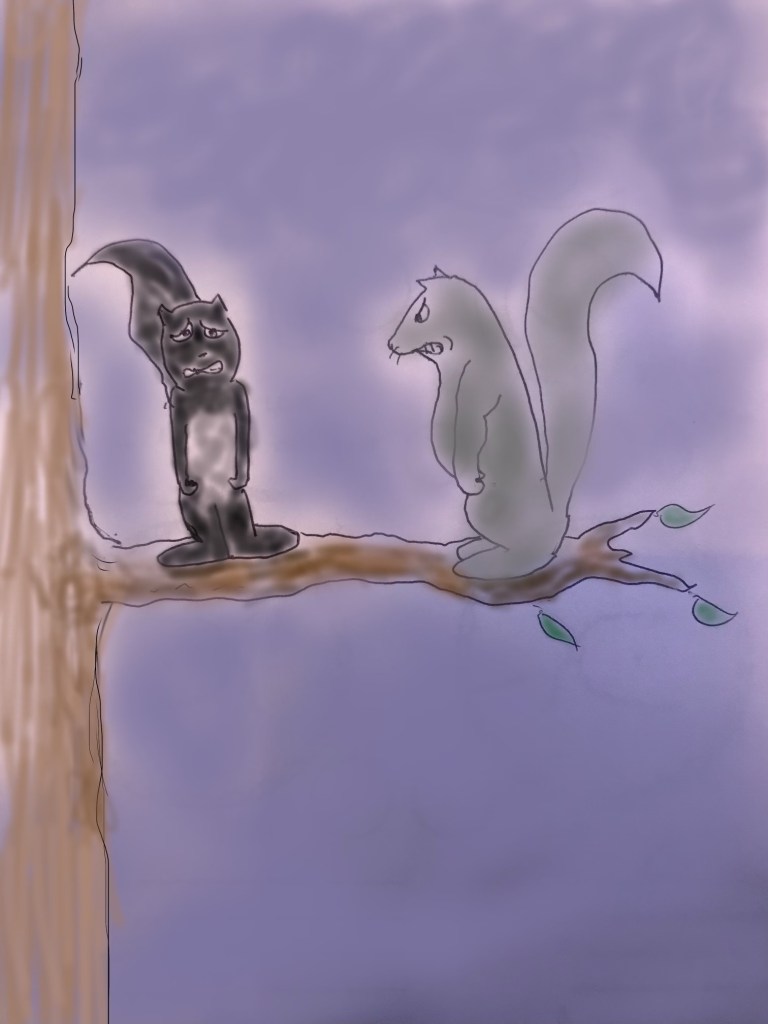
Illustration by Vince Giovannucci
We used to feed birds during winter. The red metal feeder was one of those spring-loaded jobs that prevented larger birds and squirrels from hogging the sunflower seeds. Alas, we had a mouse infestation several years ago and discontinued the daily activity.
Winter is a brutal time of year for all these backyard creatures. My wife and I would fret over their fate. How do they survive sub zero temperatures and such harsh weather?
Something happened last year that created a mice-be-damned attitude about feeding these innocents. During last summer we had a new visitor to our bird bath: a black squirrel. Didn’t know the gender – he turned out to be a she- but the squirrel was predictable in its visit to the watering hole.
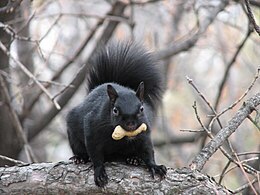
“Blackie”, as we came to call it, was cute as a button and a battle-scarred veteran of the backyard gang wars. Its body had numerous patches of missing fur on the back and behind the ear (Gray squirrels routinely attacked her). The black coat was unusual and the more frequently it visited, the more we enjoyed her gracing our backyard deck. As the summer progressed, the squirrel became fatter. Soon you could see protruding teats on her underbelly. There was now no question about the gender. Blackie was a going to be a mommy.
Suddenly she disappeared for several weeks. What happened to our cute little friend? We were concerned. Was she killed crossing a road or was she a lunchtime snack for a circling hawk or a wily coyote? Each day we’d scan the deck and hoped she’d reappear. We had switched from birdseed to oyster crackers. Blackie really enjoyed the treats and it was hilarious to watch her eat. Squirrels take a cracker and chew the treats by rotating clockwise like a human eating corn-on-the-cob. It was simple entertainment. We loved it.
One morning in early fall, my wife Kitty called, “Come here! You’re not going to believe this!” I rushed to the dining room window and was incredulous. It was the sudden appearance of three scrawny baby Blackies. They were so small, especially compared to the gray squirrels who turned out to be the bullies of the tree branches. They’d hassle the new arrivals and their truculence didn’t stop as the black squirrels began to grow.
Per usual, we had been feeding the creatures crackers, a staple that all seemed to enjoy. Besides the squirrels, the sparrows, blue jays and big black Ravens began hanging around the chuck wagon. My wife and I, however, were concerned with the little Blackies. We started chanting “Black Squirrels Matter”!
Later in autumn, the Covid-related “supply chain” debacle created a curious shift in our feedings. The oyster crackers were suddenly disappearing from super market shelves. Like so many products, the popular treat was out of stock. Hmmm. What to do.
My wife checked our cupboards and discovered we had an ample supply of Ritz Crackers, a favorite of multi generations.
“Let’s give them a try, Kitty,” I said. “I’ve seen the Ritz in just about every store. The Blackies need to be fed.”
And so it began. Three times daily we’d toss about ten crackers on to the deck floor. And then we’d wait for the show. You had to be quick because within moments the squirrels would appear. The Ritz were too big for them to eat on the deck. Squirrels and most birds worried about predators. The gray squirrels chased away the Blackies and would even hassle their own breed. It was difficult to determine the hierarchy but one bull squirrel would lift his furry gray tail and dominate. His fellow grays would scatter.
Soon all squirrels, black and gray, began grabbing one whole cracker in their mouths and would scurry away to gorge themselves. Despite the harassment, the Blackies throughout the day would scoot with their daily haul. We were delighted with their success.
We began to see a pattern in these rodents’ behavior. Regardless of color, squirrels are crepuscular – they’re active usually in early morning and late afternoon. Deer and many other woodland denizens have similar biorhythms. The squirrels would queue up along a six foot stockade fence separating the backyard from a side allee. They’d slip through the deck railings, give a quick lookabout, grab a Ritz and then scoot to a fence post and devour their snacks. Of course, we had the loud mouths – blue jays- who’d dive bomb on the deck floor and leave with a whole cracker in their mouths. Occasionally the true school yard bully, a big black Raven, would arrive and snatch two, perhaps three crackers in his huge beak.
“Screw you little ones,” the Raven seem to say as he cawed and flew away. Ravens are huge compared to the other birds. Even the gray squirrels were frightened by the Big Boy. You don’t mess with Edgar Allen Poe’s Raven.
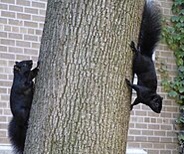
I became intrigued by the appearance of Blackie and her brood. Black squirrels have a mutated pigmented melanin gene. They have existed in North America since the 17th Century. They inhabit much of central Canada and the northern United States. Biologists have no explanation of how or why this mutated gene appeared but they do have several theories.
Some researchers suggest the black fur helps retain body heat during harsh winters. Black coated animals were found to have 18 % less heat loss in temperatures below 14 degrees. The researchers refer to the phenomenon as “thermal advantage”. It has also been suggested their fur is better camouflage in deeply forested areas. Gray squirrels stand out and are an easier target for predators.
Regardless of the how and why of their sudden appearance, we feel a certain joy with each day the Blackies appear. They seem to have more personality and we are thrilled with their presence. Black is beautiful, Baby.
 leodenatale.com
Just love your story of Blackie. Brings joy to my day. Thanks!!
LikeLike