At The Deli Counter

At The Deli Counter

By

Leo de Natale

          There I was, waiting to order my half-pound of home cooked turkey and six slices of liverwurst – my normal fare for lunchtime sandwiches–  and there he was.

The customer to my right had placed his gargantuan order: one pound of sliced ham, two pounds of provolone cheese, one pound of chipotle-flavored roast beef and one pound of imported Swiss cheese.

The man stood about 5’5” and, given his deli order, predictably portly. He was fortyish and dressed in black. His hands were soft and pudgy but too small to be considered hamhocks. My eyes gravitated to his head. His bald, bull-necked head was cleanshaven but hidden by the obligatory baseball cap. Adorning his left ear lobe was a small gold hoop earring. Adjoining the hoop was a small gold stud. He turned and I noticed the right lobe was asymmetric—only one gold stud was visible. At least he wasn’t wearing a pinky ring or any hand jewelry. Clearly, this man was one of many middle-aged men who are trying to make a fashion statement. At about 225 lbs. and experiencing presumed male menopause is a difficult task. I once saw a man at the local emergency room who was similar in age but had a fuzzy flat top hairdo. His hair was completely gray. He was wearing dual diamond stud earrings. His eyeglasses were thick and the kicker was he was also wearing dual hearing aids. In both cases I said to myself what’s wrong with this picture?

The piece de resistance, however, was deli-man’s facial hair. Beside the wizened gray mustache, was a billy-goat gruff beard that ended at mid-chest. Every time he moved his head, the beard would sway side-to-side.

          My, my, my, what a real stud. I knew this because in the nearly filled shopping cart, Billy was purchasing a dozen multi-colored tulips.  How romantic.   Charm her with flowers and cured meats and imported cheese.

Men such as Billy are common and predictable. An optometrist friend told me about a biker and new patient whose first comment was “I can’t see for shit.” Translation: I’m in my forties and seeing up close (presbyopia) was difficult and would require reading glasses. As the patient was leaving he told my friend he had to leave for home because “I’m gonna be getting some skin from my old lady”. I have a feeling that gentleman was never taught the King’s English.

Anyway, there was only one deli person on duty and I witnessed the prodigious amount of food being stacked into Billy’s shopping cart. Ten or fifteen minutes passed before he waddled away from the deli.  All I could do was shake my head in disbelief.  Enjoy the tulips, honey.

The Mechanics

The Mechanics

By

Leo de Natale

            I spent much of my life as an optometrist.  It’s one of those professions that is in the middling section of the health care food chain.  We serve a vital purpose in the wellbeing of society but it’s not a sexy occupation.  Dentistry, podiatry and chiropractic are also in this category. You never watch television or movies whose plot includes filling cavities (although Woody Allen wrote a humor piece entitled ‘If van Gogh Had Been a Dentist’), having a spine cracked, removing bunions  or arriving at a proper eyeglass  prescription.

            No, that’s left to the superstars: physicians.  Medicine is a long-honored occupation – Marcus Welby, ER, Coma, etc.   People hold medicine in esteem.  Optometrists, for example, are viewed as untermenchen. A colleague recently texted me this message: “A patient yesterday asked ‘Do you do surgery or are you just an optometrist?’”  That’s what is known as the proverbial stake through the heart but we get used to  contempt that borders self-loathing.  Such insults go with the territory.

 Health care   is indeed changing, the docs still take top billing but should they be prepared, as European physicians have, to decline in social status.  Socialized medicine has that effect.  Optometrists are lucky – we’ve already accepted our diminished status.  Over the years of referring patients to ophthalmologists and other sub-specialties and now even more because my life is filled with doctors’ appointments, I concluded that in many respects MDs are  merely mechanics and the machines they fix are human bodies.   Urologists and gastroenterologists are plumbers, cardiologists are HVAC repairmen, the aforementioned ophthalmologists are TV repairmen who correct visual system glitches.  Proctologists are sewer workers,  psychiatrists are software engineers. Surgeons are city road crews who fix burst waterpipes, street potholes or gas explosions.  Dermatologists are house painters- they sandpaper a house, fill in cracks and apply new paint to a rough exterior.

Think about it. As sexy as physicians appear to be, many specialties aren’t as sexy at all. Also, they won’t admit this to the outside world but within the medical profession there is a caste system. Neurosurgeons are the demigods, dermatologists, stablehands. How many persons want to observe dermatologists dealing with the “heartbreak of psoriasis” or obese patients with pink scaly lesions under sweaty, fatty slabs or squamous cell carcinomas. The traditional war cry for dermatologists is “If it’s wet, keep it dry, if it’s dry keep it wet!” They don’t have to deal with blood and guts nor do they work weekends or emergency visits. Most derm appointments are scheduled at least six months out or greater. But think of it. They deal with ugly warts, patients with layers of fat that smell and fungus-ridden appendages.

            Second lowest in the pecking order are psychiatrists.  They, too, don’t deal with blood.  The conveyer belt for them is a new customer every 50 minutes and see you next week.  Most psychiatrists are attracted to the field because many if not most of them are  themselves usually screwed up.  Their job is to pigeonhole and treat various neuroses and psychoses.  An obsessive-compulsive goes here, a manic depressive there.  Throw in a schizophrenic  and a garden-variety neurotic in shelf no. 12.  Every patient is categorized with psychiatric criteria.  It is the essence of this discipline. The specialty is so stressful most psychiatrists in the Northeast escape to Truro, Massachusetts during July and August.  It’s their way of detoxing and getting away from the madness.

            We ascend through the medical strata.  Think of what it takes to specialize in urology.  Day in, day out, these poor bastards inspect and fondle penises and insert their index fingers into anuses to evaluate the odious prostate gland.  The prostate, or as many laymen refer to it as the “prostrate”, is the scourge of every man over age 50.  Sooner or later it morphs from a walnut to a grapefruit and causes millions of men to recollect days when they could sleep eight hours without urinating.

            A similar specialty is gynecology.  Why would anyone want to spend his or her day evaluating women’s vaginas and uteruses.  I picture these docs arriving home after work with their spouses saying “Tough day at the office, honey?” 

The same could be said for colo-rectal specialists.  They deal not only with the anus but the entire colon, always in search of a dreaded malignancy or malfunction.  I personally dealt with one of these guys for a bad case of pruritis ani, aka an itchy heinie. The guy was incredibly arrogant and condescending.   He fixed my problem, but I left his office saying to myself, it takes an asshole to fix an asshole.

The gastroenterologists are roto-rooter specialists.  They diagnose and treat stones, moans and groans.  Gastric ulcers.  A bum gall bladder with rolling stones aplenty.  Renal specialists are plumbers who deal with kidney disease and dialysis.  Endocrinologists have the unenviable task of treating diabetics and such weird conditions as acromegaly – Andre the Giant—and dwarfism.  Amazing what misery the endocrine glands produce.

            Moving up the body, there are the cardiologists whose function is to diagnose and treat so many patients with heart disease.  The human heart is similar to a house furnace.  It circulates heat (blood) flowing through pipes.  A house turns cold with a malfunctioning furnace.  So does the heart.  Many patients are usually overweight or morbidly obese.  Many are diabetic and also have elevated cholesterol levels and high blood pressure.  It’s called the Trifecta.  The chubbies often develop clogged arteries that lead to stent surgery.  Do they lose weight?  Usually no.  Non-compliance is a biggy with the heart guys.  An overweight neighbor  celebrated at a Super Bowl party by consuming three pounds of fried shrimp and a case of Bud Light. At 3 am he awoke with severe chest pain. A nice guy, but he had the near fatal combination of being stupid and cheap.  Instead of calling an ambulance, his wife drove him to a nearby hospital.  The pain and symptoms were intensifying and he sustained breathing difficulties.  His condition was dire and was immediately transferred to Massachusetts General Hospital.  The heart mechanics performed a quadruple bypass surgery.  In automotive parlances, he had four valves  and an oil filter replaced.

            He survived and was told to lose 50 pounds.  He lost 20 and told me “I don’t like being so thin.  I look better with a little weight on me.”  He died 12 months later after sustaining a massive myocardial infarction.

            Next we turn to another trade: otolaryngology – the ears, nose and throat guys.  They deal with ventilation and acoustical engineering.  They also deal with such plumbing supplies as faucets and drainage systems (runny noses and post nasal drip).  These specialists have the unenviable task of looking up hairy, snot-filled noses, ears that often have enough wax to fabricate birthday candles.  They have the unpleasant task of assessing slimy, mucous-laden throats. 

Twenty years ago, I developed nasal polyps that were exacerbating my seasonal allergies.  I was referred to an ENT guy and my assessment of him was compromised when I notice he was wearing a toupee.  He would wear and remove those circular head mirrors very, very carefully.  He performed the surgery but the anesthesiologist overjuiced me with an anesthetic that affected my breathing.

 The so-called day surgery turned into an overnight (for “precaution only”) and left me loopy for nearly a month.   The moral of the story is never trust an ENT mechanic who dons a hairpiece.

Ophthalmologists, the video repairmen do perform an admirable service. Problem is they’re probably the most sub-specialized of all the mechanics. The specialty has been balkanized. There are few general ophthalmologists remaining. They’ve subdivided themselves: cornea, glaucoma, cataracts and oculo-plastic surgery, i.e., removing sagging, baggy eyelids. These docs perform micro-surgery. Most procedures require a loupes or computer magnified cameras. It is ultra-precise. I know because some ophthalmologists aren’t talented and that’s when screw-ups, expecially with cataract surgery, occur. I knew one ophthalmologist who, in his later years, developed a tremor. We used to call him “Shaky”. He very quickly segued into treating patients who didn’t require surgery. At least he was honest with himself.

Then there are the orthopedic surgeons. They’re carpenters. Millions of older Americans eventually develop arthritic joints – knees, hips, shoulders elbows. Total knee replacement involved cutting skin, sawing bones and reattaching a fake knee. A lot of banging and hammering. There’s a lot of noise when these guys enter a surgical suite. You can hear drills, surgical saws; you see a lot of blood, you see a lot of sweat. It’s messy, exhausting (for the surgeon) work. Ortho guys usually retire earlier than their medical colleagues. That’s how tiring surgery can be.

Neurologists are electricians.  They deal with the body’s nervous system.  It’s a fascinating specialty dealing with the wiring system – all those neurons and axons.  The human brain is a supercomputer with billions of cells that maintain electrical activity throughout the human body.  Their task is to evaluate and diagnose such conditions as Bell’s  Palsy, transient ischemic attacks – mini-strokes—and outright strokes.  They also have the unfortunate task of diagnosing and treating neurological maladies that include multiple sclerosis and brain tumors.  As a patient I can attest to the methodical process of differential diagnosis and an exercise in the process of elimination.

            Last spring I awoke at 2 am with a sharp, shooting pain behind my left eye.  It was as if some sadist had inserted a 10 guage hypodermic needle and wiggled it around.  The pain then shifted to my upper lid and again created searing pain. It recurred later that day.   This event occurred while my wife and I were vacationing in hot, sunny Phoenix.  Being an optometrist, I started to ponder the diagnosis.   It could be a space-occupying mass, the beginning of the dreaded tic doloureux – an inflammation of the giant trigeminal that has literally caused persons to commit suicide.  The pain is that severe.  I was destined to be on the receiving end of  three step diagnosis and treatment plan.

Step 1 was a visit to a neurophthalmologist after returning home. This subspecialty is the first stage where they determine if the problem is limited to the eye. They perform an eye examination on steroids. Everything internally seemed to be within normal limits. There were no internal eye tumors. Step 2 was performing an MRI (Magnetic Resonating Imaging) that will identify if there was a growth/tumor within the eyeball socket. The neurophthalmologist was through with me and shipped me out. Step 3 was an appointment with a neurologist – in my case a middle-aged woman with a charming South African accent. Her job was to sift through the various test findings and determine a final diagnosis and treatment.

            After performing the usual physical testing – the famous rubber reflex tester—and flexing and pulling my arms and shoulders, she made a final diagnosis.  It was trigeminal neuralgia, a relatively common and benign malady.  She prescribed a medication originally used for controlling epilepsy, but, because of its beneficial neurological effects, it’s used off-label for neuralgia.  Four pills daily was the ticket.  The unknown is how long I’ll be taking this drug.

 She was somewhat evasive, but hinted I may be taking the drug for an undetermined period – maybe for the rest of my life.  One has to place things in perspective.  I fortunately have no hypertension or elevated cholesterol levels. Many persons my age aren’t so fortunate.  I regard the neuralgia medication as an alternative.  It’s solved my problem.

There are various medical specialties who are included in the “Mechanics” moniker.  There’s the infectious disease docs who are basically pest control workers.  Their job is to diagnose (usually via blood test) what critter has afflicted the patient. I’ve noticed regardless of the discipline there’s always a certain level of elitism.  Most physicians do regard themselves and different, perhaps better than the hoi polloi.  So many of them have those goddamned stethoscopes wrapped around their necks.  “Hey, look at me!  I’m a doctor!”  And those starched white laboratory coats with embroidered names on the left that make it official.  Yup, I’m and M.D. 

For the rest of us ancillary health care folks, we wander in a world making patients see better, feel better.   Eyes, teeth, spines, need a lot of loving.

In my case I have embraced a profession without airs. We are in the trenches. Optometrists help people see and without much pretense. We talk and listen better. We’re user friendly.

So remember the next time you’re in a physician’s office you’re really in a parking lot full of human motor vehicles who are there for a tune up, brake job, a new muffler or tire rotation.  The difference between cars and humans is the  MD doesn’t greet you with grease stains on his white jacket.
Hairy Bastards

Hairy Bastards
By
Leo de Natale

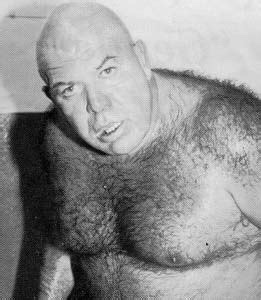
George “The Animal” Steele

Perhaps the first time I realized there was a difference between being hairy and a hairy bastard occurred when I was age10. The local barbershop had hired a young new barber. He started cutting my hair –boy’s regular–and I noticed his incredibly hairy forearms. In particular, I observed that underneath his hairy right wrist was a relatively new tattoo. I grew up in an era when tattoos were socially unacceptable and relegated to sailors or motorcycle gangs. The problem with this guy’s tattoo was its invisibility. You couldn’t see it because his forearm hair had regrown. It was an unseen tat.


Listening to my parents while growing up I learned there were certain ethnic groups that were notoriously hirsute. Greeks, Armenians, Turks, Arabs and Southern Italians were infamous for their thick, turbid hairiness. It was primarily males who exhibited the most hair but many women followed suit. The men often adorned themselves with mustaches, thick, coarse beards and sideburns. However, it wasn’t uncommon for these ladies to sport unwanted visible mustaches, facial hair or forearms. Of course many women in that era didn’t shave their legs –or probably armpits. These groups were awash in hair. They were apparently oblivious to their physical appearance but times have changed.
Television infomercials are inundated with products that eliminate female and male hirsutism. They especially concentrate on women and ‘staches that occur even in fair-skinned, blue-eyed women. When I was in college I dated a young Irish beauty – once. We had a wonderful evening that ended at a local area known for “parking”. We began kissing and, like Jerry Seinfeld dating the woman with “man hands”, I suddenly drew back. This blonde blue-eyed coed had a hidden mustache, felt but not seen. I recoiled when it scratched my face. As Austin Powers would say, it was like kissing a man, baby.


That incident heightened my observational skills. Soon, I started to notice men with thick black hairs scattered on the tip of their noses. My longtime plumber Dino is in his early 50’s. A handsome Italian-American (some think he resembles George Clooney) is not your typical plumber. He is 6’1” and quite fit. There’s not an ounce of fat on him. You’ll never see the usual plumber’s crack when he’s replacing your toilet.
His once black hair is now salt and pepper. At the last service call he made I noticed a change. At the tip of his nose, a forest of short, black hairs had sprouted. Dino is at the age where he needs reading eyeglasses. My hunch was he can’t see those bristles but they’re there. I also noted another invasion of hirsutism. Dino was now growing a black forest surrounding his ears. We’re talking enough hair to camouflage his ear canal.

He’ll soon require an industrial-sized ear trimmer to scythe through the hairy buildup. What I can’t understand is how his wife can presumably see this growth and alert him to his advancing fur line. Maybe she needs reading glasses, too.
Perhaps I’m generalizing but Italian men seem to exhibit this problem ear/nose problem. I remember a boyhood friend, Johnny Guglietto, whose grandfather lived with Johnny’s family. It was the first time I witnessed someone with ear hair so overgrown it covered the entire aural opening. The hair obscured nearly 100 per cent of the passageway. I pondered what is it with these old guinea men? Maybe this was the reason for his hearing loss. Was it considered a hairy badge of honor or was it, like Dino’s case, they just can’t see the changes in their physical appearance.
As an aside, while touring the Grand Canyon several years ago, I stood next to an impeccably well-dressed middle-aged gentleman. He was by the paddock where the canyon donkeys were corralled. Much to his chagrin, his expensive, spit-shined shoes were filthy with dust and manure. Looking at him closely was a sight I had never seen. His nose was pointed and had flared nostrils. I couldn’t believe my eyes. His interior nasal hairs were grey and combed into neat, straight rows. I surreptitiously moved from side to side and, yep, both right and left nostril hair was fastidiously groomed. It was a WTF moment. It was as if this kook was flaunting an anatomical anomaly. To paraphrase James Brown, say it loud, my nose is hairy and I’m proud.

This is one of the mysteries of male homo sapiens. The unwanted, unnecessary, unsightly and atavistic body hair.
Moving elsewhere on the body there are guys who have neck hair, resembling an ivy vine. I always conjure fictitious horror movies –“It Came From Beneath The Neck!!” Such hair weaves through men’s shirt collars and form a labyrinth of hair connecting neck with head. Pro football quarterbacks Joe Flacco and Andrew Luck are classic examples of why turtleneck jerseys can make a remarkable improvement on physical appearance, with or without uniform.
Moving along the human anatomy, there are other areas that wreak havoc on a man’s physical appearance. First stop is the chest. Back in the 1960’s, actor Sean Connery portrayed the iconic James Bond. In nearly every film he appeared bare chested for certain scenes. Connery is an incredibly hairy beast with a human sweater that started at the chest and ended at his waistline. That look may have been more acceptable 50 years ago but compare Connery’s forest to the most recent Bond, Daniel Craig. During a beach scene in Casino Royale, Craig wades to the shore, displaying his taut, well muscled physique, and no visible chest hair. And don’t forget the film Forty-Year-Old Virgin where Steve Carell undergoes a painful yet hilarious chest hair removal by a sadistic salon employee.

Spinning around the torso, we find another designated area: hairy backs. The late pro wrestler George “The Animal” Steele was in the villain category. He’d always wrestled bare-chested. His back was almost as woolly as his chest. Steele’s bald, clean-shaven head added to his bad guy appeal. I always felt sorry for his opponents who grappled with his hairy, sweat-laden body. Unsightly back hair also is included on infomercials. One device resembles a modified back scratcher. Hirsute male models demonstrate how the device removes lawnmower-style– back hair one section at a time. There’s a hair removal product for every area of the human body.
Let’s go a little lower. Legendary basketball player Bob Cousy was an incredible athlete. He also had probably the hairiest legs in the National Basketball Association’s history. It appeared he was wearing woolen leggings while playing on the old Boston Garden’s parquet floor. To Cousy’s credit he’s very self-deprecating about his thighs and calves. He was a hairy bastard extraordinaire and accepted his genetics.


Speaking of legs, many women undergo the masochistic ritual of waxing. Hot wax is applied to their legs and, very much like the Steve Carrel scene, the leg hairs are pulled from their roots and cause considerable pain. Leg hair takes longer to regrow with waxing. Of course there’s also the women’s Brazilian waxing technique where hair is removed from the groin, aka “down there”.

And so both sexes deal with the issues of unwanted hair. I heard a comedian who was commenting about men, especially bald men ( he also was bald). “Why is it men who are losing their hair in one place –their heads– deal with hair sprouting in places –their ears” he queried. “They resort to plugs and usually succumb to ugly toupees?”
“Why not transplant the ear hair or chest hair on to the head?”, he said. “Or maybe even the controversial pubic transplant!”. Bald Sean Connery would have never need to wear a “piece” if that cosmetic dermatology were available.


There’s another area I’ve noticed over the years. Older men’s eyebrows. Age and their old guy DNA kicks in and creates bushy caterpillar eyebrows. The Jerry Seinfeld character Sandy Baron, the late Andy Rooney and newscaster Walter Cronkite were prime examples of this anomaly. The eyebrows become bushier as they age.

I often had this image of taking an electric hedge clipper to Rooney’s brows and pretend I’m trimming a privet bush. I would yell at the television set, “Yo, Andy, Walter, time for a trim. Your brows are a distraction to your commentary!”. I guess when men reach a certain age, they feel more avuncular and the bushy brows become de rigueur. Concern over physical appearance wanes.
Returning to the head, there is one area that’s particularly noticeable: the nose. Unlike the Grand Canyon dandy, many persons, male and female, grow unsightly nasal hairs. They protrude from the nasal cavities and become human crab grass. Many will notice these unwanted visitors and routinely snip them away. The problem is they return, sometimes overnight. The aforementioned television infomercials also advertise nasal hair trimmers that resemble a modified toothbrush.
Our last bodily topic pertains to younger men. It’s the Unibrow. I will never understand why young guys walk around with such an unsightly eyebrow pattern. Someone should tell them Unibrows are grotesque. It’s one of the anatomical anomalies that forces people to look away during up close discussion as if they’re staring at the sun. Look long enough and it damages retinas. People become transfixed by the Unibrow and find it difficult to sustain a conversation. You cannot recall what the Unibrowed are saying. In induces hirsute-related amnesia. Maybe one day the infomercials will advertise a laser or women’s wax treatment for this category of hairy bastards.


Let’s face it. Body hair is a pain in the ass. Especially a big, fat hairy ass.

Toilet Paper Wars, 2020

Toilet Paper Wars, 2020

By

Leo de Natale

 2020 will be remembered as The Year of the Plague.  A mutated virus originating in China in late December, early January swiftly spread across Planet Earth.  The conceit of mankind, thinking we are impervious to worldwide disease and mass deaths, was brought to its knees.

World economies crashed, stock markets plunged and mass hysteria became increasingly prominent.  Globally, people were dying, people were freaking out. This demoralizing event turned neighbor against neighbor.  It was the first apocalyptic event seen since the 1919 influenza pandemic.

History Repeats Itself

Watching the panic unfold from within my “safe” home, I time- traveled back to 1953 when, as a young boy, I went with my friends and watched the classic film, War Of The Worlds.  The 50’s were an era of monster films: Creature From The Black Lagoon, Them, Invaders From Mars.  They all scared the bejesus out of me.  These movies gave me nightmares.   It was a time when you’d turn off your bedroom light and fearfully jump into bed.  One unwritten rule was you never slept with your hand hanging from the sheets.  You could be pulled underneath by the monsters lurking under the mattress.

War Of The Worlds was special. There were invading spaceships impervious to weapons including the atomic bomb. Wow, I thought, we’re in deep shit if the Bomb couldn’t protect us. The film was highly acclaimed. There were heroic scenes when the U.S. military vainly attempted to vanquish these alien demons. Familiar character actors I would see throughout the 50’s were packed in every scene. Many had obligatory mustaches and Brylcreemed hair – those were the greaseball days. There were creepy scenes where the protagonist, Professor Clayton Forrester, played by actor Gene Barry, and his assistant/paramour, actress Ann Robinson, are hiding in a demolished basement. A Martian probe is searching for them and a three-fingered alien actually touches actress Robinson. The plot moves along. I was filling my mouth with Pom Poms and Jujubes candy.

Which brings me to the bestial behavior observed during March, 2020.

Towards the movie’s end, Prof. Forrester has important information contained in  scientific instruments.  He’s trying to reach the research facility and is driving a truck.  In the background, the Martian spaceships are destroying large swaths of downtown Los Angeles – actually today’s Los Angeles landscape resembles the movie’s.  Suddenly, a crazed mob surrounds Forrester’s truck.  He stops the vehicle and is pulled from the truck and thrown to the pavement.  The mob grabs his precious instruments that are smashed against a building.  Bloodied and shell-shocked, Forrester yells “You fools!  You fools!”.  The truck lurches away.

Forward to 2020.  The mob isn’t interested in a truck carrying scientific instruments.  It’s toilet paper and paper towels.  It’s hand sanitizers and disinfecting wipes.  It’s bread and water. Fist fights erupt outside major supermarkets.  It’s the only time I can remember seeing storewide empty shelves.  People are stealing nine-pack paper towels from each other.  Pandemonium sweeps across the United States and Europe.  In England, British citizens fight over scones, France, baguettes, Germany, jaeger schnitzels, Poland, pierogis.  The insanity increases.  People fear to venture outside their homes.  Hospitals are overflowing with patients.  McDonald’s suspends operations.  No Big Macs.  Other restaurants follow suit.

Me?  I have a healthy respect for this Plague but history shows us the true Apocalypse is yet to come.  My faith in mankind’s ability to solve problems gives me hope.  The world has survived biblical plagues; Medieval Europe survived the Bubonic Plague; the 20th Century survived the aforementioned 1919 Spanish Plague.  This current scourge will pass, too.

What we are experiencing in early 2020 is a reminder how evolution hasn’t rid us of our Neanderthal forbears. We’re one catastrophe away from the opening scene of 2001: Space Odyssey where the apes discover leg bones can be used to annihilate enemies. In 2020 the bones have been replaced with rolls of Charmin.

At the end of War of the Worlds, Gene Barry finds himself huddled with others inside a Catholic church. Hollywood being Hollywood, his assistant/paramour find each other, embrace and wait for the end. Obliteration is avoided because the alien Martians become infected with Earth’s bacteria and slowly die, one by one. There’s a message there.

Choppers

Choppers

By

Leo de Natale

          “Okay, Mr. O’Brien, one more and we’re done,” said Dr. Jonathan Twine, a periodontist located in South Boston, a primarily Irish Roman Catholic enclave.  “This may hurt but I’ll have extracted the last tooth in your mouth.”

          Twine had been practicing his profession for nearly 30 years.  O’Brien, who was in his mid-50’s, was just another patient who now resembled Moms Mabley,  the black comedienne whose shtick was performing toothless and talking while playing with her gums.  After O’Brien’s procedure ended, he looked at Twine and smiled.  Yep, Moms Mablely, with an oral cavity showing only gums and a sunken mouth.

          “Ah be-glory, Doctor,” O’Brien slurred with a thick Irish brogue, his mouth still affected by the novacaine injection. “I’m finally rid of that goddamned tooth!”

          Soon after opening his practice Twine noticed a pattern that constantly perpetuated itself.  Not all, but many of his patients had almost a disdain for human teeth and an utter disregard for dental health. If I lose a tooth, so what? was the attitude.  Cigarette smoking was common among his patients.  Like so many negative aspects of smoking, nicotine has a deleterious effect on dentition.  The longer you smoked, the greater chance of dental problems.

          Twine’s primary job was preventing gum disease and its consequences, most common of which was tooth loss. The Northern European inhabitants  — British, Welsh, Irish, Scots and German were infamous for their poor dentition.  Just ask the fictitious Austin Powers who said, “I know, baby, I’ve got bad teeth!”

          The oddest aspect of Twine’s observations was that many of his Irish patients had a distorted sense of  dental care’s cost.  More than one of his patients would say, “Aye, Doctor, just yank ‘em all out.  I’ll have me choppers and won’t need to see you no more, don’t you know?”

He’d explain how absurd that notion was. He’d tell them as toothless persons age, their gums shrink. New dentures require periodic replacement. Otherwise, the old dentures start floating around and can fall out of the mouth regardless of the amount of Poligrip adhesive applied. He rarely mentioned an additional side effect the creates foul odor: denture breath. Actor Clark Gable was infamous for his denture-induced bad breath. It’s far worse than ordinary halitosis, he’d say. And those fake pearly-whites will yellow over time. After the extraction, Dr. Twine arranged for a denture fitting and like so many before him, he scheduled an appointment for Mr. O’Brien’s brave new world of perfectly white fake teeth, complete with nice pink gums. As an aside, one of Twine’s favorite Youtube videos is an elderly woman skydiving. The wind velocity was so high her dentures suddenly fly out of her mouth and are sent hurtling into oblivion.

After O’Brien left, Twine was reminded  of an Irish family– the Murphys – father, mother and three sons all of whom wore dentures.  The sons were hard-nosed blue collar types.  They frequently fought.  On one such occasion, they began arguing at the dinner table.   The oldest son named Jacky was incensed by his brother and, in a fit of anger, removed his upper denture and hurled it as a weapon.   

Jacky missed his target and the choppers were shattered against the dining room wall.  His arguing brother hurled his dentures at Jacky.  Those choppers broke a living room window.  Brine laughed to himself.  It was the only time he’d heard of smelly, slimy dentures being used as assault weapons.

The above scenario is something that you can “sink your teeth into” and that’s what this essay is all about: dentition.  In modern times, dental care is a fundamental of living a good life.  Since the 1960’s water fluoridation has greatly reduced cavities in children.   Orthodontics – getting fit to braces during a child’s middle school years—has become a rite of passage.  There is less teasing and ridiculing these days.  Fewer children endure the tauntings – “Hey barbed-wire mouth” or “When do you lose the grille?”.   Many children pass through youth and adulthood without paying much attention to dental health.  But, are they aware of the minefield awaits them if such inattention occurs?

Millennials and Gen Z’ers are prime examples of this disregard.  An example unrelated to teeth is the mainstreaming acceptance of tattoos.  Once considered socially unacceptable, sporting tattoos  is commonplace.  Many of this age group have at least one tattoo.  There are the meatheads who defile their bodies with ink on their faces, necks, forearms, hands and chest. 

Rock stars and professional athletes are a prime example of this body desecration.  You want to scream “Hey you idiots! When you’re 50 of 60 years old, do you realize what those tats will look like?  Just blobs of blue, yellow, red Rorschach tests!  They’ll be gross and unrecognizable.”

During his career, Twine adopted a cynical attitude towards educating his patients.  In healthcare, noncompliance is the greatest source of frustration among professionals.  For example, Twine had an optometrist friend who would complain about contact lens abuse.  Sometimes it was a case of poor patient education, his friend said.

More commonly, however,  the abuse was a sense of invincibility, laziness, penury or  utter disregard for rules and regulations.  Some contact lenses are “daily disposables”.  Those are the healthiest for the human eye.  Wear once, throw away and reduce the chance of infection.  Other modalities are two-week disposable lenses and four week intervals.

Twine’s colleague described the following scenarios: “If it’s a daily contact lens, patients will wear them for two days,” the optometrist said. “If it’s a two week, they’ll change them every four weeks; one month lenses will be replaced every two months. Some of these idiots will not remove the contacts for months. Economics is a factor in this abuse. Folks want to save money so they push the envelope. Many, for chrissake, have no eyeglasses, the optometrist would say.

Naturally, some of these abusers wind up with pernicious corneal ulcers, some of which can cause permanent damage or even loss of an eye.  Twine had learned in dentistry the circumstances are different but the outcome is similar.  Noncompliance is always the cause.  Patients sometimes skip routine cleanings that lead to tooth decay, abscesses, gum disease and eventual tooth extraction.

By the time patients see Twine the ship has already sailed and he’s left with the task of salvaging what remains of a sick mouth.  His years of experience enabled him to draw odds on the future of so many teeth that could have been saved.

This guy’s headed for a new set of piano keys, he’d say.  This middle-aged lady will have a “partial”.  Many will develop gingivitis requiring surgery, “gum jobs”, a procedure requiring resectioning of the gums.  Periodontistry  is a challenging dental specialty,  Twine’s clientele  were divided into two groups: those who don’t fear losing their teeth and those who’ll pay thousands of dollars to save them.  The first group, exemplified by Mr. O’Brien, have an I-don’t-give-a-shit attitude.  He has dealt with former far more than the latter.

Financially periodontists  do well.  All those procedures help pay for the summer home on Cape Cod and the winter condominium in sunny Florida.  From afar, dentistry seems to have an appeal.  In reality it’s a gross profession.  Dentists spend their time sticking their fingers into mouths.  The odor can be foul, especially with patients with industrial strength halitosis.  Their job deals with blood and pain.  It’s drill and fill, rinse and spit.  They can’t share the usual doctor/patient banter.  Dentists stare at hairy nostrils, face such potential hazards of hepatitis and have one of the highest suicide rates among health care professionals.

During the past century, dentistry has made incredible advances in improving patients’ health.  Instruments have become more sophisticated, novacaine a godsend.  Cosmetic dentistry had become a sub-specialty for patients who can afford costly veneer procedures and leave the office with  pearly whites. Unlike Mr. O’Brien who’ll be whistling through those yellowing choppers until it’s time for a refit, aye bejesus.

Knee Deep In Adjectives

Knee Deep In Adjectives

By

Leo de Natale

A Sign Of Things To Come

          My name is Charles “Charlie” Woodson.  I am a soon-to-be retired high school English teacher.  My school is located in an affluent, tony  suburb west of Boston.  I’m actually looking forward to my retirement because I’m burnt out and my career as an educator is running on empty.  I am nearing 60.  I’ve lost most of my hair and developed a slight paunch.  My students considered me antediluvian because I continue to wear a shirt and tie, Harris tweed blazers (yes with the elbow patches) and spit-shined shoes.  For years I wore a professorial beard but ditched it in favor of the clean-shaven look.  I don’t miss the facial hair.

The students, too, were different.  The school had a dress code.  No blue jeans, no mini-skirts.  Girls had to wear skirts or slacks. 

          Now the kids dress like slobs and sluts.  The boys wear baggy jeans, many of them don’t wear belts.  The pants drop to almost below the buttocks and reveal Tommy Hilfiger or Calvin Klein boxer shorts.  The girls wear tight jeans or denim mini-skirts  that hover just below the pubic line.  Their blouses squeeze their bosoms and, naturally, expose lots of cleavage.  The politically correct school administration is wont to impose dress codes. Exhibitionism is rampant in the hallways. Both males and females are transfixed by their cell phones and wander the hallways unaware of the carnal display surrounding them.  Drug and alcohol abuse has exponentially increased.  There are many problems facing these children.  I worry for the new generations who’ll be attending school long after I’m gone.

           I have witnessed a dumbing down of students and, from talking with colleagues, such robotic behavior transcends schools from elite to blue collar communities.  It is no more evident than in my discipline, the English language.

          There was a time not long ago when speaking and writing English was something to be revered.  I admittedly was a martinet when it came to teaching.  I emphasized the importance of the holy trinity: grammar, spelling and vocabulary.  Thirty-five years ago, it was fairly easy to drill my students with basic erudition.  My students learned the fundamentals of sentence structure. Many got the message and became facile with writing and speaking.  Many were good students.  They were compliant. I developed the reputation of a tough but fair teacher.  I would praise good work but eviscerate students who were lazy or showed indifference to the Mother Tongue.

I continually stressed the importance of knowing how to speak and write proper English. Many college-track students from this public school fared exceptionally well. Each class would produce a bevy of students who were accepted to Ivy League schools and such smaller elite schools as Bowdoin, Amherst, Williams and Wesleyan. I was happy for those kids, especially their when they scored well in the SAT’s language tests.

          An aside: occasionally, a handful of them would drop by and thank me for the discipline needed to score well.  Receiving complements ipso facto is the most treasured experience a teacher can enjoy.  Yes, I did make a difference.  For example, it’s fulfilling to know you’ve influenced a student’s mind and intellect.  It’s true because I one day returned to my high school and visited Patricia Coree, my 12th grade English teacher.  When I was a senior, she was pregnant and taught only through Christmas break.  But boy, did I learn so much from her. 

          I remember her reading an article regarding the fate of  English.

          “There are three things that are ruining our language,” she said. “Jargon, euphemisms and gobbledygook.”

          She was so right and during our visit I reminded her of that particular lecture.  She, of course, remembered the author who wrote the article.  I told her how much her class affected me and how much I appreciated her truncated course.   She was flattered and touched by my reaching out and visiting her.  Her response was heartfelt and I presume my visit made her day.  Mine, too.

After about ten years’ teaching, I noticed  discernible changes within the school system.  The aforementioned dress codes changed .  The jeans prohibition was relaxed. The faculty  went casual, too.  No shirt or tie required.  Female teachers weren’t require to wear formal clothing.  Grunge had arrived in suburbia but the students were still performing academically.  It is my strong belief the digital age was the fountainhead of the swift decline in language skills.  Texting created a new lexicon.  Use of the internet became ubiquitous.  I began noticing how many writing assignments were exercises in cut and paste.  Students became less interested in writing meaningful essays.  It was easier to Google a subject and massage the data.  I considered that behavior quasi, if not full blown, plagiarism.

Even conversations were affected. The word “like” has become a verbal crutch. I heard one female student using that word in nearly every sentence uttered. “You know” is another phrase that has spread like a Corona virus. The de- emphasis of using language correctly has become a low or even non-existenent concern. The art of well-spoken, scintillating conversation has been lost.

Here are some examples:  between he and I; Us vs. we; “u” vs. you – that’s definitely a barbarism derived from texting; vulgarity – pushing the envelope has  coarsened our speech and society.  Expletive words such as suck, pissed, balls and bitch are heard daily on sports talk radio.  The curse words  and others such as fuck, dick, asshole and spilled into the accepted lexicon thanks to social media – Twitter, Facebook and Instagram.  We have devolved into a linguistic dystopia.

There are many grammatical and usage errors that drive me crazy.  English is the only Western language that is gender neutral.  The Romance Languages, German and Slavic tongues all have masculine and feminine word designations.  Learning French frustrated me because I often forgot which gender was applied to nouns.  I mention this because out of ignorance and political correctness an egregious error has seeped into English, specifically, subject/pronoun errors.   If a singular word, everyone, is used it is logically supposed to refer to either the his or her pronouns.  One of the most frequent barbarism is the phrase, “Everyone has their own opinion”.  Traditionally, the male pronoun, he, was used.

But you can’t do that today.  In deference to purported gender neutrality, “he” is not used.  Hence “ their or they” have become a default solution. None dare offend the identity politics of gender neutrality, a concept that has adversely affected language. There is a seminal book entitled “The Elements of Style” by William Strunk and edited by the famous man of letters,  E.B.White.  It is a pithy 78-page primer that contains the essence of English usage.  White was a student at Cornell where Professor Strunk taught English.  Strunk compiled elemental rules of grammar and usage.  It is timeless classic that contains all the knowledge to write well.   It is a relevant today as it was when Strunk published the book in 1919.  White carved a Herculean career at the New Yorker magazine and was a superb writer and considered the arbiter of  English usage.

The book addressed the above gender conundrum.  During these past years I compromised with my students and allowed them to use a modification: “Everybody can decide what he or she wants”.  One public school teacher cannot change the world.  It’s Sysiphean.  I constantly hear the bastardization and turn my head.

I’ll now list other grammatical errors that make me want to hit my head against a wall:
          “Between you and I, us vs. we, me vs. him” – between is a preposition and requires an objective pronoun –me, us, them.  Another favorite is the “its vs. it”s”. This common error is the use the possessive pronoun “its” instead of the contraction of “it is” and an example of either ignorance or laziness.  Regarding euphemisms, the most egregious example—I can remember Mrs. Coree mentioning this– concerns death.  People today feel uncomfortable saying “he died” and replaced it with “passed away”.   Most people use the term and it is even included in funeral home death notices.

Below is an example of the drek we teachers face.  The following is an excerpt from a creative writing assignment by a corpulent high school senior who considered herself  a 21st Century Emily Dickinson.  The following is a portion of her writing:

Flight of the Snow Dragon

By

Destiny O’Rourke

(sic)

Samantha arose from her ice-encrusted bed.  It was 6 am and she had much work to do.  She was tired because of the goddamnd cold that surrounded her.  She was living in Azimuth and she was scared of the pending invasion of the Tropes that were a marauding horde of North Monsters who were retrning for their annual harvesting of us, the Eloi.

“Ho!,” she cryed(sic). “We have much to do and not to much time to protect ourselves.”

“The Eloi were surface dwellers and they knew they were gonna be eaten if they didn’t hide themselves real quick.  Of course the Black Queens of the inner planet might be able to help them, but the BQs had their own way of destroying us.  Its no secret they had other purposes for us but not as bad as the SDs.  It was certain death for them for us.  God it was fuckin getting cold in this goddam freezer.  How can I stand it?”

Young Ms. O’Rourke was considered exceptionally talented among her peers.  I’ve talked to fellow teachers at various conferences.  There’s a consensus among colleagues who are in my age group.  We all agree today’s youth can’t write.  It is seen in elite private and public schools.  It spills over to college and university students.  We educators are the culprits.  Once the rules and regulations are diluted, it’s a slippery slope to where we are today.  We’ve allowed political correctness to permeate all aspects of education. Even penmanship has been abandoned.  Students aren’t taught  cursive writing.  Most students use printing on homework assignments.  Oh, for the days of ink wells, blotters and fountain pens!

I know, someone reading this screed is saying “Just another geezer complaining about change and living in the past”.  This may be partially true but we’re concerned over slouching towards mediocrity. Perhaps it’s the predictable course of decaying societies.  We’ve seen it in the past:  Ancient Greece, the Roman Empire, Spanish Imperialism, the British Empire the Soviet Union and America.  Each has a shelf life, including our effete society.

Eye Of The Needle

By Leo de Natale

This is Spinal Tap

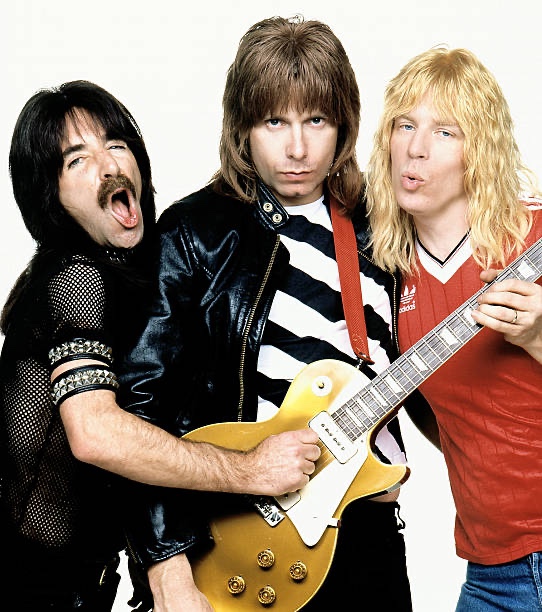
Last week I felt as if I were reliving the famous scene in the cult classic film, This Is Spinal Tap. In the movie an aging, has-been British rock band was appearing at a third tier venue in Cleveland, Ohio. The band members are in the building’s rundown basement and they’re yelling “Rock ‘n Roll”. There was yelling and screaming from the awaiting crowd. The camera followed them as they attempt to reach the stage. They’re lost and, even with the help of a custodian, they wind up where they started. They never perform and ignominiously leave the wretched building. As for me, I sought alternative treatment for a condition called trigeminal neuralgia that caused eye pain and daily headaches located only on the left side of my head. The condition started two months ago and the medication prescribed by a dowdy South African neurologist was apparently not helping. I decided to try acupuncture as an alternative and contacted a fellow my sister recommended – if only I could find his office.

Trying to locate his building was the Spinal Tap link.         The acupuncturist, Martin Googbeck, called and confirmed the appointment.         “The office is right on Rte 117,” he said.  “From where you’re located, it’s a 30-40 minute commute.  I’m in a strip mall.  You can’t miss it. See you Thursday.”         Hmm.  I have trouble with legitimacy when a profession is located at a strip mall and on a secondary highway.  But, desperate times often require desperate measures.  One has to open-minded under such conditions.  Off I went.         

I’m a punctual person and left 45 minutes prior to the appointment.  Using my car’s GPS whose android name is Samantha  (Why  this woman  always send drivers on the most circuitous route to reach a destination?), I ignored the long way because I was generally familiar with the highway and town.  I arrived 20 minutes early and passed by this weenie building that housed the obligatory hair and nail salon and pizza parlor.  There was no visible address and I drove 1,000 feet beyond that building.  The address numbers were declining and concluded I must turn around to find Mecca.         Returning to the strip mall, I finally noticed a small obscure sign that listed the business.  I couldn’t see any entrance to a professional suite and drove to the building’s rear entrance. 

I parked my car and noticed an open, unmarked door, and like Spinal Tap, entered.  There were a maze of offices with no signage but there was a staircase leading to the second floor.  I alighted the stairs and again wandered through the corridor.  To my amazement, I finally found Martin’s office!  I entered and a woman who turned out to be a masseuse told me I was in the right place and Martin would shortly arrive.  The office was non-descript save for the Chinese artwork hanging from every wall.  The lighting was subdued.  It’s always  that way in New Age and homeopathic offices.        

Martin was a tall, middle-aged man. He had a dark complexion and had a cheery smile. Balding and with crooked teeth and smile, Martin was wearing a Brooks Brothers shirt sans tie, the de rigueur look for today’s businessmen regardless of the occupation. He was personable and friendly. The night prior to the evaluation I had downloaded a questionnaire that listed medical history and current medications. Martin reviewed these. He pooh-poohed some of the non-prescription medications, especially Vitamin E. “You don’t want to be taking the Vitamin E – it affects your alimentary canal,” he stated. And he questioned the efficacy of the neurologist’s use of the drug I was taking for the pain and headache. The drug’s main use is an anti-epilepsy medicine, but apparently neurologists are using it “off label” for my condition. It affects the body’s sodium levels, a situation that required a weekly blood test. As mentioned, the medically intensive protocol prompted me to seek a potential alternative. After assessing my history and a perfunctory physical exam – pulse and breathing rate – Martin asked me to remove my stockings. I laid on an examination bed covered with sheets and a pyramid-shaped pillow placed under my knees. He pulled four sterile needles from a container and, to my surprise, placed two just below my right pinky finger and two below my small toe.

“I thought you’d be placing the needles around head and eye,” I said curiously. “No, the neural pathways for you particular problems originate lower in the central nervous system,” he replied. “Your condition is controlled from neural connections downstream.” With four little skin pricks, Martin told me to begin deep breathing.  He turned down the lighting and, on cue, soft New Age/Asian music began.  It was going to be an exercise in relaxation of the body and mind. “I’ll be back in about 20 minutes,” he said. “Relax.” For the first few minutes, I did concentrate on deep breathing.  I could feel the needles embedded in my skin.  The music was soothing although I found it a bit hoaky.  I listened and listened and, I’ll be damned, I fell asleep.  I knew because drool was at the edge of my dry mouth – must have been snoring, too, I thought.   Martin awoke me and was smiling.  He said most clients have similar reactions.  He quickly removed the needles. 

Of course there was no discernible difference in my pain level and that was to be expected, he said.  I was waiting for the next discussion which was I needed to return for another treatment.  The evaluation would continue and I would await the eye of the needle. Driving home I wondered if sticking needles into foreign parts of the body would have any remedial effect.  Many Americans have a doubter’s opinion of acupuncture and its allied field, chiropractic.  There’s a certain Voodoo about disciplines where using pharmaceuticals for curing is alien.  It was a beautiful June afternoon and driving home in my cherished convertible made the day seem worthwhile.  Rte. 117 is a pleasant secondary highway.  On both sides of the street there were many farms and garden stands.  The head pain was still with me, but I was content there would be a cure awaiting. I continued to consume the medications, four pills daily.  I certainly wasn’t experiencing the darting eyeball pain.  Indeed, that seemed to be abating. 

The daily headaches were more problematic.  They waxed and waned.  I was supplementing the drugs with enteric coated aspirin that reduced the potential gastric distress that non-steroidal, non-prescription drugs create. When you become old, it is true that a geriatric spends much of his or her time seeing doctors and undergoing a myriad of tests.  Later that week, I was instructed to have a blood test for blood sodium levels.  The neurologist’s drug had the potential for lowering the body’s sodium content.  The drug has to be discontinued if this occurs.  It was off to my primary care physician’s office for the blood test.     The phlebotomist was Indian. His name was Majeeve and was born in Bombay, or as he pronounced “Bomb-aay”.  I’ve noticed many Indians have a serene persona.  Many chuckle with a laugh sounding like “tee-hee-hee”. Majeeve went about his worked he placed a tourniquet around my bicep muscle, found a suitable vein and inserted a hypodermic needle and drew my blood into the usual and customary vial. As he  performed his task, we discussed India.  He was very proud of his country’s history, especially in agriculture. “India is the world’s biggest cotton producer, “ he said.  “And silk, too.  It is so hot and this attracts butterflies.  The more heat, the more silk the butterflies produce.  And then we sell it to China, tee-hee-hee.” He complimented on my multi-colored harlequin shirt and my spit-shined oxford shoes.  His shoes were also shined.  Birds of a feather…….

The blood tests were emailed to me the following day.  The sodium level was within normal limits, but still on the lower end.  I was slightly concerned, but I decided to reduce my anxiety and wait for the neurologist’s telephone call.  Meanwhile, on Martin’s recommendation I was scheduled for a follow up and a return to the needles.          Martin again smiled through the crooked  teeth.  “Let’s give another go,” he said. Out came the needles. 

The Oriental music resumes with its soft, dulcimer tones.  Again, I fell asleep.  The obligatory drool reappeared.  Martin reappeared. “This should do the trick,” he said.  “Call me if there’s no resolution.” I returned home.  Gradually, over the next few weeks, the trigeminal pain subsided.  I presuming the drugs were the remedy but I’ll never be able to tell if the acupuncture was somehow involved.  Such are the mysteries of the healing process.  We never really know.