B.O.Plenty

B. O. Plenty

By

Leo de Natale

Illustrations by Vince Giovannucci

In 1931, cartoonist Chester Gould created a newspaper comic strip, Dick Tracy. It was immensely popular and introduced America to a cast of characters that became household names. One of them was a disheveled roustabout named B. O. Plenty, who, as the name implied was a skank before the word was invented. He had dirty hair, wore a pith helmet and wasn’t too clean. Mr. Plenty is the inspiration for this essay.

Mr. B. O. Plenty (by Chester Gould)

          Rosamond “Roz” Chabot is a  trainer at an exclusive physical fitness center located in downtown Boston. In her late 20’s, Roz was a three-sport athlete at the University of Michigan.  She majored in biomechanics and health sciences.  An unapologetic jock, she decided after graduation to pursue a career in health and fitness.  Despite the onslaught of obesity in America,  many people  are  committed to maintaining or improving their health.  Physical fitness is a growing industry. 

Fitness programs vary from local, low-budget gyms to more expensive and exclusive facilities that employ people like Roz.  There is also  increasing popularity of exercise equipment like the $5,000 Peloton stationary bicycles for those who eschew organized gym programs. 

An ebullient woman with good interpersonal skills,  Roz is  perky, stands 5’8”, has azure blue eyes and dirty blonde hair.  She has the lucky combination of good looks, competency and an ego she keeps in check.   She always cares about her clients and strives to improve their health and fitness.  She works at Ba’Hai Health in Boston’s financial district.  Roz also has a marvelous sense of humor, except for the day after the Covid 19 mask regulations were finally lifted.  She always kept a mask handy. Some clients still wore them.

“It’s a pleasure to meet you Jean Claude and Marie.  I’m Roz Chabot”, she said. “This is your first day at the Ba’hai fitness, correct?”

“Oui, excusez moi, yes,” Jean Claude Du Bois said with his French accent.

As senior fitness trainer, Roz’s task is to assess client level of conditioning and customize an appropriate workout regimen. The DuBois had recently arrived from France and were both working at Massachusetts Institute of Technology (MIT); Jean Claude was a biochemical researcher, Marie an economics professor. The couple were in their early 40’s and were feeling the need for an exercise program.

Jean Claude was tall, about 6’1”, very polite and handsome. Roz looked at him and noticed how much he resembled actor Russell Crowe. Marie was, like many French women, brunette and brown-eyed. A beauty. Both were born and raised in Paris.

Roz ushered the couple into a small meeting room to discuss their needs. Unfortunately, the meeting didn’t start well and rapidly went downhill. Once the door was closed, Roz turned to them and Boom!, she was figuratively thrown against the wall. Both husband and wife had the worst body odor –B.O.- she’d ever encountered. It was the equivalent of a Muhammad Ali upper cut that snapped her head back. She had difficulty breathing due to the stench and thought how could these two Europeans be oblivious to the acrid odor assaulting her olfactory system. Quick on her feet, she retrieved her blue Covid mask.
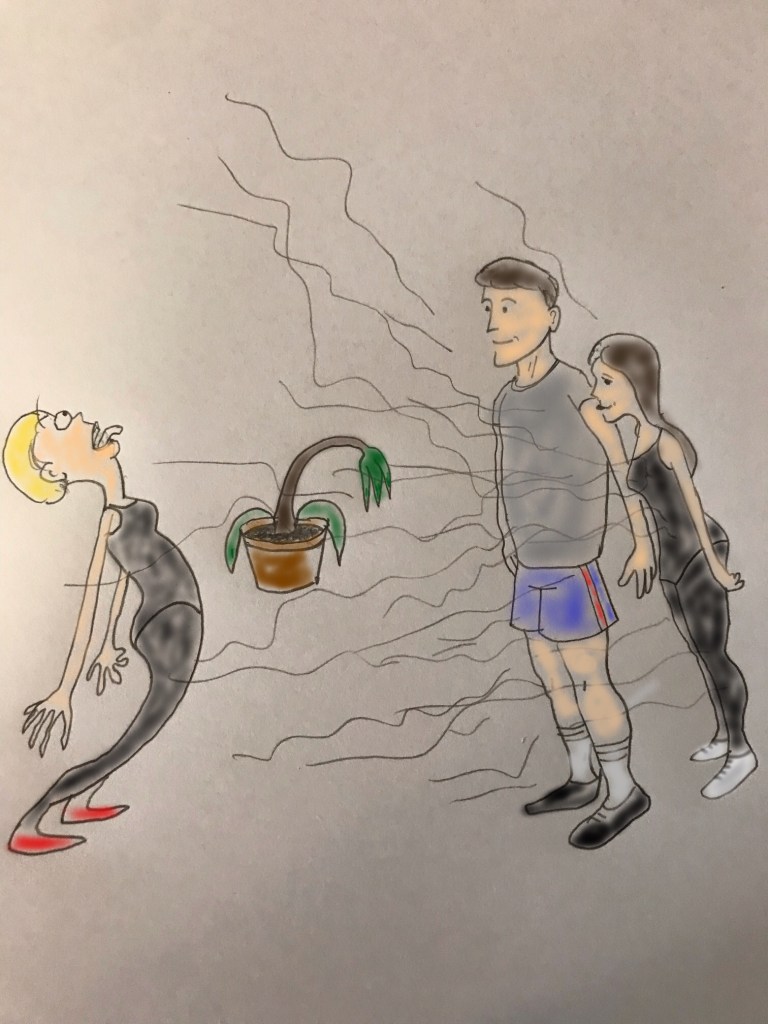
Roz meets Jean Claude and Marie Du Bois

“Uh, let’s leave here and go the main gym,” Roz deftly said.  “There’s more room out there, and, unless you object, I still prefer masking.”

I could use a sixty-foot distance from these two stinkers, she thought. Roz’s experience was compounded by another cultural difference.  Both Jean Claude and Marie had greasy hair that probably hadn’t been shampooed for several days.  Not a pretty sight.  She desperately wanted to say, “Time to change that oil, you two!”.  

The final note of their sanitation issues was Jean Claude’s dirty fingernails. I can’t believe I’m interacting with two highly educated persons who don’t have a clue about physical appearance or hygiene, she said to herself.

Roz hoped someone at MIT would eventually prep them on hygiene rules and regs.   As the head trainer, she  dealt with many well-heeled professionals.  These two would not make the cut as her clients.  The Parisians would  be passed along to a staff member. 

American society places a high value on personal hygiene. Countless soaps and men’s and women’s deodorants are continually advertised. Daily showering is the norm. Most Americans wouldn’t dream of leaving home without utilizing such products. Europeans mock us for our obsession with cleanliness.

For example, after World War II, soldiers returning from Europe had many stories about cultural differences and fundamental views on hygiene.  B.O. was the norm.  Europeans simply didn’t often wash themselves, especially the French.  That reputation unfortunately continues.   Both sexes smelled; women didn’t shave their arm pits or legs.  B.O., clinically known as bromihidrosis, occurs when apocrine glands located in hairy  parts of the human body secrete fluids that combine with skin bacteria.   The chemical reaction causes the stench.  Some wag once quipped a European’s B.O.  would knock a buzzard off a shit wagon.

Roz felt obligated to assess the couple’s needs. Wearing the Covid mask and maintaining the now unnecessary social distance, she sat at her laptop and asked them what was most important.

          “We would like to increase our physical fitness,” Jean Claude said with a Gallic lilt. “I’m in the laboratory most of the day and Marie is teaching three courses.  We come home and we’re tired.”

She entered the data, coded her assessment and plan and the computer instantaneously produced a daily routine.

“Well, I’ve devised a daily regimen for you both,” she said and promised to email the details. “For the first few weeks, you’ll need to meet with us here so we can assess your progress. I’m having Kurt, our team leader, help you go through the exercises. It’s been a pleasure meeting you.”

          Roz left the Dubois and  dashed toward the gym exit.   She left the building, removed her mask and gasped.   Ah, I can breathe again, she exclaimed.

Roz didn’t realize this was going to be a bad day at the office. Her next club member was Peter V. Coolidge, a highly successful hedge fund manager. Peter was a quintessential Yankee. In his late forties, he was very much a blueblood.

          He grew up in Concord, MA and was a double Harvard – undergraduate and business school.  Having those credentials gave him a leg up in career trajectory.  He came from old money and was making new money.  An obscenely large amount of money.  He was married with three children, drove an $80,000 Audi and lived on Cambridge’s exclusive Brattle Street.

Regardless of social station, middle age rears its ugly head.  Peter’s body was getting soft and he’d developed a gut.   He’d been a varsity lacrosse player at Harvard and, like Roz, a natural athlete.  But that was yesterday.  Peter tried to maintain his fitness but time and Covid, like most of us, had affected his diet and activity.  I need to get back in shape, he thought.

          So here he was at the health club meeting with Roz.  He was a handsome man of average height.  He possessed a shock of brown hair flecked with gray.  In the era of grunge and relaxed clothing, he was an oasis of tasteful business attire –suit,  necktie, starched white shirt and highly polished dress shoes.

          Once again, Roz greeted her client and ushered him into the meeting room where the Dubois’s odor still lingered.  It was déjà vu all over again.  She was about two feet away from Peter when he said “Hello. Hi, Roz.  I’m Peter Coolidge.”

Peter did not have B.O. but the two H’s-hello and hi – were a blast furnace of bad breath. Yup, it was evil halitosis, an affliction that transcends socioeconomic status. Once again, Roz’s head was pummeled. She found herself arching her back to avoid further onslaught. This is not my day, she thought. The breath was foul and had an acidic smell that forced her to increase her social distance from Mr. Coolidge.
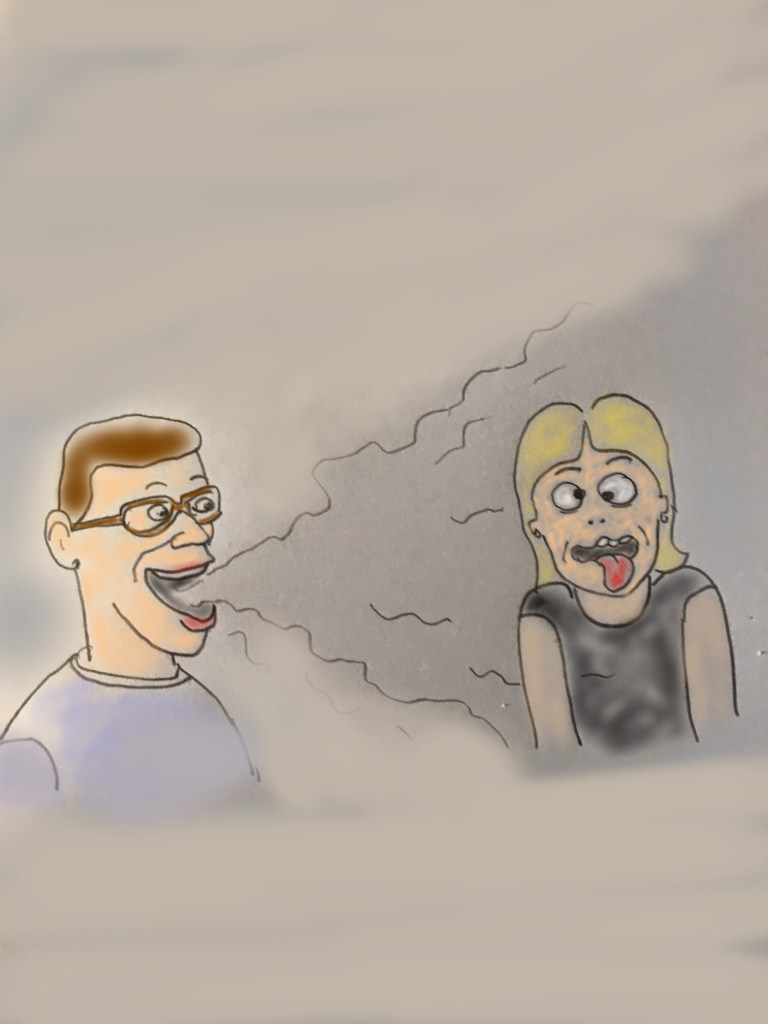
Peter V. Coolidge and his breath

She again donned the mask which helped. Does this guy realize his mouth is a lethal weapon? I’ll rename it Brahmin Breath, she declared. One exhalation could kill plants, wilt flowers and dissolve chrome off an automobile bumper. The poor dentists who deal with this condition could qualify for hazardous duty pay, she said to herself.

Roz was the most popular and sought-after trainer.  She felt obligated to accommodate Peter.   She decided she could tolerate his breath – it was better than the B.O. Twins.  She would merely maintain a buffer zone. The masks would help.  She queried him about his goals and asked questions about diet and exercise.

          “Here’s a printout of my assessment and plans, Peter,” she said.

“Let’s schedule twice weekly meetings.  Follow the instructions on these pages and I know you’ll be getting fit.  I’ll also email you a copy.   See you soon!”

It was lunchtime and Roz again left the building to breathe welcomed fresh air.  She daydreamed about walking through a  forest in her native Colorado.  Aromas there would be a wonderful antidote for today’s nasal trauma.  Time for a sandwich and some mineral water, she thought.

          Returning to the fitness center, Roz saw three new clients with joint pain and various orthopedic maladies  that were straightforward and easy.  The clients were congenial and their problems would easily be solved.

Her last client of the day would complete the cycle that started her morning. Clyde Bunting was a CPA working for one of the Big Three accounting firms. Despite spending his entire day staring at a computer, he was quite fit. He was spindly tall and prematurely bald. His hands were enormously large and perfect for his leisure activity of rock climbing. Clyde had been climbing at Tuckerman’s Ravine in New Hampshire. He unfortunately grabbed a rock that became loose and fell six feet. He had fractured his right knee cap and tibia bone and arrived at Ba’Hai with a knee brace and crutches.

Clyde underwent surgery. He would walk again, the orthopedic surgeon told him, but he’d would require extensive physical therapy.

Roz reviewed the pre and post-operative xrays. Clyde’s tibia sustained a severe break that required many screws and metal plates inserted during surgery. According to the surgeon, the prognosis was good. However, there’d been considerable muscle wasting after the surgery. Many leg injuries or surgeries cause loss of muscle mass. The job of a physical therapist/trainer is, through exercise, to strengthen the leg muscles, especially the quadriceps.

To arrive at an accurate assessment of the leg and muscles, Roz told Clyde to don a Johnny gown. She wanted to inspect the thigh and lower leg. This is where she hit today’s trifecta. With shoes and stockings removed, Roz examined the leg, and wham!, lightning struck again. Clyde’s feet smelled like Gorgonzola, “the pungent Italian bleu cheese”. She began gagging and was afraid she’d wretch. Quickly, she donned two masks.
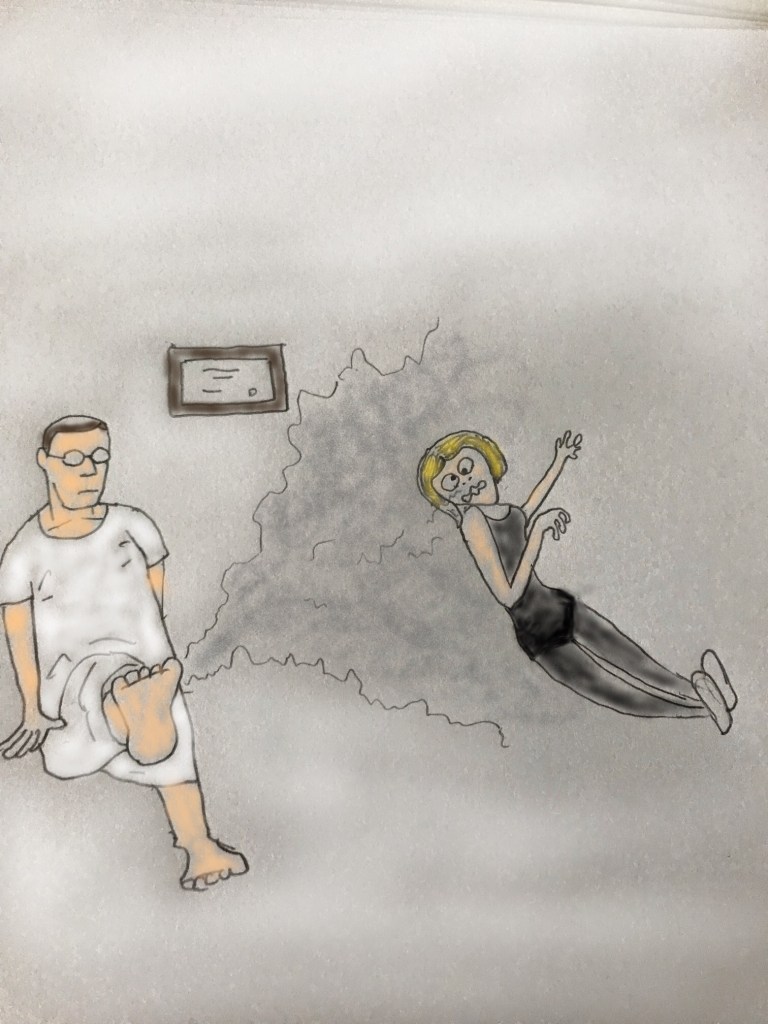
Is it Clyde Bunting or Gorgonzola?

Clyde suffered from bromodosis, the medical term for smelly feet. Once again, bacteria located in the feet are the culprits. They thrive in a warm, dark environment when covered with stockings, especially if the socks are dirty. Bromodosis can be controlled with meticulous hygiene but body chemistry and genetics can complicate the odor problem.

Like dentists, podiatrists deal daily with such biochemical weapons of mass destruction. Feet are one of the most unattractive human body parts. Clyde is one person who wouldn’t be playing much footsie and certainly not with Roz.

She suffered through the evaluation process, developed a therapy regimen. She liked Clyde and was sympathetic to his horrific accident. A broken tibia would probably require months of rehabilitation. It was a challenging case and with masks scented with Shalimar perfume, she was determined to help this man.

          Her profession was one of healing  patients who  experience pain and also  involves persons who care about their health by losing weight and becoming physically fit.  The big question is how to deal with clients whose  odor problems are impediments.   How does one diplomatically reveal this to him?  It’s a social hand grenade and thus far no one has solved the problem.

Roz’s work day was finally done. On her way home, she stopped at a drug store and bought a package of pine tree-shaped car fresheners having an elasticized loops. Many people hang them from their automobile rear view mirrors. After the olfactory assault she decided to mainline and held the scented tree under her nose for her 45 minute commute home. It smelled good. Really good.
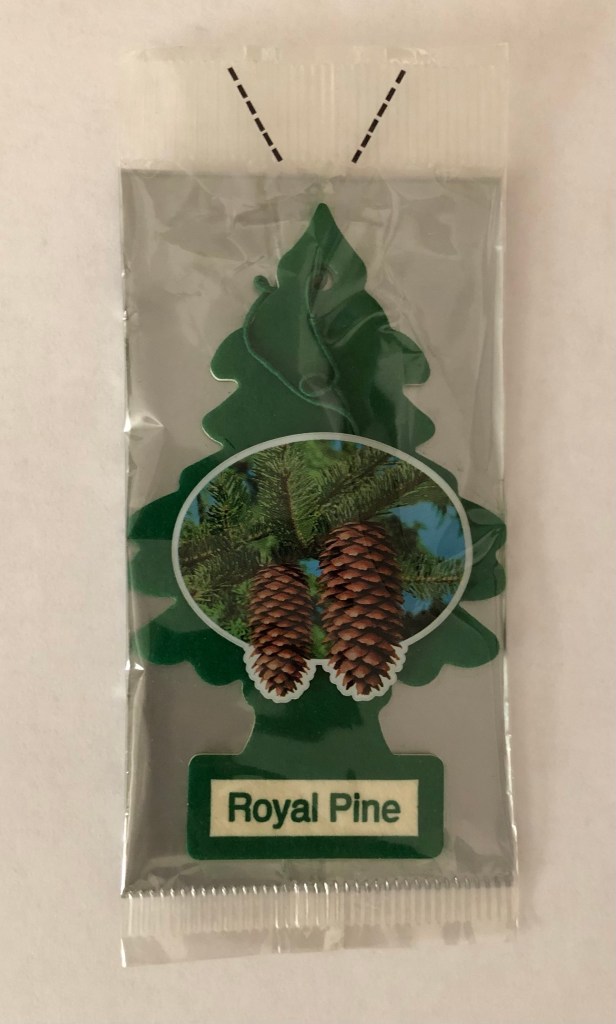

It’s All About The Chrome

It’s All About The Chrome

By

Leo de Natale

Illustrations by Vince Giovannucci

          It was the last week of April, 2021 and all Dr. Vito Di Stronzo wanted was a new car.  In his 65 years he dreaded a time that affects us all: dealing with car people and the labyrinthine  world of automobiles sales.  Everyone has a personal story of getting screwed over by a mendacious salesmen.  In today’s world,  car dealerships have spawned a new twist:  both buyer and seller are using the internet during this mercantile courtship.  Like most of today’s societal changes, car buying has undergone depersonalization.

Many consumers conduct car purchases via computer, cell phone or laptop. Today, there is yet another phenomenon: females selling cars. Vito had always dealt with male salesmen who were historically hustlers trying to make the maximum profit. During one of Vito’s car experiences, a salesman, during the sales pitch, was eating a greasy bowl of Kentucky Fried Chicken. Chicken fat dribbled down his chin. “Hey, in the business you gotta eat when you can. So what model ragtop are you lookin’ for?”. The experience was not finger-lickin’ good.

Just about anyone who leaves a dealership says, “ Somehow, I think I got hosed”. Alex Baldwin in the movie Glengary Glen Ross has a famous line, “Get them to sign on the line which is dotted, get mad you sons o’ bitches! Don’t forget it takes brass balls to be in sales.”.

Vito is a successful dentist who lived a financially comfortable life. He is also a sucker for convertibles. He became bald in his 40’s. His family teased him: “Oh Vito, driving with the top down is why you’ve lost all your hair!” or “You wear a baseball cap while driving because you don’t want people to blinded by the sun when it reflects off your chrome dome.” He took the ribbing good-naturedly. He possessed a strong ego.

He’d owned four convertibles and his current vehicle was a 2013 Chrysler. It was a beautiful car, perhaps the most stylish he’d ever owned. It had an unusual color, auburn metallic pearl coat, to which he added a distinguishing red pin stripe.

A 2013 Chrysler 200 convertible

People were always complimenting him on this car. He had detailed and Simonized the car twice yearly. It was pristine for its eight years. There was nothing mechanically wrong with the car but this perhaps was the last year he could sell the car privately and command a decent profit.

He discovered a major issue was product availability. During the past decade, fewer car manufacturers were selling convertibles. Chrysler had discontinued rag tops. The only American convertibles were the muscle cars: the Chevrolet Corvette, Camaro and the Ford Mustang. I’m too old for those cars, he’d decided. Volkswagen has also discontinued the iconic Beetle convertible.

At his age, Vito decided he’d sell the Chrysler and lease his new wheels. He had researched the alternatives and had his eyes on an elegant Audi four-seater convertible. He wanted black with a tan interior and with all the bells and whistles. Expensive, yes, but he knew the pleasure was worth the cost. His income bracket could readily absorb the increased monthly payment. It was time to do his homework.

The internet has dramatically changed the dynamics of car sales. Shoppers can shop online and avoid the tension associated with unctuous salespersons. Such companies as Kelley Blue Book and Edmunds have websites that purportedly provide consumers with the best strategies to level the playing field. He also learned these companies play both sides of the game.

They supply data regarding MSRP( manufactuer’s suggested retail price) and compare it to something called invoice price and recommend what the consumer should demand as a fair and equitable price. But there are two sides to these companies. To obtain information, Vito had to supply his email address, telephone number and his car’s make and model.

Within hours, he was bombarded with emails and telephone calls from area car dealerships. They sent cheerful messages. “Hi Vito, this is Janice at the Audi dealership. Give me a call. I want to help you buy your new car!”. Or they would leave terse messages such as “Hey, this is Melissa. How’s the car shopping going?”. Let the online bartering begin.

Text exchange:

Vito: “I’ve researched your invoice price. It’s $3,000 less than the sticker price.  What’s the wiggle room here?”

Julie the saleswoman: “Well, yes, Vito there is indeed a difference in those two prices. What price are you thinking about?:)”.

Vito: “I want to lease the Audi for a price so I don’t pay more than $450 per month.  You crunch some numbers and then we can talk.”

Julie:  “Whoa, don’t think we can go that low. Well, you’ve probably heard this before but I’ll have to talk to my manager.”

          Everyone who’s bought a car has heard that line.  If she has to talk to the manager then why the hell is she working there, he mused.

Of course Vito couldn’t conduct all negotiations via the internet. It’s foolish for anyone to buy or lease an automobile without the “test drive”. Consumers want see the car, drive the care and smell the car – few aromas compare to the new car smell, which vanishes with three months of ownership. Test driving a car occurs at the dealership and that’s where the spider meets the fly.

His research online indicated there were few, if any, Audi convertibles in greater Boston. One saleslady, Melissa, contacted him and said, yes, we have one. Let’s make an appointment, she said.

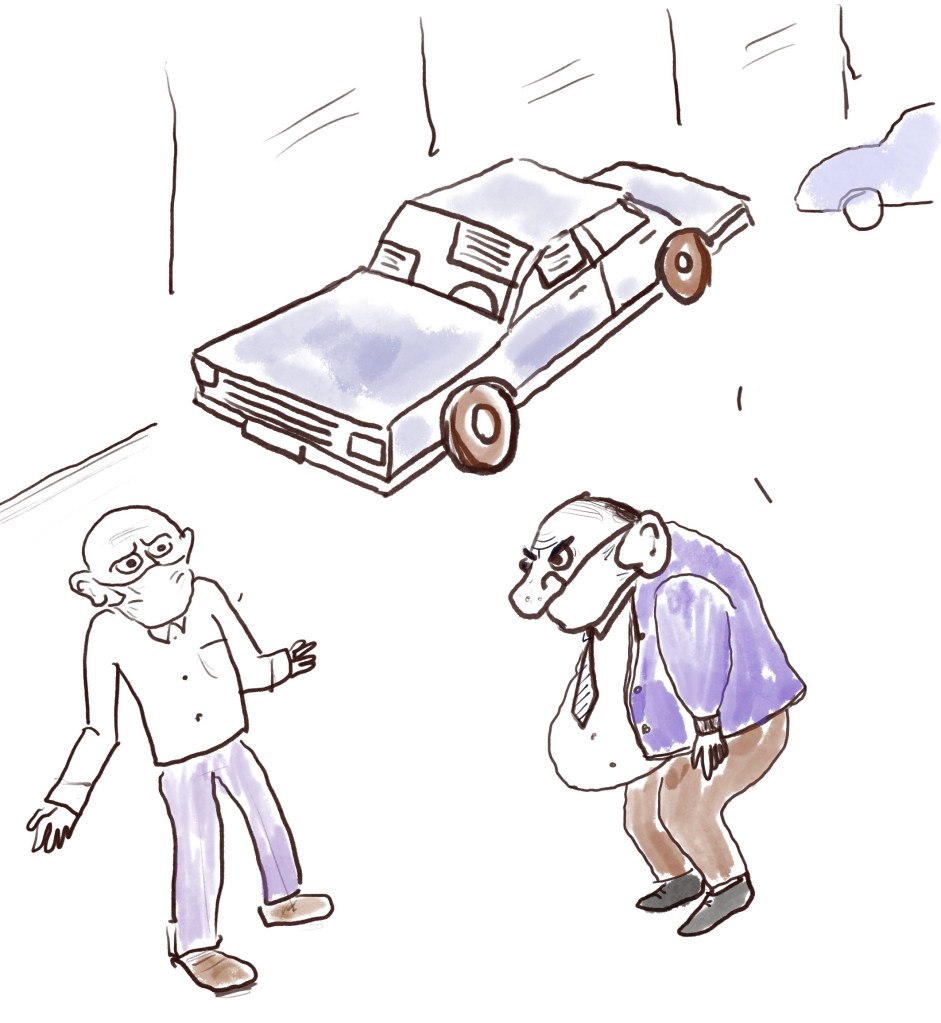
He was free on Saturdays and drove 45 minutes to this chrome and glass dealership. An older man wearing a nylon windbreaker and a soiled necktie greeted him at the door. Vito presumed the man was a service employee. He was rumpled and the ubiquitous Covid mask covered his face but not his big, reddened nose. He was bulky and drug store reading glass perched on said proboscis. He never introduced himself.

“I’m here to see Melissa for a test drive,” Vito said.

“She’s upstairs,” the man brusquely replied. “Have a seat here.”

With a ham-fisted gesture, he pointed towards a nearby desk. His shoes were scuffed and he wore wrinkled trousers. Because of Covid 19, a clear plexiglass shield lay between customer and salespeople; this barrier was a true metaphor. A few moments later, Mr. Nose reappeared with a worksheet. He then informed me he was the salesman who’d be handling the negotiations. “You’re a salesman?” Vito thought.

Dr. Di Stronzo meets Mr. Nose

“So you’re here to purchase an A5 Cabriolet,” he said in a gruff tone.

No, I’m here to test drive a convertible per my conversation with the salesperson,” Vito testily replied.

“Well, we don’t have any convertibles on the lot,” he chided.

Vito was incredulous. There was an increasing tension between the two.

“Look, I drove down here because I was told a test drive would be available,” Vito said, as his Italian temper arose. “Now you’re saying that’s untrue. What kind of dealership are you running?

“Hey Vito,” the Nose said. “All I was told was you were ready to buy.

“Oh, that’s rich,” Vito replied, his voice rising. “You want me to purchase a $53,000 automobile sight unseen. I don’t think so.”

          The two men glared at each other.  Vito did not blink.  Then came the expected.

          “I’ll have to talk to my manager,” Nose said.

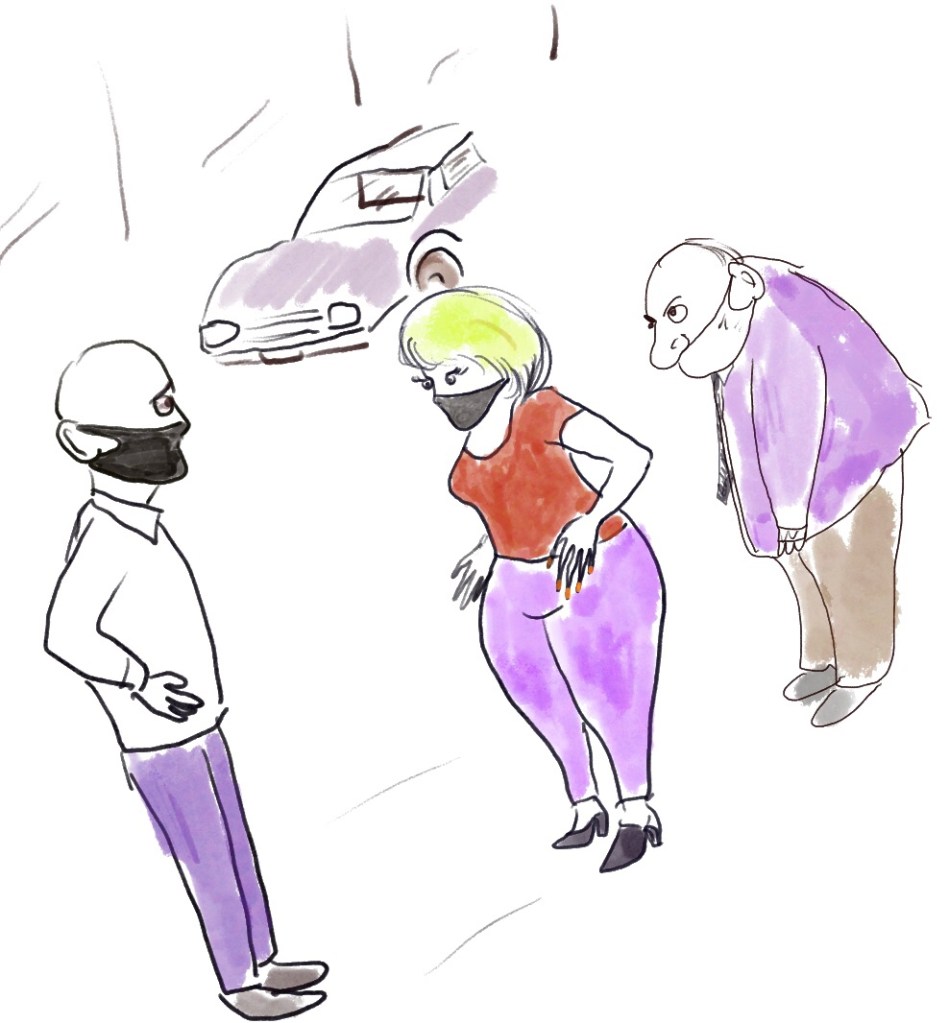
Mr. Nose and his manager, Candace

The manager, a hefty woman in her mid-30’s, arrived with the Nose in tow. She had dyed blonde hair, impressive false eyelashes, and exquisitely manicured, long French nails. The mask kept her expression a secret. Her name was Candace. In a cheerful, tone she apologized for the misunderstanding. Melissa had misinformed Vito, she admitted. She produced a sales worksheet that listed charges and total cost of the vehicle.

She told him there were no available convertibles in dealerships statewide. Meanwhile, the Nose stood silently behind the manager.

          “Well, I’m sorry, Candace, but I don’t think we’re a good fit,” Vito said without malice.  “I’ve driven here on a wild goose chase.  You’ve wasted my time.  I’ll think I’ll look elsewhere.”

          Vito abruptly stood and headed towards the exit.

          As he was leaving, Candace ran after him and said, “Dr. Di Stronzo, what can we do to make this right?  We’d like to get you into a new car.”

          “That ship has sailed, Candace,” Vito replied.  “Oh, and by the way, you should have your staff clean up their  appearance.  Your slovenly, large-nose “salesman” looks more like a Walmart greeter.” 

Vito was now a man on a mission. He returned home and resumed his search for an available 2021convertible. He called several dealerships to see if there were any available elsewhere in neighboring states. In pre-internet days, dealerships could scour inventories and often find an available make and model. He then recalled reading a recent online business magazine that stated the automobile industry, like so many businesses, had been adversely affected by Covid-19. Manufacturing and delivery underwent delays. He also remembered the article said computer chips, a vital component in modern cars, were back-ordered.

          It was 4 pm and Vito decided he’d call the last dealership on his list.  He was connected to Gloria, another female salesperson.  He expected the same rigamarole.

          “Actually, Doctor, we don’t have any 2021’s  available,” she said with a pleasant voice.  “They’re really scarce.  However, we do have a used 2019 Cabriolet in our inventory.  There’s not much difference.  You could at least test drive the car.  I think you’ll love it.”

Vito was impressed with Gloria’s delivery. She had a smooth, calming, voice, promising a soft sell. The good news was the dealership did have car, 2019, that was a reasonable facsimile.

          “I’ll drive down on Tuesday but please call me if you’ve sold the car,” he said.  “I don’t want to go on another fool’s errand.”

Tuesday arrived and Vito drove to the dealership. Gloria greeted him as he entered the agency. She was middle-aged somewhere in her mid-40s, early 50’s. She dressed professionally, was personable and created a hassle-free environment. He was required to produce his driver’s license and sign several documents.

          They walked outside and there it was.  A stunning cobalt gray Audi convertible.  It was a used lease car that was available for sale.  Gloria gave him the keys and he slid into the luxurious leather driver’s seat.  He started the car.  Gloria stood by the passenger’s door.  Vito lowered the window and said, “Aren’t you coming along for the ride?”.

          “No”, she replied.  Because of Covid  we don’t accompany customers.”

Just as well, Vito thought. He eased out of the parking lot and drove along the highway. The car was comfortable and silent except for the high-end sound system. The dashboard was an overwhelming array of lights, buttons and controls. After about 15 minutes he was sold. Yes, this was the car. He quickly returned to the dealership.

Gloria couldn’t see it but Vito was smiling beneath the mask. Next came the “discussion”. Without naming names, he told her about the unpleasant Mr. Nose experience. They discussed the scarcity of convertibles. Next came a rarity in car sales: Gloria revealed the truth.

“Well, Dr. Di Stronzo, the reason you couldn’t find a car is because they’ve stopped manufacturing 2021 models,” she said.  “If we sit here today and you want to complete the sale, it’ll be for a  2022 model.”

Mr. Nose and the other online/telephone marketers hadn’t revealed the truth. They perpetuated the longstanding reputation. Car people talked jive but Gloria possessed unusual candor.

“Actually, Dr. Di Stronzo, I couldn’t sell you a 2022 today,” she said. “Audi hasn’t released the pricing schedules.  They’ll be announced in mid-to late May.  I can contact when when I have the numbers.”

Vito had become Diogenes; he’d searched and found an honest car salesperson.

“Well, I’ll tell you, Gloria,” he said. “I appreciate your honesty. I’m impressed. It’s refreshing to meet someone like you at a car dealership. Call me when you’re ready. Never thought I’d hear myself saying it, but it’s been a pleasure.”

And with that, Vito left the dealership and drove off in his shiny auburn-colored 2013 ragtop. I’m going to miss you, he thought. It’s been a good eight year run.

Adieu Chrysler, hello Audi!

Paradise, Sicilian Style

Paradise, Sicilian Style

By

Leo de Natale

Drawing by Vince Giovannucci

Taormina, Sicily

On the eastern coast of Sicily lies a small village that has been luring inhabitants for millennia. Its name is Taormina and is located on a coastal roadway between Messina and Catania. The village is actually located more than 800 feet above the azure Ionian Sea. The views are breathtaking.

Sicily has a semi-arid climate. Warm enough to make winters bearable. In spring and fall, the sun shines daily. The only glitch is summer when the Sirocco winds blowing from Arabia bring a blast furnace of wind-intensified heat. For the rest of the year, natives and countless tourists enjoy the vistas of the sea and, of course, the brooding volcano, Mt. Etna.

Taormina has one major street. It is narrow and is actually a dead end. No automobiles are allowed access. The famous Hotel Timeo is located to the right just before the biggest surprise and treat: an ancient Greek theater. Under the warm Sicilian sun this treasure is a classic amphitheater with 50 rows of seating.

Taormina’s Famous Greek Theater

It is so well preserved the local artisans produce plays throughout the tourist season. The acoustics are still magnificent but the view is more enthralling. Perfomances are accentuated by the ocean backdrop. Plays performed there are the highlight of any vacation. It’s incredibly sensual. The smell of the salty air is combined with the aromas of nearby restaurants. During evening performances, Etna provides background fireworks.

“Rome may be the eternal city, but Taormina is the eternal town,” says tourist guide Domenico Buonfiglio. “Just think of the hundreds of  thousands of human beings who have walked along these streets since the ancient Greeks.”

Domenico Buonfiglio, tourist guide extraordinaire

In his walking tour, Buonfiglio, whose Italian accent adds charm to his anecdotes, recounts the town’s rich but tumultuous history. He was born in Rome and educated there. Italy has historically been a balkanized country, he said. After the fall of the Roman Empire and the Vandal hordes, Italy became a nation of city states and the regionalism persists. Milan is culturally different from Venice which is different from Florence. Each region has different cuisine and language, or dialect. It’s impossible for a Roman to understand a Sicilian. They speak in sub-languages.

After graduating from college, Buonfiglio’s curiosity about the various regions lured him into a career of discovering the differences in a country so rich in history and tradition. He was entrepreneurial and transferred his fascination with Italy into a tourist business. At age 56 Buonfiglio owns the largest agency in Italy. He fell in love with Taormina along the way and is the place that has captured his heart and spirit.

Of all Italian regions, Sicily has been the biggest political football. The ancient Greeks first colonized the island. In fact, many historians claim the best Greek ruins are found in Sicily, not Greece. Sicilians often debate which city has the most and the best. Most agree it’s a tossup between Catania and Syracuse. The Roman Empire succeeded Greece. Following Rome, Sicily has been ruled by Moslems, French, the Vatican and the Holy Roman Empire. Each nation left an indelible imprint of the food, language and culture.

For example, the Moors were known for their sweets. Marzipan was created in Sicily. Taormina is famous for this delectable candy.

During World War II, the Nazis occupied the town and General

Albert Kesselring established headquarters in Castelmola, a stunning hilltop town overlooking Taormina. He didn’t stay long there because the Allies invaded Sicily and der gute General hightailed it up the boot of Italy.

“Let’s put it this way, “Buonfiglio said. “The Sicilians did not like the Germans and were ecstatic when they were forced to leave. Their hatred of the Germans equaled their animus for Mussolini.”

The beauty of Taormina is its survival of all unwelcomed political regimes. It continues to provide the world with a pacific presence. The panoramic views, the warm Ionian water, the smell of lemon trees that grow wild there and the blessed sun remain unchanged.

Sicily is an island of many paradoxes. It is Italy’s largest producer of citrus fruits. It also produces wheat, nuts and fish, especially tuna and sardines. Of course it is infamous for the “mano nero” – the black hand- , the original term for the Mafia. Mt. Etna is one of the few continuously active volcanos. Ironically its volcanic ash combines with native soil and is perfect for producing hearty, robust wines.

“There’s something for everybody in Italy but paradise is reserved for my beloved Taormina,” says Buonfiglio with a playful smile.

Brownie

Brownie

By

Leo de Natale

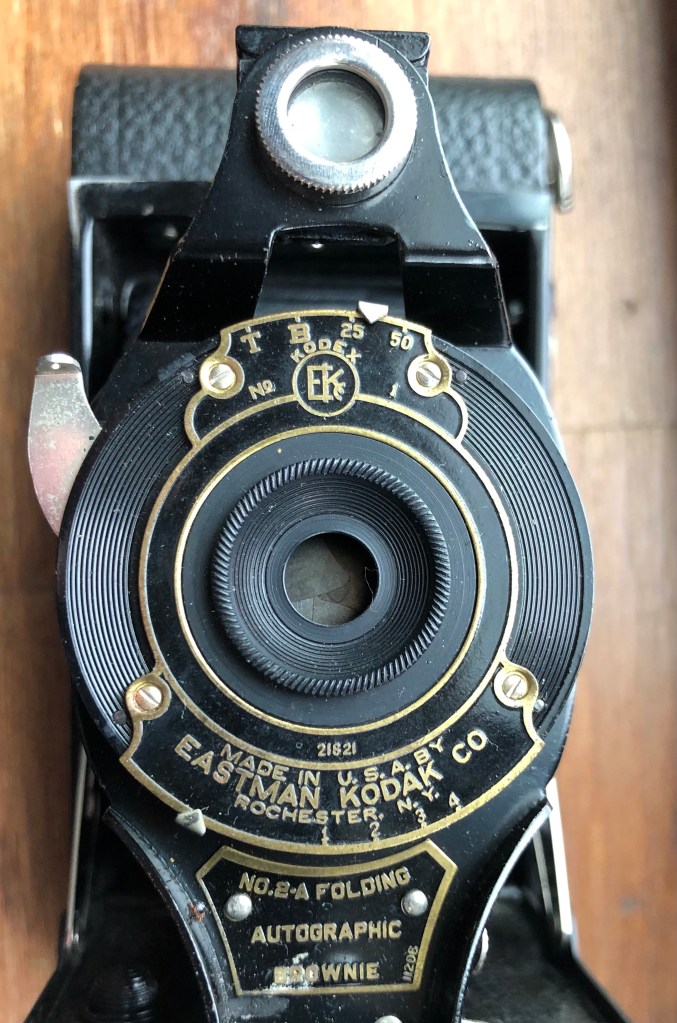
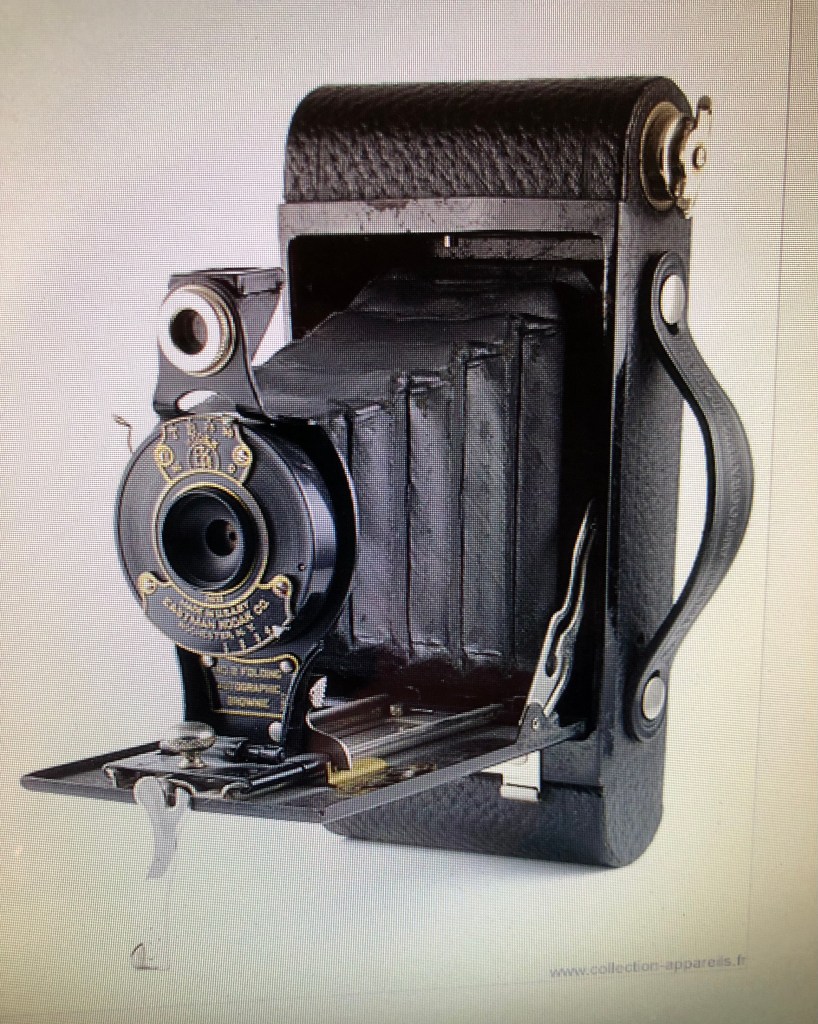
Kodak Brownie Camera circa 1930

I was rummaging through some cardboard boxes in my attic last week. They’d been stored away after my wife and I sold our property in Belmont, Massachusetts three years ago.

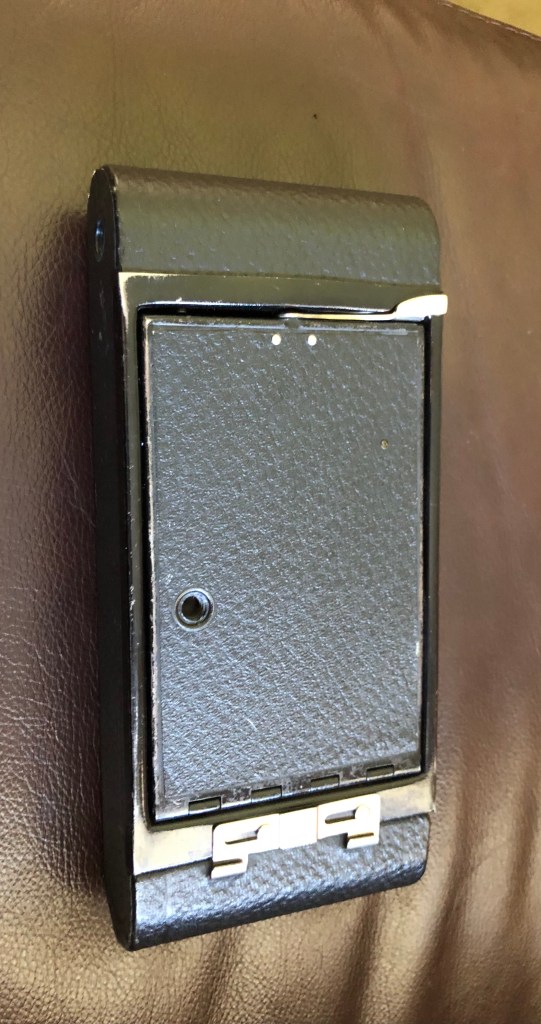
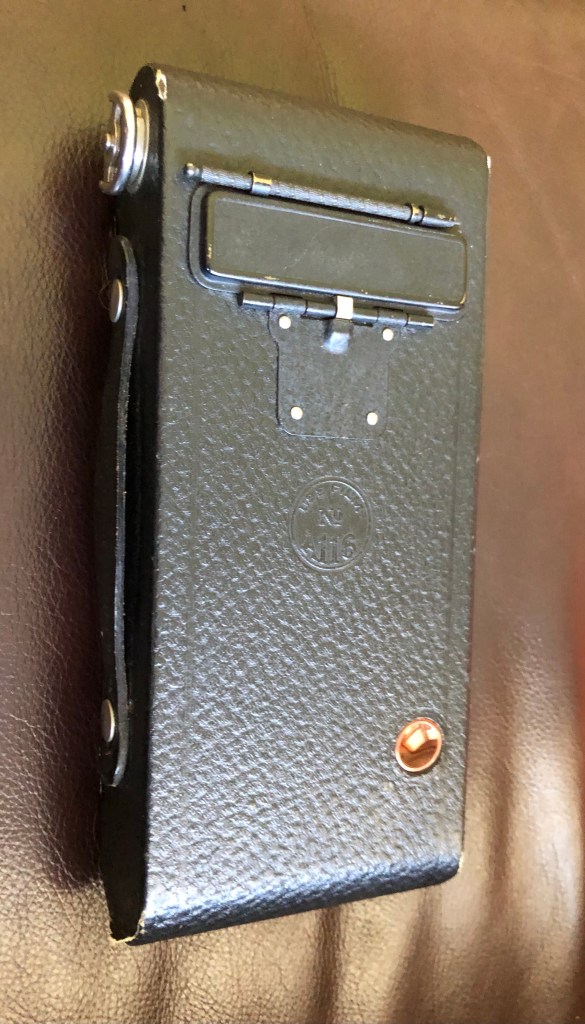
Near the bottom of one of the boxes lay a black, rectangular device with rounded edges. I smiled and reacted as if I’d discovered gold. The “device” was my mother’s “No. 2A Folding Autographic Brownie” camera. I was overcome with a wave of nostalgia. So many family paper photographs were taken with this camera. Photos of my parents’ wedding, my brother’s First Holy Communion and me with dressed up for Easter and missing my two front teeth.

The Brownie was compact

My grandmother had given Mom the camera as a gift for her 16th birthday. It was 1930. Eastman Kodak’s Brownie camera was the photographic equivalent of the Ford Model T – Kodak made owning a well built camera that middle class Americans could afford. When first introduced in 1915, it sold for a whopping $6! The Folding Brownie was the early prototype of hand held cameras that would evolve into smaller, lighter, more compact cameras. Kodak Brownie cameras became similar to such eponymous products as Kleenex tissues, Thermos bottles and Mack Trucks. The Brownie was the precursor and to modern devices: Polaroid, Leica, Hasselblad and Nikon cameras.

Physically, my Brownie is heavy and weighs about one pound. It is a strange looking device. A sliding lever opens and the camera’s lens stares at you. A locking device is squeezed and the photographer pulls the lens and its accordion housing made of fabric upward into locked position. The lens has a view finder and another lever is clicked. Aim and shoot developed a new meaning. The photographic image flashes on to the underlying film. Unfortunately photograph film is no longer available so the Brownie sits there, a desiccated antique of another era.

Camera ready to snap photographs

When you pick up this camera, you are holding a piece of American history that signifies a different era, one where American entrepreneurialism was at its zenith. Kodak was created in 1888 by George Eastman and Henry A. Strong. The company, Eastman Kodak, originally manufactured photograph plates for the old-fashioned 19th Century cameras. Civil War photographer Matthew Brady used such devices. The company was headquartered in Rochester, New York. Eastman was clever and tinkered with creating a handheld camera that would utilize photosensitive “film”. The Kodak empire was created when the company devised a dual marketing strategy: manufacture the camera and the film. Laboratories were created across the United States and capturing life’s images on a piece of shiny paper was integrated into American life. Camera shops were created. People could purchase film and the stores, pharmacies and department stores.

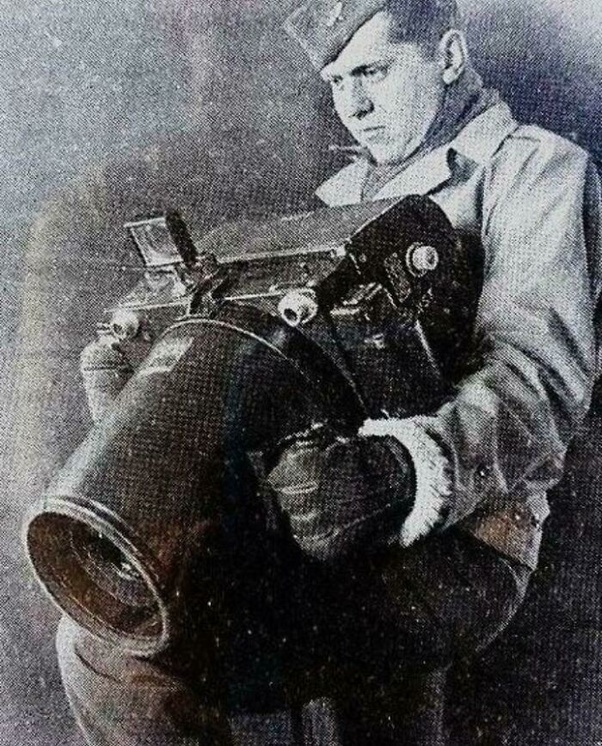
Of course the Hollywood film industry was a highly important client, especially with the introduction of color movie films that burst upon the scene during the 1950’s. The “Kodak moment” was born and survived for 100 years. Paul Simon’s famous song “Kodachrome” was a tribute to a product that many thought would never cease to exist. There’s a famous photograph of Kodak’s Monster Brownie. It was a huge camera developed for the U.S. Army’s Air Corps during World War II. The camera was a Brownie on steroids. It was used for aerial reconnaissance and manifested how Kodak was such an integral part of American history.

Now THAT’s a camera! Air Corps Kodak used in World War II Air Corps reconnaissance missions

Near the end of the 20th Century photography  transitioned from analogue film to digital.  All cameras were digitized  which eventually led to the amazing iPhone where clear, pixelated photographs that are literally within hand’s reach.

Unfortunately, with so many famous corporations the so-called Peter’s Principle again proved true. During the last part of the 20th Century, Kodak executives, unlike Apple and Microsoft, lacked foresight. They were reluctant to embrace the new kid on the block, digital photography. They could not accept this new innovation. Delving into the digital market would affect the highly profitable film business.

 They dilly-dallied and  were too late.  Analogue cameras suffered a quick death as did manufacturing film for products that were being abandoned.  There would be no more film processing at Seattle Film,  the local drug store or photography shop.  Kodak did introduce digital devices but the products weren’t popular and the camera industry eventually was ceded to the Japanese Nikons and Canons.

Eastman Kodak filed for bankruptcy in 2012. It survived but is a shell of itself. The company has switched to digital imaging and photographic equipment, materials and services. Kodak has also quizzically delved into the pharmaceutical industry. It is still headquartered in Rochester but tens of thousands of Kodak employees lost their jobs and careers.

As with much in life, for every change and advancement in our lives, there’s always something lost.  Anyone under age 40 will never experience the fun of using boxy, clunky hand-held cameras that were omnipresent at family gatherings.  Or will they ever experience the blinding light of camera flash bulbs.  They’ll probably won’t understand the artistic skill of photographer/environmentalist Ansel Adams whose famous black-and-white masterpieces were created with techniques no longer existing.  Such is the detritus of modern evolution.

After I was finished with my nostalgia trip, I rubbed my hands over the camera’s textured surface.  I sniffed the camera’s bellows – it always had a distinctive and pleasant odor.  The camera was solid and well made.  It is a tribute to mankind’s ingenuity.  It introduced the world to a medium where memories were made and preserved for future generations.  It is a touchstone to the past, present and future.

For one last time, I caressed the No. 2A Folding Autographic Brownie, lovingly placed it into the box and returned to it to my attic. Au revoir, ciao, auf wiedersehen, goodbye. Click.

Der Kaiser

Der Kaiser

By
Leo de Natale

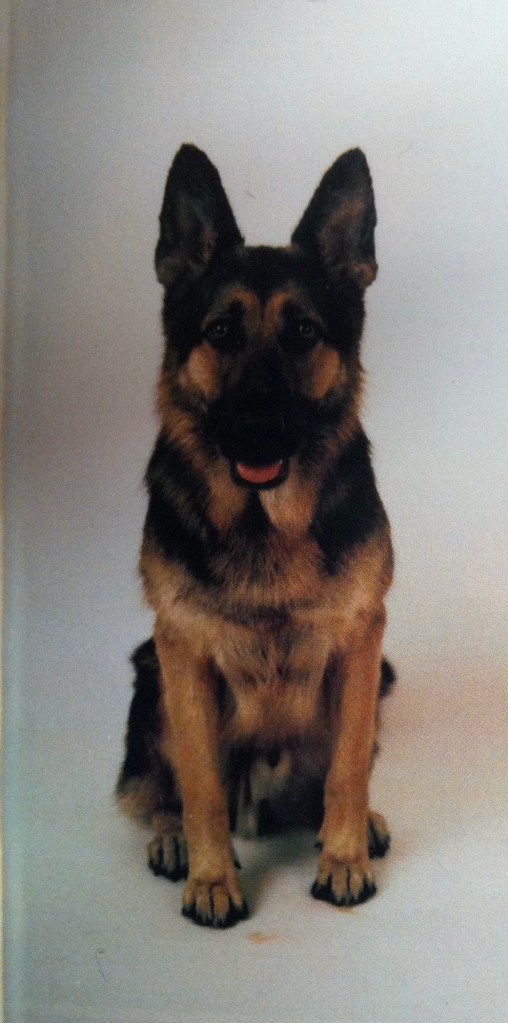
Kaiser

He is age twelve and old. His muzzle is gray, has white whiskers and his body has changed. His name is Kaiser and he is a German Shepherd Dog. His life has developed a rhythmic pattern. Eat, sleep and tend to bodily functions. Despite his age, Kaiser is a happy dog. He gnaws his rubber peanut toys, constantly follows my wife Kathy-he’s a Momma’s boy- and is limited to increasingly shorter walks. No more romping around in our fenced backyard. His right rear leg is arthritic and loss of locomotion will probably be his undoing.

For now, we embrace the Serenity Prayer’s famous line, “Living One Day at a Time”. Kaiser weighs 70 lbs. and is considered a small male. His coat is called sable, not the Rin Tin Tin classic black and tan. Sable shepherds are more lupine in appearance; many people are intimidated by them. He is, in fact, though, a very goofy dog and loves to approach strangers. At our veterinary clinic he is treated like a rock star. Most of the staff are females and adore Kaiser. Before the Covid pandemic we’d watch him flirt with the ladies as he obligingly kissed and nuzzled them.

Kaiser is a rescue dog. We adopted him as a two-year-old. He was living in a New Hampshire double-wide trailer park. His bloodline was superb and his American Kennel Club(AKC) registered name was “Vino von Valtenstein”—breeders usually assign a letter to each litter. Vino was, you guessed it, from the “V” litter. Once purchased, he became Kaiser, a far more suitable Teutonic name. We know nothing about his first owner except he was scheduled for imprisonment on drug charges. The owner paid for basic obedience training but most days Kaiser was chained to a tree within the trailer park.

Our breeder Karen found him and whisked Kaiser away. There was a familial link. The breeder had sold us Kaiser’s aunt, Gundi. The physical resemblance between the two was uncanny.

Aunt Gundi

“Kaiser is a good boy but needs some socialization,” Karen said. “He hasn’t been abused, more like neglected and not thoroughly trained.  He does know the basic commands  and  I think he and his aunt will get along well.”

We introduced Kaiser and Gundi at Karen’s training center. Female dogs usually dominate males and Gundi was no exception. With a few sideways glances, a couple of growls and some neck biting, she put Kaiser in his place. A bond was created and the pecking order established. The rescue fee was modest and we blissfully drove home. It was a treat seeing four canine ears in the rear view mirror.

The first priority was a veterinary evaluation. Kaiser had received the usual canine vaccines. He was an intact male and neutering was one of the first things on the to-do list. However, our veterinarian, Dr. Michaels, noticed two glaring problems.

“Our buddy  here has fleas”, he said while distancing himself to avoid infestation. “He needs a pesticidal bath ASAP.  This is common in dogs with his background.”

Dr. Michaels inspected his ears and discovered infections. Antibiotics and a thorough cleaning were necessary and through his lifetime the ears have been a continual issue. We still use special cleaners and medicinal drops.

I asked him about the neutering surgery.

“Oh, we can wait on that,” he said with a laugh. “His balls aren’t going anywhere.  Let’s first get the hygiene and medical issues squared away.”

Dr. Michaels said Kaiser was in pretty good shape.  His legs and hips were sound   — many German Shepherds have congenital hip dysplasia.  We should have good luck with him, he said.  Aunt Gundi and Kaiser became pals and chased each other in the backyard.

My wife and I have owned eight shepherds most of whom had a companion. I guess many persons in our neighborhood were intimidated by the sight of shepherds walking in tandem. Kathy is a professional dog trainer and all our dogs were friendly but their presence and bearing could be off-putting. According to the American Kennel Club’s breed guidelines, German Shepherds have “a certain aloofness that does not lend itself to indiscriminate friendships”. As the years passed many neighbors felt more comfortable but others still feared them because of traumatic childhood experiences. Breeds such as German Shepherds, Doberman Pinschers, Rottweilers and Pit Bulls have developed bad reputations.

During her long career, Kathy has learned the bad-boy dogs can be legitimate threats. The issue usually stems from poor genetics, lack of socialization or owner ignorance.

Also, buying purebred dogs costing $1,000 to $5,000 has prompted many people to adopt shelter dogs that have a much lower price tag. Dog bites sometimes stem from rescue dogs of unknown backgrounds. They are often from Southern states. Many of such dogs are Pit Bull mixes and owners take risks with these dogs of questionable provenance.

We have always fancied German Shepherd Dogs and have been lucky to own good ambassadors of the breed. Kathy often brought our dogs to her basic obedience classes. They were calm, non-reactive and friendly. One shepherd, Rex, had the classic look and majestic behavior. He posed for famous Polaroid photographer Elsa Dorfman who captured his regal but friendly nature. Puppies and owners would gather around Rex when he visited the puppy kindergarten classes. He was very approachable.

Handsome Rex

Kathy and I are at a crossroads. Boss Lady Gundi unfortunately died from a brain tumor in 2017 and Kaiser has been flying solo since. He will probably be our last shepherd. Owners grow older and age dictates what you can and cannot do with dogs, especially with large breeds.

Our attitude is to enjoy Kaiser for as many days, weeks, months he’ll be with us. We’ve all settled into a routine, especially since the Covid 19 virus arrived. Having a faithful dog has helped save our sanity. As he has aged, Kaiser has become an even softer more affectionate dog. He stares at Kathy and me with loving brown eyes that reveal developing cataracts. He is also stone deaf.

He still enjoys car rides but cannot jump into the back seat.  He now requires a ramp when loading and, once inside, loves to stick his head out the passenger window.  Many drivers passing us smile and wave.

The age expentancy for large breed dogs is between ten and twelve years. Kaiser is approaching the right parenthesis of his life and that is why we cherish every day he’s with us. We know the day will come for the long good-bye. We dread the inevitable. In the film Gladiator actors Djimon Hounsou and Russell Crowe’s Maximus ponder the brevity of a warrior’s life. Houndou says “We all will die….but not yet.”

In memory of Sarge, Buzzy, Helga, Rex, Dixie, Roxanne and Gundi.

Epilogue: The long good-bye occurred August 20, 2021. Kaiser was euthanized after degenerative spinal myelopathy affected his right rear leg. We are heartbroken and will miss him terribly.

Shine My Shoes

Shine My Shoes

By

Leo de Natale

A New York City shoeshine boy, circa 1930’s

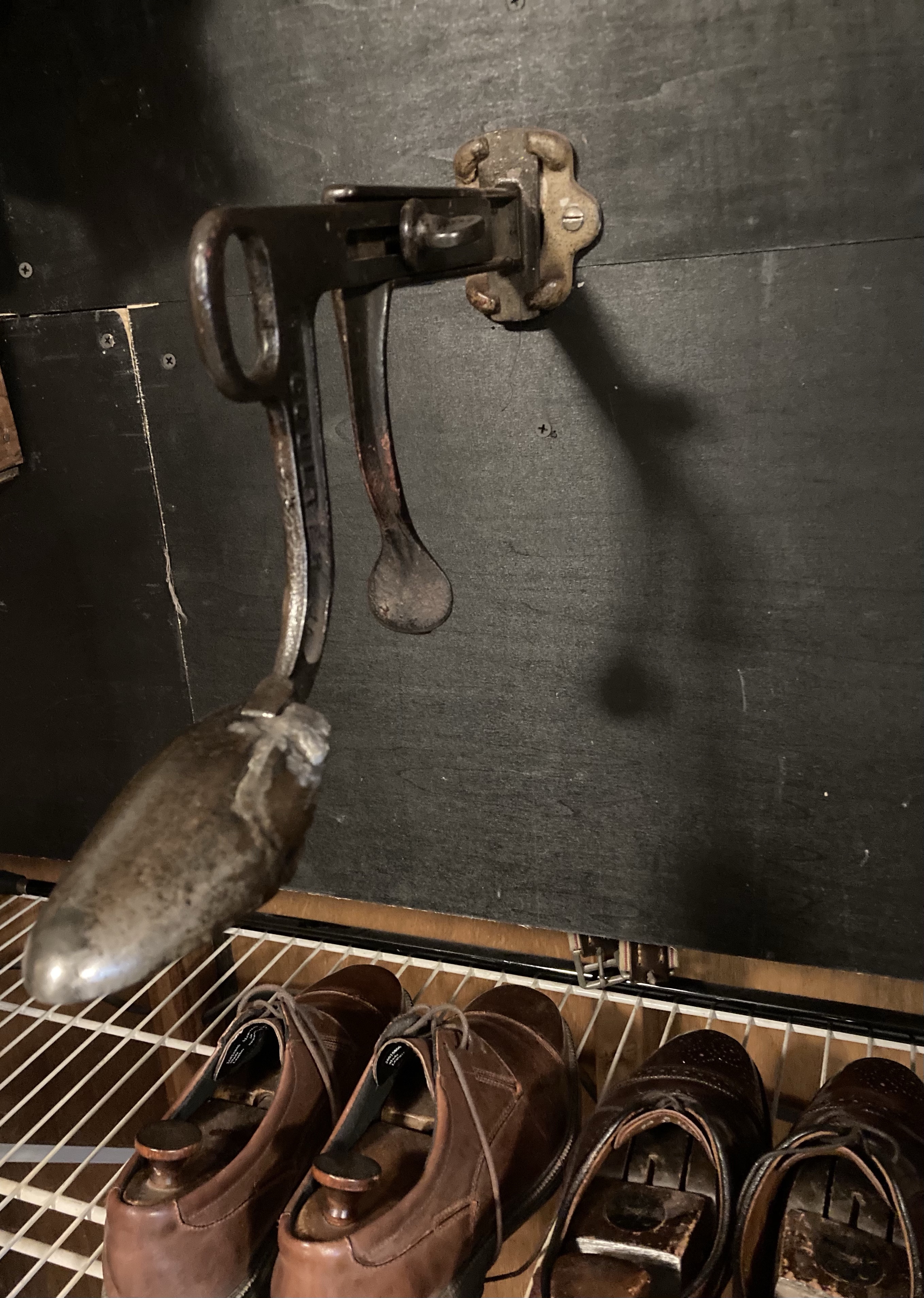
Attached to a basement wall lies a family heirloom. It is not fine china, a framed portrait or a family coat-of-arms. The inheritance is a homely, rickety cast iron shoe shine rack that has served three generations. It is approximately 100 years old and is still used to polish my shoes as it was it for my late father’s and Grandpa Joe’s. The beauty of this family keepsake is its durability. Even today, the metal device slides along a track and stretches shoes. A large wing nut locks the device and the ritual of polishing shoes begins. Ten decades of service and, to my delight, this device still functions.

The author’s Coulter Manufacturing, Inc. shoe rack, patented 1904

I’m a sentimentalist and derive much pleasure from using something old that pertains to an activity, shining shoes.   Caring for footwear draws little attention in the year 2021.  Everything, including wardrobe,  has become casual.  Many associate shined shoes with several  dubious groups: politicians, bankers,  lawyers and Wall Street denizens.

As with so many aspects of life today, the pandemic has affected the simple act of shoe shining.   I haven’t worked since March 2, 2020 and was forced into indefinite retirement.  My elegant Allen Edmonds shoes lie dormant on shelves with, as music legend Chuck Berry would say,  no particular place to go.  They merely collect dust.  I must confess that during the past year, I occasionally polished the shoes for a simple reason: nostalgia.   It is a rite that has followed me my entire life.

 My grandfather was a Sicilian immigrant. He was a barber who spoke no English when he arrived in America.   I barely remember him but I do know he was a proud man who had an innate sense of style and physical appearance.  There’s a family photograph of Grandpa wearing a bowler hat, a vest with pocket watch, a carefully groomed mustache and highly polished shoes. 

How a person presented himself was very important in Italian culture.   Both grandparents were proud of their five children and despite living through the Great Depression, they maintained a sense of style and decorum with the family.   The shoe shine rack was always present and used during those years.

Within my family, using the  rack  became second nature.    Although I never considered the routine demeaning,  within society shoe shining sometimes had a negative connotation.  Some would refer pejoratively to shoe shiners as “bootblacks”. The inference was their job lay with social inferiors.  Throughout major cities, immigrant kids gathered at railway stations prepared to  shine shoes on city streets, in subways and at hotels.

In a famous scene from the movie Goodfellas, a Mafioso insults actor Joe Pesce’s character, gangster Tommy “Spitshine” DeVito. The “made man” ridicules Pesce for being a shoe shine boy in his youth.

He yells, “Now go home and get your  fuckin’ shoeshine box!”  Pesce is livid, hurls expletives and with the help of fellow actor Robert De Niro, the Mafioso is beaten to death.  Poor optics for shoe shiners.

The above scene was fiction and had nothing to do with the simple act of improving one’s physical appearance.  For me, shining shoes was simply an integral activity instilled by my father.   As a child,  I watched Dad as he rubbed his shoes with a liquid cleaner.  Using the shoe shine rack he would then apply aromatic shoe polish, brush the shoes and then buff them with a cotton nap cloth.

Shoe polish has a clean scent.  It is composed of shea butter, and carnauba and bee’s wax.  Turpentine is also included and gives the polish its distinctive aroma.  Dad would often apply saliva that would provide a mirror-like sheen to the shoes.  Hence the “spit shine”.  Even today, shining shoes provides a pleasant and olfactory memory.

Two Australian brothers developed the modern shoe polish named Kiwi (one of the brother’s wives was a New Zealander).  The product was introduced  prior to World War I.  The British and American soldiers were expected  to complement their uniforms with polished shoes.  Kiwi became the unofficial military polish.  As part of the industrial revolution, mass produced footwear became affordable.   I occasionally sift through fading family photographs taken during the big four Italian holidays: Thanksgiving, Christmas, St. Joseph’s Day and Easter.  The photos become interchangeable.  The adults were dressed in their finery, the many cousins were wearing a shirt, tie and, of course, shined shoes.  The family uniform.  Patriarchy  ruled.

As I grew into adulthood, proper grooming  also included wearing clean starched shirts,  tasteful neckties and subtle after shave colognes.

We are, however,  living in an era of relaxed mores.  Covid 19 has increased style changes.   “Working remotely” has lowered  sartorial standards.  Warmup suits and Uggs slippers have supplanted jeans and  L.L. Bean flannel shirts.  Men don’t shave and women are less concerned about hairdos and makeup. Why bother with blush and lipstick if a mask is covering your face. And there’s certainly no need for polished cordovan wingtips in the family den.

When this national nightmare is over, employees will eventually return to office buildings.  Normalcy will hopefully return.  Finally seeing each other’s faces will be a welcome sight.  Commuter traffic jams will resume and the office environment will reappear.  Slippers and  flip flops will be left at home.

Dress codes vary by company standards.  Many high tech firms haven’t objected to men’s rumpled shirts and trousers or women’s sweatshirts and spandex pants.

Regardless of this dumbing down in the workplace an employee’s physical appearance eventually makes a difference. According to a New York University psychologist, it takes only seven seconds for employers to assess their first impressions of job applicants. And in that time an interviewer can also make up to eleven initial judgments. Interestingly, the researchers found job candidates’ footwear is the first item noticed. Does a man wear polished Salvatore Ferragamo shoes or well-worn Nike Airs? Do women wear Manolo Blahniks or black low-cut canvas Chuck Taylors?

The research shows scanning a person’s physical appearance paradoxically starts from toe to head.   In today’s world, wardrobe probably has less significance than 20 or 30 years ago.  There’s a famous line in playwright Arthur Miller’s Death of a Salesman.  Referring to salesman Willy Loman, the character Charley states: “He’s a man way out there in the blue, riding on a smile and a shoeshine.”

I have often thought of that  passage as I descend into the basement and place my shoes into the rack and continue the ritual started long ago.    Enjoying the redolence of the shoe polish,  I hope Dad and Grandpa enjoy my homage to them and what they taught me about shoes and life.

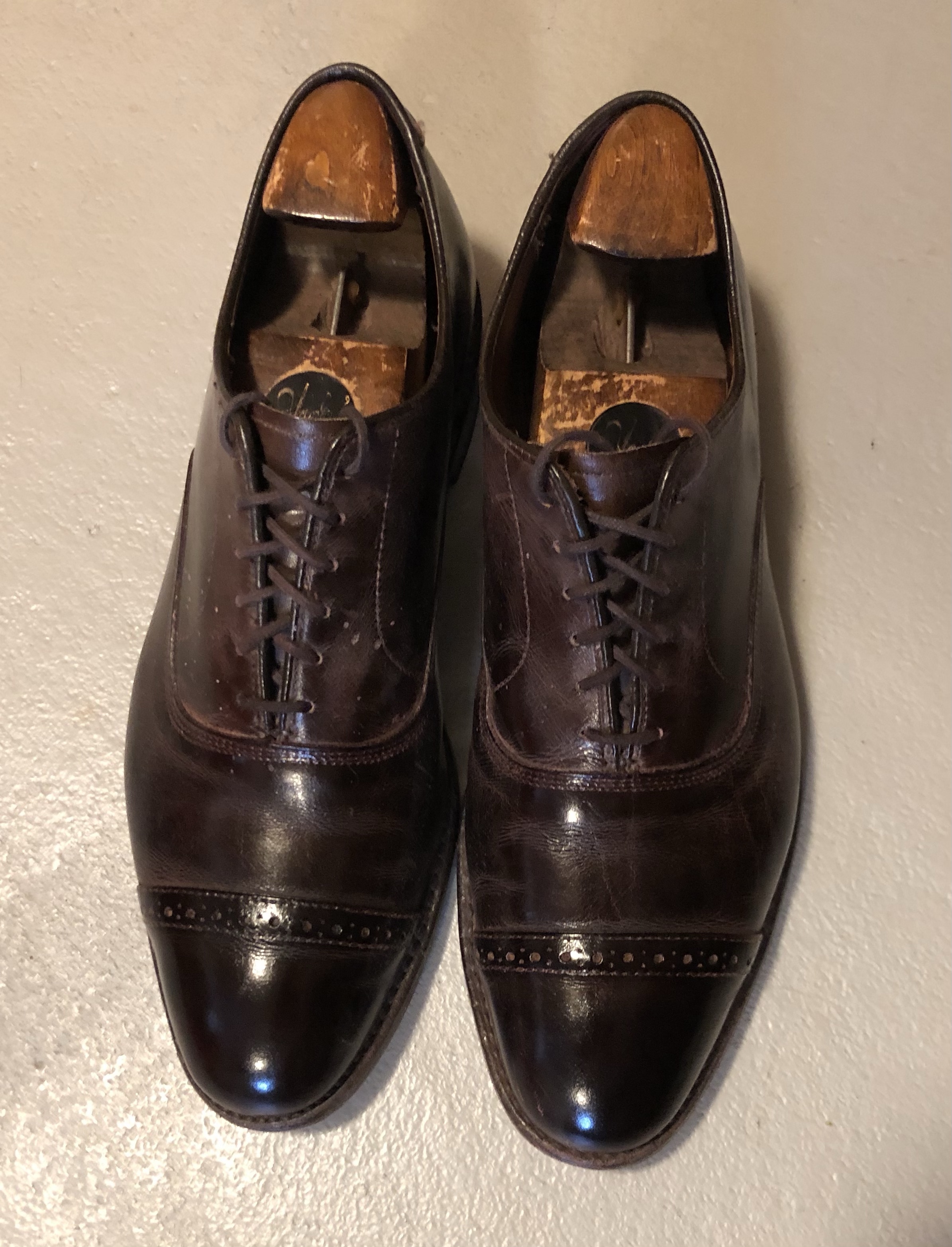
The author’s “Fifth Ave.” Allen Edmonds shoes.

Out of the Inkwell

Out of the Inkwell

By

Leo de Natale

Illustration by Vince Giovannucci

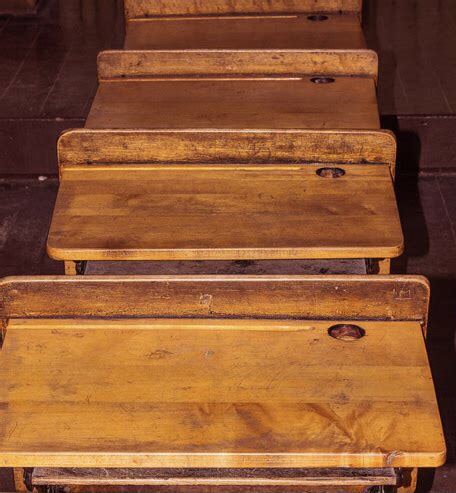
Circa 1950’s School Desks With Inkwell Holes

Daniel Butler Elementary School, Belmont MA

          “Good morning class,”  Teacher Mildred Gale said to her freshly scrubbed fourth graders.  “Today we start our penmanship exercises.  We’ll be using the Rinehart method.”

          Miss Gale was  dour and a character from Central Casting.  She wore rimless eyeglasses; her triangular face possessed a priggish mouth that rarely smiled.  She wore no makeup and her hands were unadorned with jewelry or nail polish.  Her dresses were matronly – the style you see in Vermont Country Store catalogs and, of course, there were the  obligatory sensible shoes.  She was, shall we say, not warm and fuzzy.  Miss Gale was the quintessential old maid.

          “All right class, let’s take out our pens and begin writing,” she said.

Miss Mildred Gale

 Public schools had universal hierarchy.  Grammar school was kindergarten through grade 6.   Miss Gale taught at the Daniel Butler school in Belmont, Massachusetts , a Boston suburb.   Junior High, an age group where male and female hormones exploded was grades 7 through 9.  High school included grades 10-12.  Then it was off to college, the military, or the trades.

An accompanying inkwell:

“I detest sloppiness when it comes to writing,” she’d sneer.  “There is no excuse for writing too fast or too slow.  Both extremes will cause messiness.  An even pace is the best way to write.  Do you hear me, people?”

Of course most students did smudge after leaving an ink puddle after a cursive letter.  With the Rinehart Handwriting System, the T’s, F’s and S’s were the usual culprits.  Once the smudge occurred, kids would grasp the blotter and try to absorb as much ink as possible.  The botched writing assignment would incur Miss Gale’s wrath.  Many kids would earn only a middling C grade in penmanship.  The writing courses were taught in all  grammar school grades.  Most students would  arrive home with black ink stains on their fingers – or, worse, their clothes.

Fast forward to today.  Miss Gale would be shocked at the classroom curricula.  She’d discover a completely alien environment.  Slate blackboards and chalk have been replaced with whiteboards and erasable  Sharpie ink pens.  There’d be no desks with inkwell holes or ink and stick pens.  Introduced in the 1950’s, ball point pens increased in popularity and eventually replaced fountain pens. Penmanship would be abandoned from school curricula.  Students today no longer write in cursive hand writing.  Everybody prints.  For anyone under age 40, written signatures are extinct. 

And yet there are people who cling to yesteryear.  Fahrney’s, a Maryland –based company, has survived and specializes in fountain pens.  The pens vary considerably in price.  A Parker or Cross pen can be purchased for less than $100.  Mont Blanc, a German pen company, manufactures fountain pens that are considered the Rolls Royce of writing instruments; many many Mont Blanc pens cost more than $1,000.  Prices increase when 18k gold nibs are used.

Boston has several stationery stores that still sell medium to high-end fountain pens.

“Yeah, the fountain pens are a niche market,” said Buster McGee, owner of With Pen In Hand stationers. “We have some customers who’ll purchase five or six pens at a time. Penners can sometime border on being fetishists.  They want different nib widths and different colored inks.  Peacock blue, for example has made a comeback.  It was really popular in the 50’s but black and blue inks are still the main colors.”

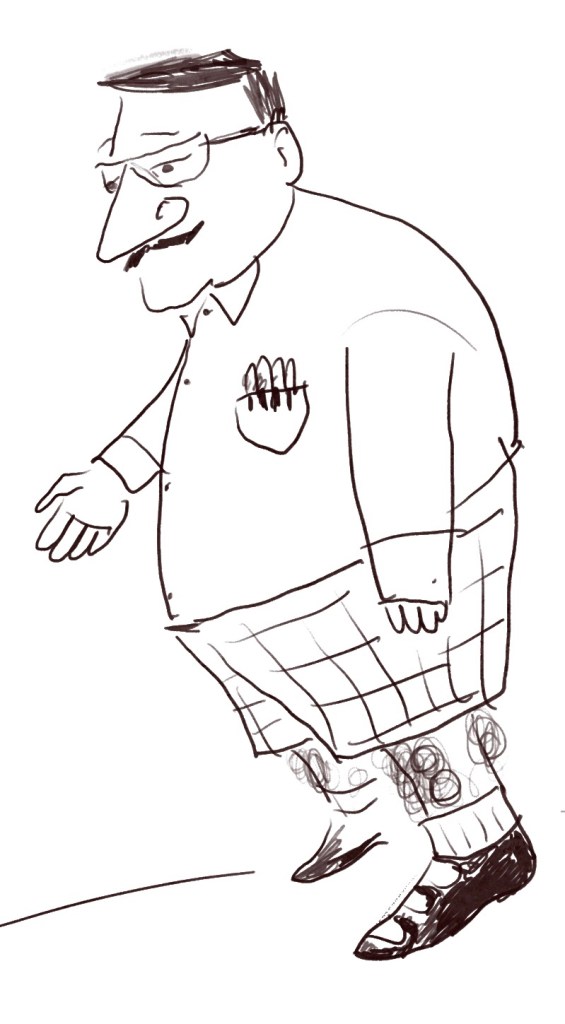
McGee is a classic stationer.  Tall and lanky, his face is adorned with a waxed handlebar mustache.  He wears three piece suits.  The necktie is highlighted by a diamond stick pin and his vest has a chain attached to a gold pocket watch.  His shoes are polished.  He’s a dandy and if it were 1910, he’d probably be wearing spats.  His persona fits perfectly with someone who uses and sells fountain pens.  In fact, he writes with  a  Mont Blanc DeLuxe fountain pen with a rhodium nib.  The pen costs $985.

He said fountain pen popularity during the past 40 years has neither increased nor decreased.  The demographics are tilted towards older men and women.  Most people under 40 are oblivious to such an alien device.

“Kids today see a fountain pen and think of their parents talking about rotary telephones and Rolodex file cards,” he said while shaking his head. “They don’t have a clue.”

According to McGee, the pens have gained increased popularity in the Middle East and Asia.  He’s sold many German Mont Blanc and Pelikan pens to Chinese students who attend area colleges and universities.

McGee said there are  many famous names still associated with the American fountain pen industry: Parker, Esterbrook, Schaefer, Cross and Waterman.  These  companies continue to manufacture pens.  Most pens are made from acrylic plastic; the more expensive use alternate materials ranging from wood, brass, silver or gold. Many also manufacture the water-based ink.

Fountain pen devotees  consider them “instruments” rather than pens.    There is a ritualistic component when one decides to write with fountain pens.

The ink bottle is opened and the pen’s rubber sac is squeezed.  The ink is sucked in and the pen is ready for use.  There is an atavistic pleasure in writing with pen and ink.  Nib widths vary with the writer’s style.  Some prefer the tight clean lines of a fine nib; others use the middle-of-the-road medium nib.  Still others love the bold, broad cursive lines on the blunt nib that blend on paper with a flourish.  Of course, there’s the extreme art form of calligraphy.

In an era where we are surrounded by tools of the computer age—cells phones, lap top computers and Bic ball point pens, it’s nice to know there’s an oasis of a different age that survives with purists and afficianados.  Men and women who cling to the old ways will still enjoy the feeling of a nib gliding across smooth Clairefontaine writing paper. This is a form of communication that transcends centuries.  Pen and ink. Pen and ink.

N.B.

The title of this essay, Out Of The Inkwell,  is homage to an eponymous 20th Century cartoon series spanning the years 1918 to the 1930’s.  Using a stick pen, illustrator Max Fleischer created many black and white cartoon characters.  His most famous characters, Betty Boop and Popeye, still remain pop culture icons.

Suet

Suet

By

Leo de Natale

Illustrations by Vince Giovannucci

          We are living in an age of intolerance. Political, religious, cultural.  As each year goes by the schisms seem to widen.  The divisiveness has been exacerbated by a plague that has gripped the world for nearly twelve months.  Isolation, fear, depression, suicide and wide-scale unemployment have added fuel to the fire.

We have all witnessed the change. Can’t do this, can’t do that, can’t eat here, can’t go there. It’s incredible how swiftly life as we know it has been transformed. People are searching for diversions to pass the time that will aid us during the plague and pestilence.

Me? I was fortunate to receive a Christmas present from my sister-in-law, Terri. It was a suet bird feeder and one slab of her homemade greasy square of lard and crunchy stuff that would create its own Broadway show.

          Neither my wife nor I had ever had a suet feeder.  We used black sunflower seeds which attracted cardinals, juncos and  mundane sparrows.  A mouse infestation inside our house several years ago freaked us out.  Our birdwatching promptly ended.

          We’d hired a pest control company.  “Lose the feeder and the vermin go away,” a technician said. “Feeders are mice magnets.  I’m gonna install the poison boxes in your basement JIC.”

          Out of isolation and boredom, we succumbed to the temptation of luring songbirds to our deck.  It had been a couple of years, we thought, and the company performs periodic checks for mice and the usual summertime pests, carpenter ants.

Up went the feeder and we waited. And waited. After about three days, it was JFK International Airport! Downy Woodpeckers –never had seen them before—Blue Jays, Juncos, Starlings and Chicadees. It was as if we’d opened a crack house!

A Starling

          For several days, we sat in the dining room overlooking the back deck and reveled in watching our avian friends eat with gusto.  There was a hierarchy.  Blue jays, the biggest bird at the feeder were the schoolyard bullies.  “Screw!” they’d say as they pushed away the little guys. 

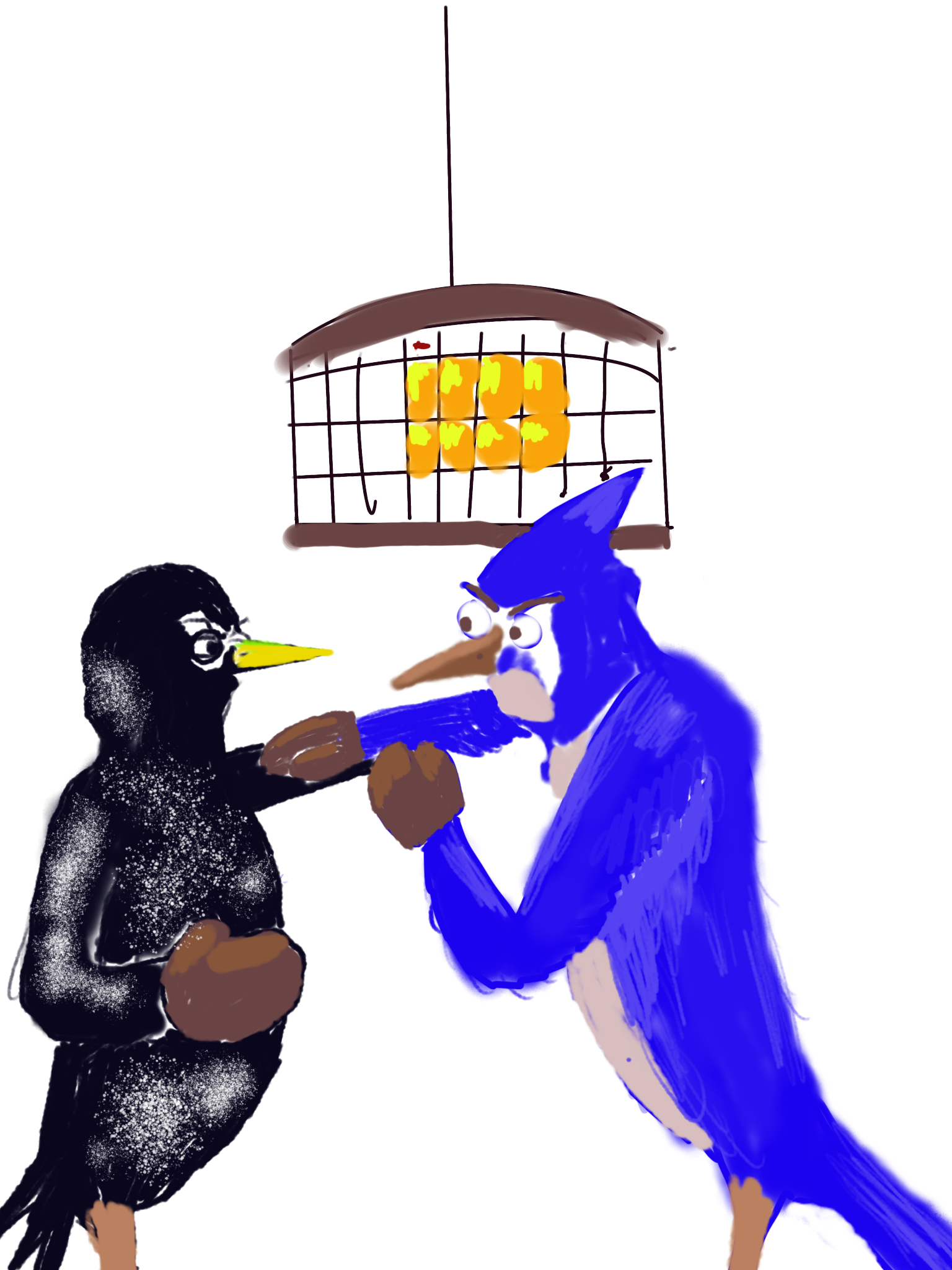
Or so we thought. Turns out the Starlings were the street gang members. It wasn’t uncommon to observe them with their winter plumage of black with white flecks. These thugs began pecking away at the suet. To our surprise, even Mr. Blue Jay gave obeisance to them. Three or four Starlings would assault Jay with their shiv-like beaks. Jay would fly away and wait in queue.

 “Hey, this is my turf, asshole!” one Starling would squawk to another.

 The pugnacious Starlings  battled amongst themselves for position and reminded me of the juvenile delinquents in the film Blackboard Jungle.   Woodpeckers  – they have this beautiful red stripe on their heads –  and Juncos with their gray bodies and white chest – would patiently wait their turn.   Blue Jay would then reappear  and shoo away  the Juncos.  They, too, were very bellicose among their species.   One Junco gave two vicious pecks and resumed feeding.  Several minutes later it was he who was kicked off the greasy mountain.

The Woodpeckers were solitary, only one bird at a time. They were patient and would wait until the crowd thinned. Each species had an arrival and departure time. It was always survival of the fittest. Some arrived the in morning, others in the afternoon.

We began using binoculars and would observe the birds’ eating habits. Some jabbed away at crunchy peanut butter; others preferred cornmeal. Sometimes it was difficult to determine which recipe component was preferred. The suet’s main ingredient was leaf lard, the unctuous glue that was mixed with the various nuts, cornmeal and sugar. My sister-in-law had included the recipe but warned It was messy to prepare.

Not surprisingly, the suet was consumed in less than one week. My wife and I decided to prepare a batch of this avian cornucopia. We discovered a major glitch: leaf lard was unavailable in our area supermarkets.

          “We just don’t have any,” a butcher told us. “Not much call for  a tub of lard these days.  I couldn’t tell you where to find it.”

Disappointed, we sought the best alternative. A local market sold commercial bird suet. There were various recipes that contained similar ingredients. We bought one whose label boasted “Attracts All Winter Birds”.

          We installed the new batch and waited.   After five days, no birds had visited.  Hmm.  Something’s wrong with this suet.  The store gladly accepted a swap.  This time, we selected the one that claimed “Woodpeckers Love This!!!”

It took a while but a few days later our woodpecker friend returned and pecked away at the suet. In no time the Starling gang was back but apparently weren’t as enthusiastic.

          “Hey, what is this cheap shit in the feeder?!” they seemed to complain.  “Bring back the lard!”

They boycotted for several days but thought differently after an Arctic blast brought temperatures of 5 degrees Fahrenheit. The wind chill made it feel like -10 degrees. The flocks resumed eating. Any port in a storm.

My wife and I love watching these avian performances from the comfort of our dining room. With binoculars in hand, we’ll continue to enjoy observing the challenges of birds’ lives. For them, survival is harsh. They freeze their cloacas off in winter and endure brutal summertime heat. Brave little creatures who perhaps inspired Thomas Hobbes’s famous line, “Life is nasty, brutish and short.”

          Let’s hope 2021 will be a better year for birds on wing and their human admirers.

Addendum

Terri’s Bird Suet

1 1/3 Cup Lard

1 Cup of Crunchy Peanut Butter

2 Cups of Quick Oats

2 Cups of Yellow Cornmeal

1Cup of Flour

1/3 Cup of Sugar

Super Suet

Optional: Use 1 Cup of Yellow Cornmeal and 1 Cup of Songbird Seed

Melt lard and peanut butter in a large pot.  Turn off heat.  Stir in remaining ingredients at little at a time.  Spoon mixture into trays or shallow pan.  Press down forms.  You can refrigerate, then cut into shape of your feeder, wrap in plastic wrap and freeze in zip lock bags for later use.

Tip: Line your containers with plastic wrap or parchment paper so you may lift out when cooled.  It keeps suet from breaking into pieces.

Irritability Quotient: The New IQ

 Irritability Quotient: The New IQ

By

Leo de Natale

Illustrations by Vince Giovannucci

The term IQ, Itelligence Quotient, was coined in 1916 and originally called the Stanford-Binet test. It quickly became known as the IQ test and the gold standard of a person’s intelligence. A score of 130 or higher placed an individual in the rarefied air of genius.

          Today, we are dealing with a new IQ test, the Irritability Quotient, that measures the psychological mayhem created by the pandemic Covid 19 virus.  Unfortunately, there are many Americans who are scoring higher than 130 and instead of numbers, colors are used.  Yellow is low; Red is high. Rich or poor, male or female, the virus has affected us all financially, emotionally and psychologically.  Below are examples of  Plague-induced IQs.

Boston, MA December, 2020

“I want six crabcakes, a pound of haddock and four lobster rolls,” stated the 60-ish woman in a no-nonsense tone.  Her hair was disheveled; her clothing frumpy.  Her physical appearance matched her miserable personality.

          “Do you want those packaged separately,” replied the polite young man behind the glass-enclosed counter.

          “Of course I do,” she said sternly. “Everything should be in an individual bag.”

          “Okay, ma’am” the employee said. “Are you looking forward to the holidays?”

          Silence.  The woman stared straight and didn’t utter a word.   This dyspeptic lady was, like all of us, masked.  You couldn’t see her face but her body language and frozen posture suggested a hatchet-faced harridan bearing a perpetual scowl.

          A young woman waiting behind the lady was observing the interaction.  My, she thought, this person must be having a bad day or is suffering pandemic depression.   The employee, probably 19-20-years-old was well-mannered.  He was tall and thin.  His voice was pleasant.  There was probably a smile hiding underneath his mask.  He tried making small talk with the elderly woman.  Silence.  He finished preparing the order.

“Will there be anything else you need?” he asked with alacrity.

          Silence.  As she grabbed her fish and headed for the cash register, he said “Thanks for coming in and have a nice day!”  Silence.

          “Gee, some people  apparently  don’t appreciate good manners,” the young woman said good naturedly.  “A little kindness goes a long way, especially in these days. Sorry you have to put up with that behavior.”

          “No worries,” he said.

          A moment later, Mrs. Sourpuss, on her way to the cash register,  heard  the banter and quickly  returned to the counter.

          “I don’t like your sarcasm!” she said to the young man. “You’re here to wait on customers, period.  “I’m here to buy food.  I don’t have to talk to you if I don’t want to.”

          She then turned 45 degrees to the young woman.

          “And you, you have no right to chime in on a private conversation” she yelled with a bellicose voice and  pointed an arthritic finger. “You disgust me.”

          She abruptly returned to the cash register.

“You disgust me!!”

          The young woman was blushing with embarrassment.  How dare that woman talk to me, she thought.  The hag finally left the food store.

          “I’m sorry I created this scene,” she said. “No one should be treated that way.  I felt bad about how she treated you.”

          “Thanks, m’am,” he replied. “She’s a regular customer.  Nobody likes waiting on her.  She’s flunking life.  No worries.  Now what would you like to order?”

Plymouth, MA January, 2021

          Forty miles south of Boston, Joe Vagerney, a retired mathematics teacher, was strolling along an old railway spur with his girlfriend.  The colonial town had converted the spur into an unpaved biking and hiking trail.  The weather is always chilly near the Atlantic Ocean.   On this day, however, the temperature was above freezing.  The ground was thawing.

          “Let’s walk on the grass on the side, Judy,” he said. “It’s too muddy here.”

          The masked couple walked along the side  and saw a woman approaching them.  The closer she came, the more obvious it was they wouldn’t be practicing social distancing.  The woman stopped six feet in front of them and stared.

          “You’re on the wrong goddamned side of the path”, she bellowed.  “Get out of my way!”

          The woman had an obviously elevated IQ.

Vagerney, a tall Irish-American, wasn’t shy and shouted his retort, “Hey, lady, you don’t know what the fuck you’re talking about.  Don’t be such an asshole.  You could have asked nicely, but we’re staying here.  You walk over to the other side.”

          Whether or not it was a case of two against one or Vagerney’s  intimidating eyes and body language, the woman sheepishly slid across the  path and continued walking.  She stopped and turned around and yelled, “Fuck you, too!”

          In less than a year, the pandemic had people raging against each other regardless of physical location or region.  North, south, east or west, it made no difference.

Manhattan Winter, 2021

“Oye cawled in a prescription this morning,” Mrs. Emily Joule said in her thick Brooklyn accent. “Are the drugs ready?”

“Well, let’s take a look here,” Joel Fumpton, the mustachioed pharmacist replied. “Yeah, we have your statin drug, your metformin and your lisinopril.  We call those the three musketeers – you know cholesterol, diabetes and hypertension.  So many people are in that category.”

          “Look here, Mr. Frumpton,” she said.

          “It’s Fumpton,” he replied.

“I don’t care how your name is spelled, you don’t have to insult me with that remark!” she retorted. “You think I like having to take these fucking drugs?”

          “Please, Mrs. Joule.  Such language,” he said.  “I didn’t mean to come off snarky but it’s just that those medical conditions are so common. I probably fill that Rx probably 20 times a day.”

          “Well I didn’t like it, you fat slob,” she yelled.  Her IQ was in the red zone.         

Joel Fumpster was seething but decided he’d made enough mistakes during the conversation.  And who was she to make comments about my physical appearance?  Sure, I’ve put on some tonnage since the coronavirus reared its ugly head.  Most people have, he mused.  I’ve probably packed on an extra 20 pounds.  All those Baci chocolates!

But she should talk.  Her ass was wider than Broadway.   At age 65 she belied her age – she looked ten years older.  Fortunately, no one can see her mustache or smell her foul breath underneath the mask.  For several years Fumpton had been subjected to the halitosis and hirsutism.  Occupational hazard.     

New York City, the country’s jewel,  experienced a bad  2020.  The pandemic wreaked havoc on its inhabitants and institutions.  Bad governance, summertime riots, failing local businesses – especially restaurants—had taken its toll.  Mask wearing enforcement was  ubiquitous but enforcement arrived too late.  The nursing home fiasco caused many unnecessary deaths across New York State and especially in Manhattan.   

          Employees in the banking and financial industries had experienced the “new normal”: virtual work and accompanying isolation.  People weren’t commuting into the city; everything was done at home.  The city was dying due to a lack of tourism.  Nobody was dining in the posh restaurants.  Theatre business, movie-going ground to a halt.

The Irritability Quotient had become omnipresent.  A surly woman upbraiding a fish store employee, a Brooklyn harridan berating a pharmacist or a grumpy hiker are homely examples of a country physically and emotionally brought to its knees.   Levels of rage.  Vary and civility had been thrown out the window. 

          “So, what can be done about what’s happening to our city?” asked Jack De John, a local radio talk show host.  “How can we make people lighten up?”

De John was New York’s most popular radio celebrity.  His show was known for discussing the serious and mundane.  A philosophy major at New York University and former standup comic, he was always interjecting insult humor into his discussions.  Many of his guests were  entertainers  — actors, singers, television  celebrities —  enjoyed his Don Ricklesesque putdowns.  He had been a Borscht Belt comedian during the waning days of the Catskill comedy circuit.  And most surprising he was Italian, not Jewish.  His real name was Giacomo Di Coglione.

          On this particular day it was an open mike format.  Anyone could call the show.

          “Okay, we’ll be letting our audience answer the question,” he cheerfully said.  “Joey, from Queens, what’s on your mind?”

          “Yeah, Jack, you remember that movie ‘The Joker’?” a young man said. “He had a great line.  He said ‘What this city needs is a good enema’.  What do ya think?”

          “Are you thinking about mandatory prune juice or a Fleet for everyone in the city?” De John retorted.  “Maybe you’re right, Joey, we could ‘wipe’ the city clean of this crappy situation!”

          “Okay, who’s next?” he said. “Shelley from Scarsdale.  What’s on your mind?  How’s things in Westchester County?”

          “Things are great here,” she said. “The virus isn’t allowed in Westchester.  You know we’re special here.”

          “Well, that’s a given,” he replied. “I’ve always thought you people were aliens.  Nothing bad ever happens in Westchester.  Isn’t that right, Shelley?”         

“You’re absolutely right, Jack” she said. “But we’ve got a secret weapon here.  We’re all becoming Italians!  We’re hanging cured meats – proscuito, mortadella, and capacola – from the ceilings along with Parmigiana and  Mozzarella cheese balls.  And our secret weapon: garlic.   That stuff emits the evil eye.  We’re safe and well fed.”

          “Maybe it’s the garlic breath that’s making you guys virus proof, “ De John opined.     

As if on cue, the radio crew played The Tarantella and De John did his best Italian accent- “’Ey whatsa for you?  Meengia, what a bunch of stronzos!  Bafungool!”  He was able to revert to  his  strong Bay Ridge accent.

          Irritated Italian-Americans flooded the radio station with complaints from Queens to Bayside.  They called De John a racist and bigot, two overused terms during the past four years.  One wag said he’d drown De John in a vat of Progresso tomato sauce.  He’d be the meatball di tutti meatballs.

          “We’ve been getting some heat from the Italian community,” De John said.  “I was trying only to create levity.   You’ve probably heard this before but some of my best friends are Italian, including myself, Signore Di Coglione.”

Tucson, Arizona Fall, 2020

          “I can’t believe what this goddamned virus is doing to the ranch,” said Allen Falstaff, owner of the Twin Peaks Ranch.  “We’re  gettin’ cancellations every day.  And it’s our busiest season.”

Twin Peaks has been one of the most successful dude ranches in the Southwest. The busiest season was March through May 31 and before the Arizona heat becomes oppressive. Ranch guests vv normally arrived in droves from the East and Northern Midwest states. Thanks to Falstaff’s Norwegian daughter-in-law, the ranch had cultivated a European clientele. 2020 was the year when massive revenue was lost. Travel restrictions had decimated foreign visitor bookings.

Hot, sunny weather, horseback riding and relaxation had lost their allure. Through much of the spring season the infection infection rate was low compared to other regions. The image of staff and guests wearing those damned masks had Allen asking what’s wrong with this picture? The infection rate would increase as the year progressed. There were fewer bookings for the fall season and the image of employees wearing masks in the still hot months of September and October destroyed the dude ranch cachet.

“The guests are gonna arrive with untanned skin,” Allen said. “With those masks, they’ll leave with their faces having a bikini tan.”

Allen’s two sons, Steven and David, started brainstorming and  approached their father with a twist on mask usage.

“Dad, we think this will lessen the aggravation,” Steven said. “When the guests ride the horses, we’ll supply them with Twin Peaks bandanas.  We already practice social distancing – riders have to maintain a horse’s-length distance while riding in the desert.  The bandanas will make them look like the bad guys in old Western movies!”

“Hmm. That’s not a bad idea,” the father said. “But they’ll be hot as hell and you can’t walk around the ranch with those goddamned things.  They’ll have to resort to the regular blue masks.  The ranch is literally and figuratively awash in horseshit!”

Allen Falstaff

Like Mrs. Joule,  Allen’s I.Q. was in the red zone.

 State governments weren’t making life easier.  In the Northeast and California the shutdowns were killing businesses.  Restaurants were closing, many to never open again.  More waitstaff employees were losing jobs.  Governors were restricting hours of operation and seating capacities.  Such draconian measures had a ripple effect.  Food brokers and liquor distributers saw dramatic drops in sales.  The clothing industry was also feeling the effects.  People were working from home.  Who needs new suits or shirts?  Necktie sales plummeted.   Shoes costing $300-$500 weren’t selling.  People were working from home padded around in slipper and sweats.

And everybody’s Irritability Quotient reached epidemic numbers but hope appears to be near.  The massive Federal government push for vaccines has borne fruit.  Hopefully the nation will have a cure and perhaps by year’s end we’ll have conquered the curse and lowered everyone’s IQ.  Fish lady? Maybe not.  Some people are miserable with or without Covid 19.

60 Percent Off And Gone

60 Percent Off and Gone
By
Leo de Natale

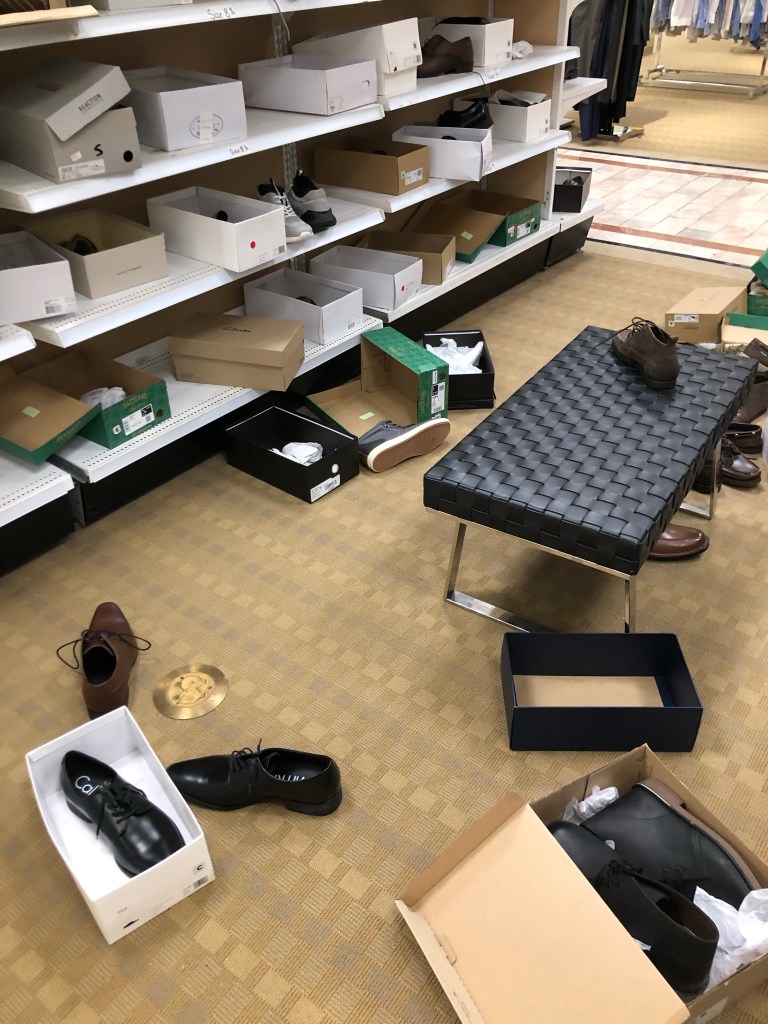
Lord & Taylor men’s shoe department,
December 9, 2020

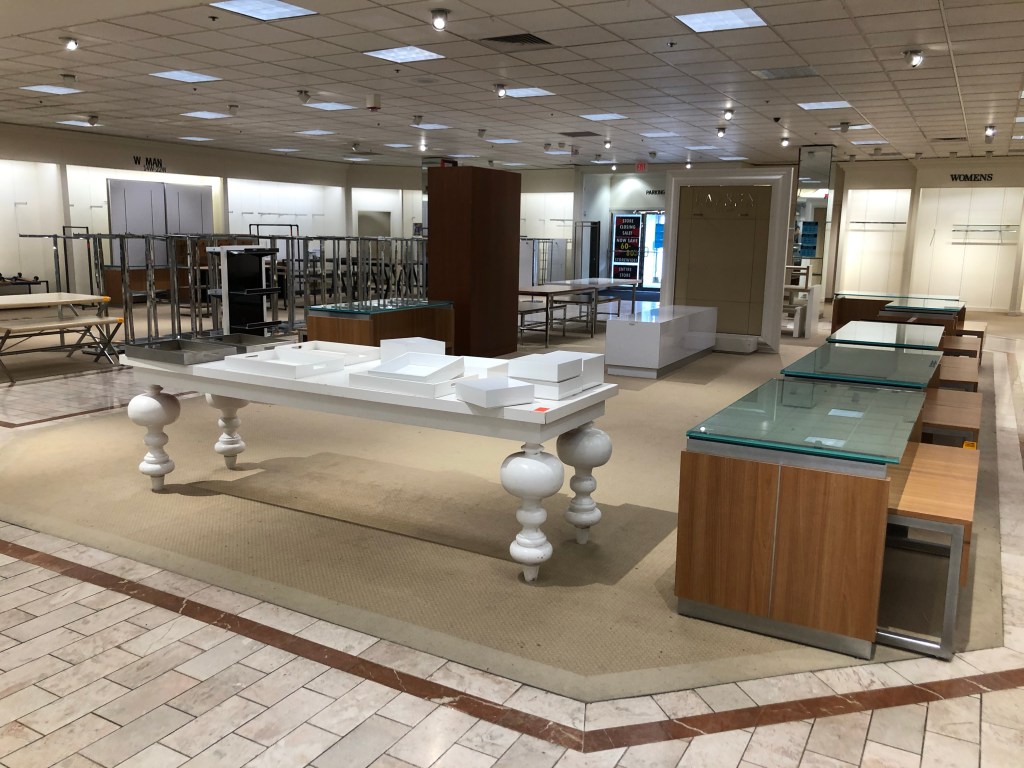
Big red signs blare “Going Out of Business”, “Everything 60 Percent Off” a familiar sight these days but there’s a sadness; It’s Lord & Taylor,

God, what are they doing to my old store?

Men’s Department, shoes and their empty boxes are strewn on the floor


everywhere; no semblance of decorum; scavengers sifting through

clothing; shirts and trousers lying on the floor, walked upon

footprints on some; no one bothering to pick up wrinkled

merchandise.
A handful of workers heading for unemployment lines wander
about, zombie-like.

Slow creaking escalators a metaphor as this elder statesman


of merchandising ushers me to the first floor; Cosmetic and


perfume display cases are barren. No black-clad ladies plying

their wares, the air is absent of the overpowering scents.

Jewelry counters have dwindling inventory.
Here too, ladies’ garments are scattered willy-nilly; the once

elegant designer labels are gone. The clothing is dreck.

I leave the store and turn back. These times have destroyed so

much; death and depression permeates deserted mall corridors .

There is a sadness in the eyes of the masked who trudge by vacant

storefronts. No vitality, no spirit. Good-bye, good-bye to these touchstones

of whom we were.

Adieu