Broca’s Area 10: Return Of The Eloi

Broca’s Area 10: Return of the Eloi
By
Leo de Natale

Illustrations by Vince Giovannucci
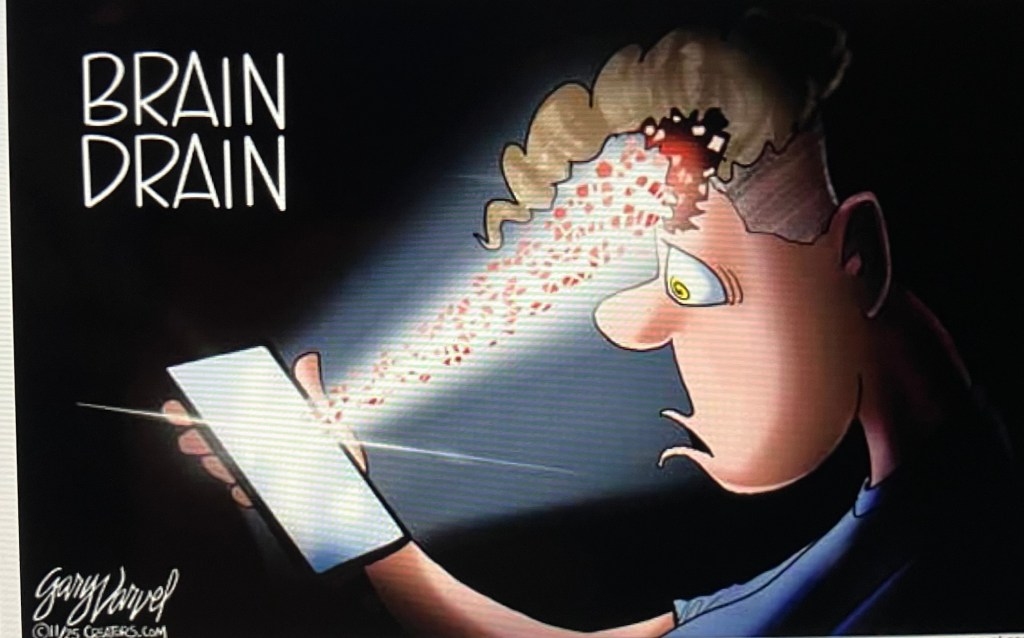
There is a new term that describes Americans under the age of 30: generational aphasia. Slowly, almost insidiously, boys and girls, men and women who have grown up under the specter of cell phones, laptops and social media have lost the ability to speak.
Charles Younger, an English teacher in a Boston Metro West suburb, has observed that among school children, the cell phone is no longer used for talking. He has witnessed students sitting three feet away from each other texting rather than turning their heads to converse. Children and young adults won’t call their parents. They text or use SnapChat, Twitter, etc.


Younger said this has translated into a strange phenomenon he’s noticed in his classroom. Students may do well on tests or school projects but fail in public speaking. He said they have an inability to talk in front of a class. They have difficulty privately discussing assignments with Younger and constantly use such verbal crutches as “like” and “you know”. He yearns for students to utter a simple declarative sentence.

Aphasia is medically defined as the inability to comprehend or formulate language because of damage to a specific brain area known as Broca’s Area 10. It is usually associated with head trauma or brain tumors.
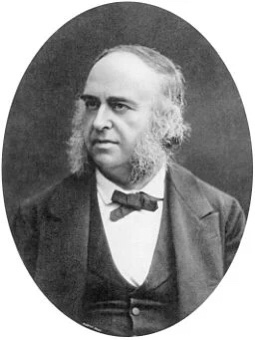
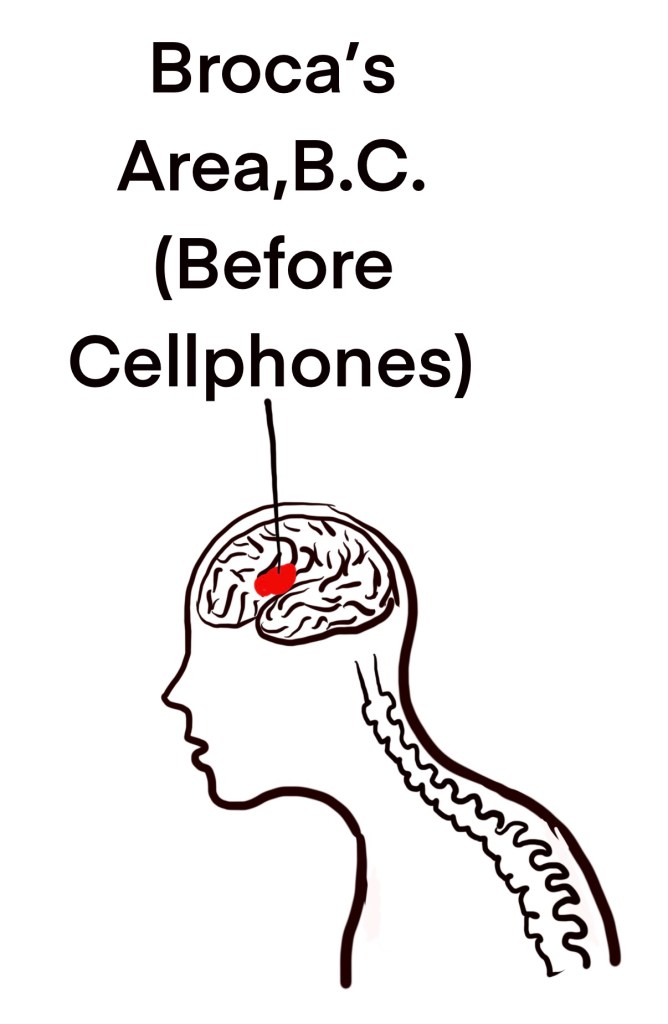
French scientist Pierre Paul Broca discovered the location of the human brain that controls speech

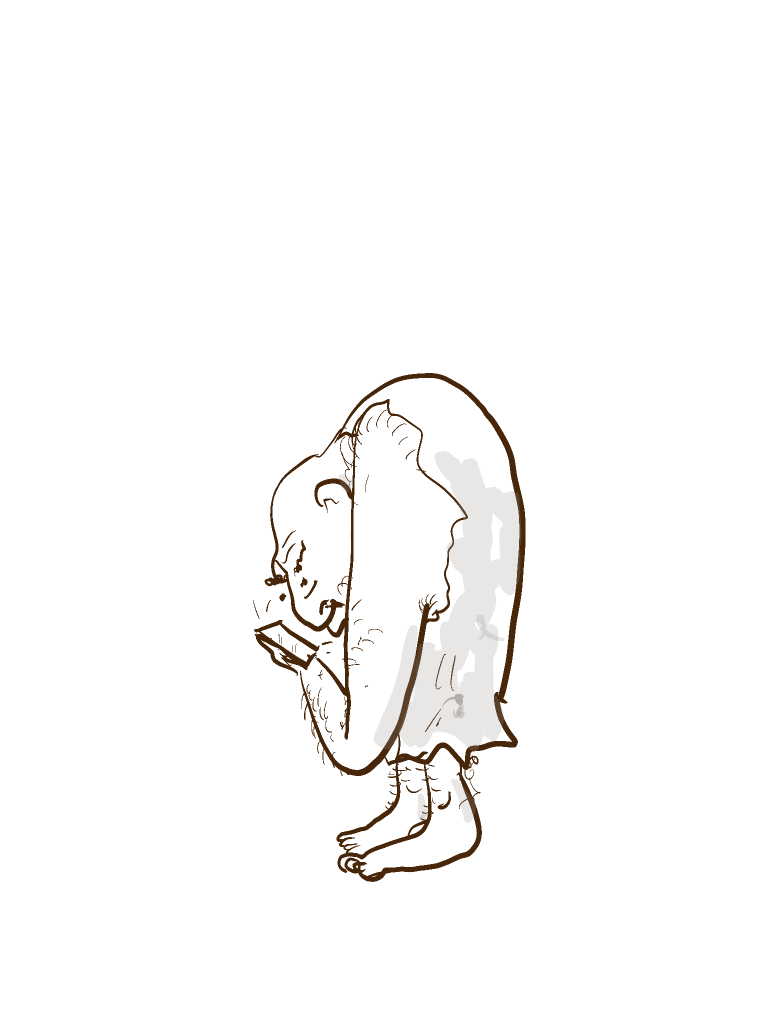
Anyone over 50 has difficulty reconciling this lifestyle change. This includes people who remember dial, touch tone telephones and phone booths. Telephone books, too. Physical posture has changed. Instead of walking as a homo erectus, humans are slouching, their necks bent. Neanderthal anatomy is returning.


During the past 30 years, our society has been seduced by the exciting flashy lights of technology. New devices were introduced at a dizzying pace. Thinner and faster PCs begot portable laptop computers, tablets, and, of course, the handheld cell phone. Concurrent with the mechanical devices was the Internet, a revolutionary network of cybernetic research and communication. The world was transformed.

A sign of things to come

We were so distracted and didn’t realize an imperceptible lulling effect engulfing us. We were literally and figuratively losing our voices. The new toys of technology stole our ability or inclincation to talk.

It is depressing to realize how these modern devices that promised to make life easier, efficient and time saving have, like Covid 19 virus, spawned a generation that’s actually dumbed down. We are creating automatons unable to function in the real world where problems cannot be solved by asking Siri.

For example, before the 2020 pandemic, restaurant customers were rapidly manifesting the loss of etiquette. It wasn’t unusual to observe groups of young diners sitting at their tables, staring at their phones. No scintillating conversations going on there. What’s wrong with you folks? Have you no manners or sophistication?


The novelist H. G. Wells was a visionary British author whose life straddled two centuries. He was born in 1866 and died in 1946. He was a prolific writer and is best known for his futuristic books, especially War of The Worlds and The Time Machine. In his lifetime he witnessed how technology would affect mankind.

Wells would find current society ironically similar to the characters in The Time Machine. In his novel, a London scientist known only as “The Time Traveler” invents a machine allowing travel forward or backwards in time. Being adventuresome, the character pushes a lever into the future and the machine hurls him through time and space. Three times during the 20th Century he stops and discovers England is at war. The last war produces nuclear annihilation.

Leaving quickly before the bombs are dropped, he pushes the lever further and arrives at the year 802,701 A.D. He discovers a different planet where England is transformed into a tropical paradise and is inhabited by two species: subterranean ghouls called Morlocks and effete, passive inhabitants living above ground and known as the Eloi.
Physically, the Eloi are cookie cutter humanoids. They are blonde, blue-eyed, and wander about and behave as a nation of lobotomized airheads. As one critic said, the Eloi “lost the spirit, intelligence and physical fitness of humanity at its peak.”

The Traveler befriends a female named Weena who takes him to a decaying building called “The Palace of Green Porcelain”. It’s a museum full of books that disintegrate into dust if touched. Nearby is a table of rings. The rings, when spun, elicit an historical narration of the world. He learns the nuclear wars changed the planet’s geology. The disfigured, Morlocks live in darkened tunnels. They are cannibals who breed the Eloi for consumption. Periodically a siren blares and the Eloi passively enter a cave and are slaughtered by clever but genocidal mutants who survived obliteration but assumed a bestial mantle.

The Time Machine is, of course, fiction but Wells was a prescient writer and somewhat clairvoyant. His other famous book, War of the Worlds, was a story about alien space ships invading Planet Earth.

The 21st Century appears to be assuming a schizoid character. The world has become technologically advanced. The Internet and the various electronics have revolutionized how businesses perform. It has changed the landscape of interpersonal communications and lifestyle behavior. Yet these advancements are creating deleterious sociological effects.

Society is becoming coarser and ill-mannered. The question remains if these dehumanizing changes will create generations of new Eloi who speak little and live in a world of catatonia. Will Broca’s Area 10 become anatomically vestigial? Time will tell.

Will this be our back to the future?
Haitian Sun, Haitian Moon

Haitian Sun, Haitian Moon

By

Leo de Natale

As she peered through her airplane window, Elizabeth Ann Murphy thought the island nation of Haiti resembled paradise. There were mountainous regions, verdant forests and beachfronts with gentle waves lapping along pristine beaches. Looks can be deceiving, especially after the plane landed. She knew firsthand.

A former Dominican novice and a registered nurse, Elizabeth was traveling with a team of volunteers for their twice-yearly pilgrimage. It was a mission of mercy. She administered health care; the remainder were involved with construction projects. Elizabeth was a tall, attractive woman of 45 who’d left the novitiate life 15 years ago, met a man, married and bore two children. She had piercing blue eyes and soft brown hair flecked with gray. Her heart and spirit were unchanged from her convent days. She remained committed to helping unfortunate souls, whether it was the mean streets of her native New Jersey or the abject poverty and suffering that existed in this godforsaken Caribbean island.

          The plane landed in Port-au-Prince.   She  and her colleagues were greeted with a blast of hot, humid air and the sounds, sights and smells of an overcrowded airport.  Some Haitians were dressed as if they were headed for Carnival.  They wore brightly colored shirts, hats and  footwear.  Many wore overpowering colognes and perfumes.  These strong aromas were mixed with the commoners.  Most wore plain peasant clothing that hadn’t been cleaned for weeks or perhaps months.  Some walked barefooted.  Indigent men and women with toothless faces pleaded for alms.  Scantily clad women slinked through the airport lobby and hoped to snare an American who might rescue them from their hellish existence.  

Elizabeth  recognized the face of a young black male who was holding a sign, “Ecole de Notre Dame de Fatima”.  His name was Jean-Claude and his dilapidated  Kia minivan was waiting outside to whisk her and her team away from the crowds to the school that was her headquarters. 

The Haitian sun was blinding but after ten years of missionary work, she had become accustomed to the physical assault of an equatorial climate.  She learned that  blood thins after several days of  heat and humidity.

She was perspiring profusely as she entered the car.  Her blouse and linen slacks were drenched with sweat.  The car lacked air conditioning – a luxury few cars had.  Jean-Claude weaved his way through the bustling, noisy crowds.  Street beggars pleading for money  thrust  their hands through the grimy windows.  The van increased speed and eventually gained road clearance.  The school’s headquarters was about 70 miles outside the city.

          Everywhere she looked, Elizabeth observed armed militia bearing stern faces and semi-automatic rifles.  Tension between citizens and repressive political regimes was always palpable in Port-au-Prince.  For 400 years, Haiti’s history has been marked with violence, oppression and suffering.  Haitians continue to be a faith-based people.  It’s an admixture of African Voodoo and Roman Catholicism.

As the human and automobile traffic thinned out, Jean-Claude, speaking in Creole French, updated Elizabeth  on developments at the two elementary schools under her mission’s care.  There were more than 700 students attending the schools.

“Les enfants besoin de plus nourriture,” he said. “The children, they still need more food.”

She presumed as much.  Food and potable water were a continual problem, especially at the school she’d be visiting that was farther inland. The school  in a remote mountainous place called Riviere Froide (Cold River) was usually the most needy.  Her job was to assess the improvements the mission was implementing.

About two hours after driving, Elizabeth and her group arrived at the school district’s headquarters.  They were greeted by the priest and nuns who taught at both schools. She was also gleefully welcomed by children who whooped and yelled at her.  She was known as “Ste. Elizabeth” among the children, many of whom exhibited  heartbreaking malnutrition.  Distended stomachs and starvation stemming from parasitic infestation were always evident among the “pauvre enfants”.

She and the volunteers would surround themselves with these waifs and hand out candy that had been stuffed into suitcases. A handful of mints was treated like gold. One young Haitian girl, Sylvette Mimieux, was ecstatic when she saw Elizabeth. Five years prior, Sylvette, then age six, was afflicted with diphtheria. Her parents were weeping. Sylvette was near death. Fortunately, Elizabeth had brought numerous antibiotics. She administered the drugs and stayed with the child for 48 hours. The medicine worked and a special bond was created with the family. “Toujors Ste. Elizabeth!”. Elizabeth always sought out the family during each visit. Sylvette, now eleven, was a bubbly young girl with a beautiful smile. Her parents told her Sylvette became a good student with straight A’s in class. They were very happy and proud.

After a quick sponge bath and change of clothes, Elizabeth met with her Haitian partners in a meeting room. Ceiling fans helped move the stolid air and she was updated two vital and ongoing issues: food and water. Brother Julien, the school’s principal, said thanks to the aid from American Catholic organizations, the school was now providing a nutritious lunch for four days per week. Many children, he said, eat only every other day. This, she thought, is a poverty few in the Western World have experienced. The Haitians have a Creole phrase, “vant ki vid pa tande” –“An Empty Stomach Has No Ears” that best describes starvation among children.

Elizabeth told the officials her group’s goal in 2021 was to raise enough money to attain a goal of five daily meals per week.  Under paid security details, her organization in the United States was now shipping thousands of food packets for the faculty and students.  Though some shipments were stolen most foodstuffs and supplies reached  school headquarters.

Potable water is the second issue. About 75 percent of Haitian villages lack running water. When not attending school, the children are charged with carrying water to their homes. Brother Julien reported that, again, Americans had contributed sufficient funds to begin the first phase of the Laval Water Project.

With the help of the Elizabeth’s group, the villagers have begun construction of a cistern that filters water. The children will still be carrying water but it will be clean, and safe to drink. When purified, the water from Riviere Froide is reflective in its name: cold and good.

After a long, hot exhausting day, the group ate a modest meal- mostly vegetables and tea. Elizabeth and crew were ushered into a curtained area that was designated sleeping quarters. The school provided canvas cots and sheets. Before retiring Elizabeth walked outside and looked around her. She was sweating. Crickets and buzzing insects could be seen, heard and felt.

She disregarded the annoyances and closed her eyes. She quickly opened them and stared upwards. With no ambient light pollution, the sky was magnificent. There were star clusters and the Milky Way shone. The sight of these heavens was awe inspiring. You never see a sky like this back in New Jersey, she mused. It was a learning moment. Surrounded by the misery on this small island, one could extract beauty that transcends the human condition. The inhabitants lead hellish lives where mere survival is a constant, daily challenge.

There is hope, however, when the Haitians meet people from a different country and culture who arrive to help them lead an improved life. During her two week stay, Elizabeth conducted health clinics for children and adults. Drugs needed to combat infections and parasites were administered. She would then switch to school visitation and determine which books and supplies were needed. Her organization had contacts with French publishing houses. She listed the necessary materials and would place an orders after returning to the United States.

The day before she left,  Elizabeth hosted a party for the children.  She opened a large box containing Frisbees.  The school placed food and candy in the discs.  Brother Julien told Elizabeth the children were ecstatic with the Frisbees.  He said they took them home where they’d be used as dinner plates.  Simple pleasures.  Amazing grace.

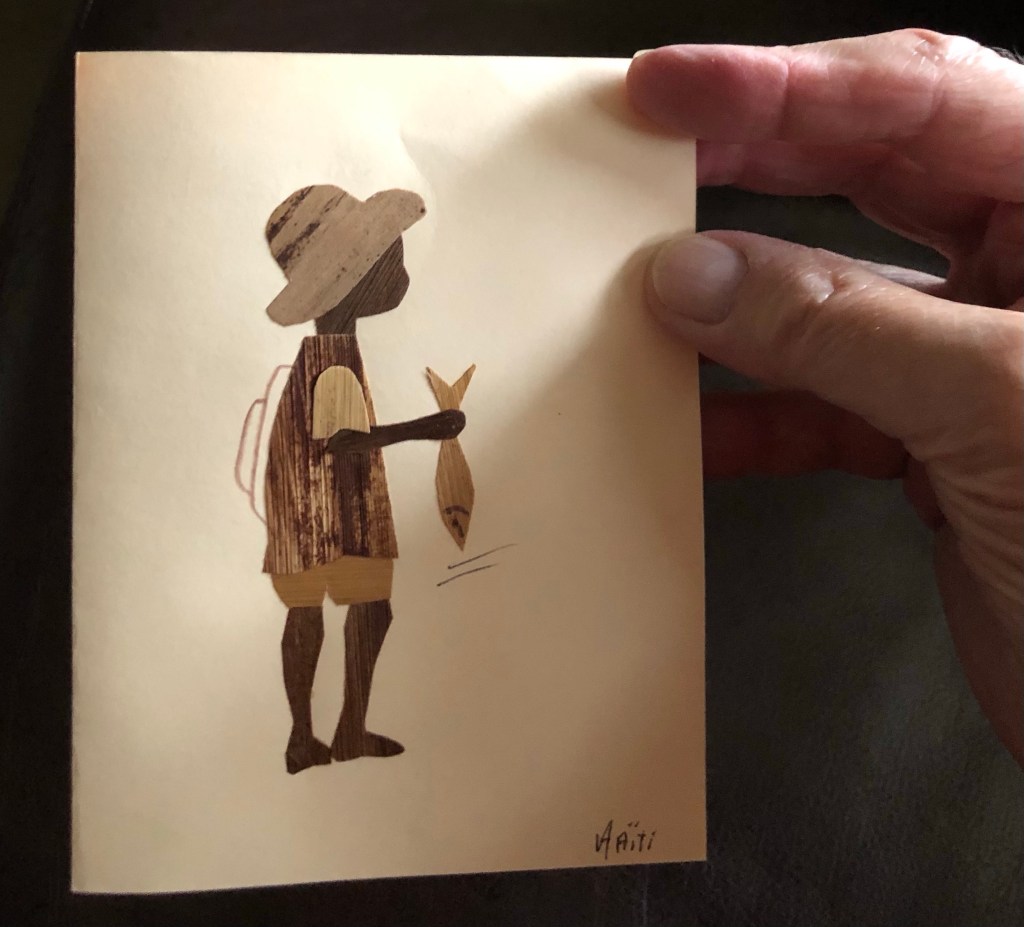
On the day of the team’s departure, a villager named Toussaint approached Elizabeth with a paper bag.  He was a self-taught artist and created illustrated greeting cards. Using thin slices of coconut bark he crafted scenes of village life.  He told her they were a gift to her.  She could keep them or sell them.  Any monies collected could be used for food or clothing.  The cards were beautiful and manifested  innate talent.

“These will sell very easily, Toussaint,” she said, thinking of the scripture, blessed are the poor, for they shall inherit the earth.

Handmade Haitian greeting card crafted from coconut bark.

Later that day, the group arrived at the airport. Stepping from Jean-Claude’s van, Elizabeth basked in the steamy heat. In a few short hours she’d be returning to a world of bountiful food, creature comforts, computers, cell phones and WiFi. This had been a good visit, she thought. In six months she’d again return to her mission under the Haitian sun.

This is based on a true story. The organization is a non-profit charity. helpinghaitianchildren.com

Faceless

Faceless

By

Leo de Natale

I started writing essays this year as an escape from the plague. In three short months a lethal virus spread from Communist China and brought the world to its knees. In early January, work was fun, as I enjoyed the camaraderie with colleagues, staff and clientele. By March, however, the seriousness of this pandemic was severe. One day I was working, the following day I was forced into early retirement.

I drove home to my wife Kathy and our faithful German Shepherd Dog, Kaiser. I closeted my winter overcoat, removed my suit, shirt and tie, dress shoes and adjusted to a brave new world. The coat and suit were sent to the dry cleaners, the shirt was laundered and the tie placed on its rack. The shoes were polished and shoe trees were inserted. I was disheartened when realizing I might never again wear such clothing.

        Like so many Americans, my family endured the self-imposed quarantine.  I had been a professional writer.  The pandemic offered a creative outlet. I’ve been chronicling the seismic changes during the chaos. The fallout occurred rapidly.  No socializing with family or friends, no theaters or movies, no restaurant outings. Grocery shopping was infrequent. 

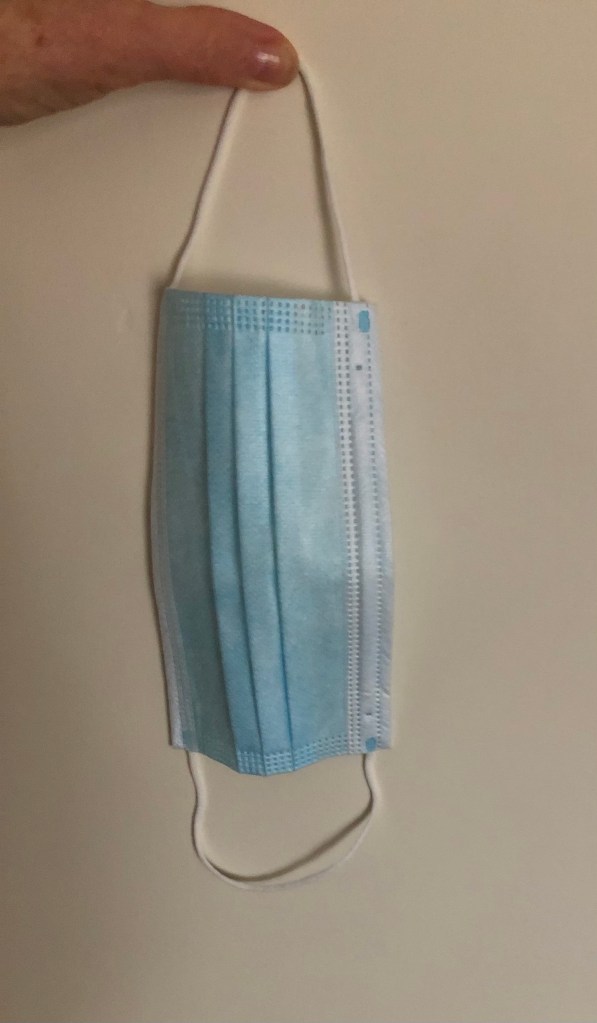
With all these rapid lifestyle changes came the metaphoric stake through the heart: the mask.  Wear it or become infected.  Wear it or be shamed.  Don’t wear it and Invasion of the Body Snatchers alien Donald Sutherland points at you.

We all wear the masks now.  They have had a devastating effect on the human psyche.

Human beings are social animals.  We love interaction, we love seeing our fellow men and women.  But now, we are faceless.  At the supermarket, at the local drug store, we pass each other and   see only eyes.  We have no idea what people look like.  No noses, no mouths, no teeth, no chin.  We can see the rest of a body, tall, short, thin, fat, old, young.  But who is that person behind the mask?

I feel sorry for the young.  Quarantining followed by mandatory masks inhibits their social lives.  Men and women in their early to mid-20s seek romance. Prior to Covid 19, they’d meet at dating bars or social gatherings. Their hormones are raging and the human face is an essential element of physical attraction.  Add the early lockdowns and now the masks and you have Roy Orbison singing Only The Lonely.   Computers and social media have created virtual dating sites, a 21st Century version of the old personal ads in magazines and newspapers.

What I miss the most is seeing a person’s smile. The eye may be the window to the soul, but the smile is the door to the heart. When I’m talking with someone who’s masked and I say something funny or crack a joke that often elicits a laugh. I can tell by the crinkling of the eyes. I say to myself, oh if only I could see that facial expression.

Anywhere you travel, you can sense the tension that has arisen.  People in supermarkets will argue over social distancing.  Road rage has increased.  Quarantine claustrophobia has caused more family arguments and discord.  There is yelling, screaming and shouting.  Alcohol and drug use have increased.  We all need a good laugh but local comedy clubs are closed.  Standup comedians have started using Zoom as a virtual stage.  You can see their faces but it doesn’t have the effect of a live audience.

Still, there are pockets of humor. My friend, comic Gary Savonarola, has made some observations about masking.

“Hey, look at the bright side” he says. “You wear a mask and you don’t have to shave.  It blocks halitosis so you don’t snap a person’s head back with halitosis.  You don’t have to brush your teeth.  No one will see the spinach clinging to your molars.  Women can save money on lipstick and makeup. You can stick your tongue at someone or call them an asshole.  The sounds get muffled.  Most people can’t hear a word you’re saying! You know what I mean?  You know what I’m saying?   No worries, man.”

A renowned dog trainer friend who was successful because he understood the canine psyche.  Dogs, he told me, live in the moment.  There is no yesterday, there is no tomorrow.   There is only now.  We humans can learn something from canine behavior.  The pandemic will be conquered.  Vaccines will purportedly be arriving soon. 

There will be a time when we look back at catastrophic 2020 and say, oh, I remember the year of the mask.  Sadly, too many  poor souls lost their lives to an invisible monster that devastated Planet Earth. 

When it’s all over, we can then see each other’s beautiful faces – eyes, ears, noses and — those smiles.

Live in the moment.

Bespoke

Bespoke

By

Leo de Natale

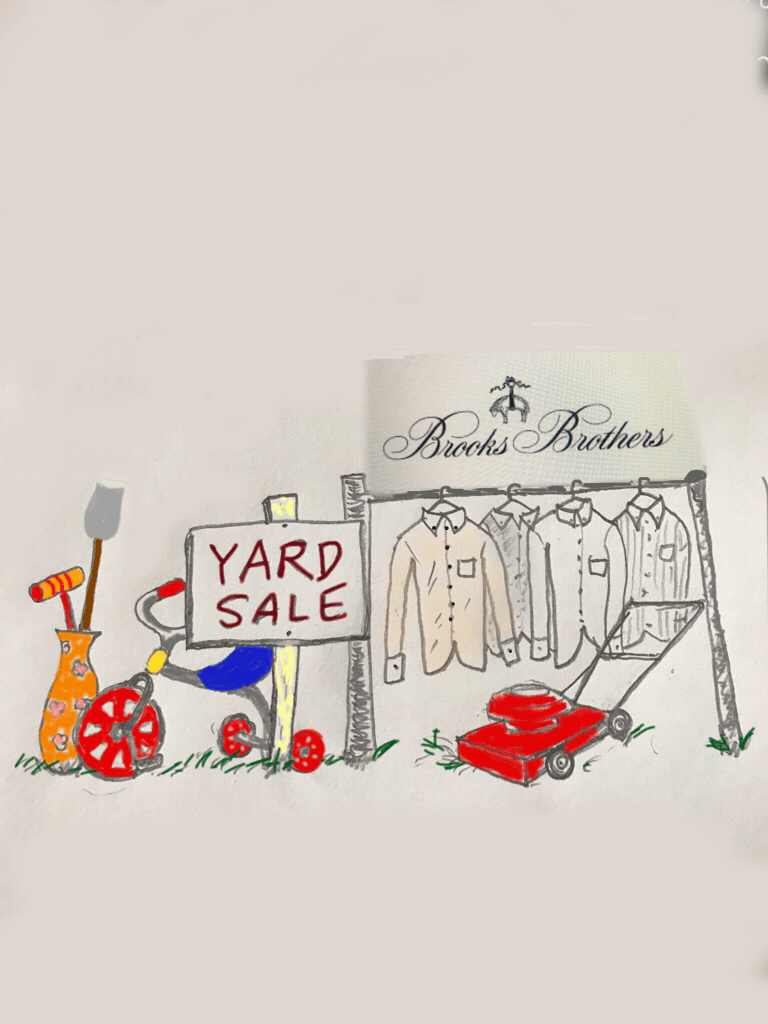
Illustration by Vince Giovannucci

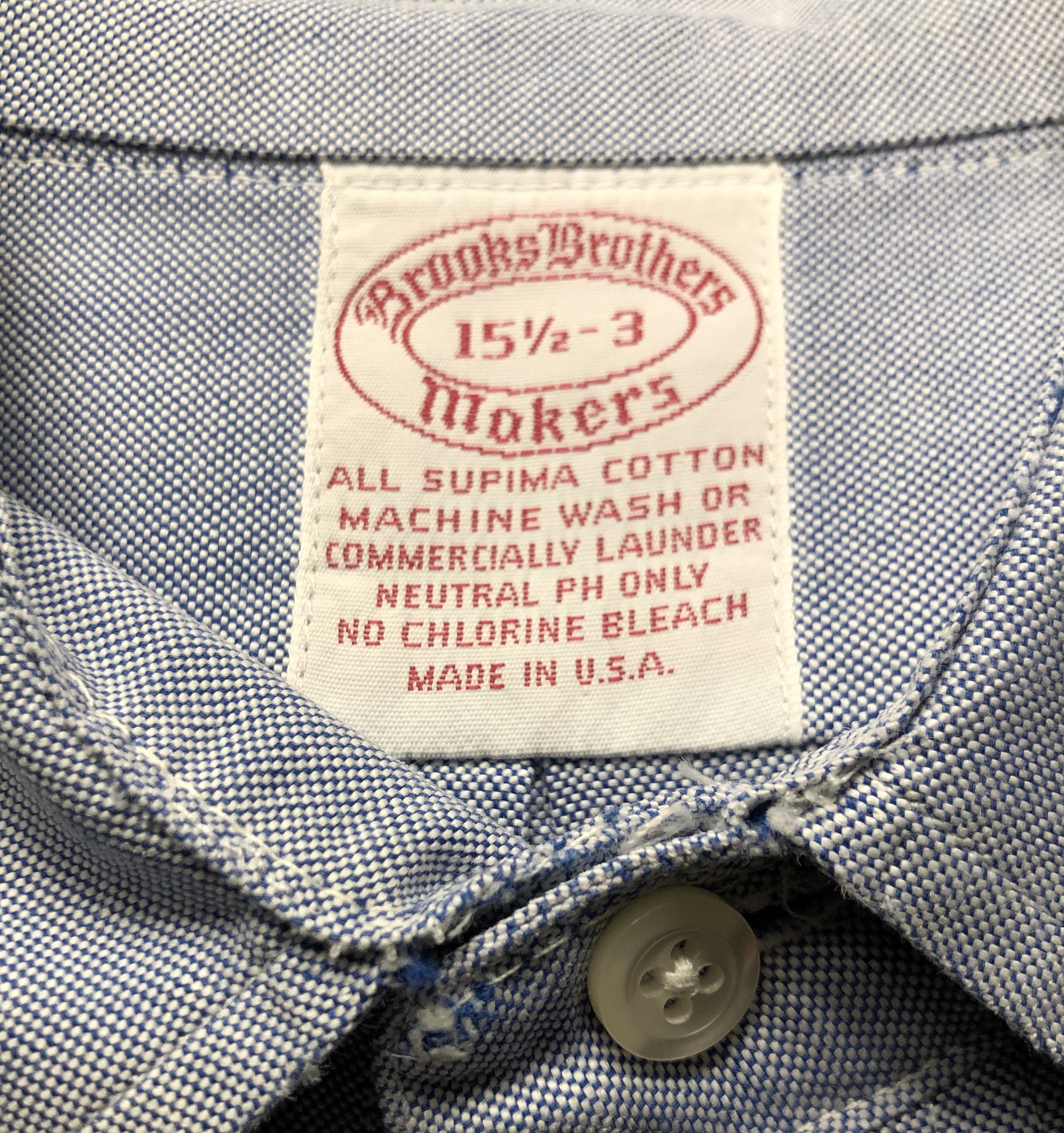
The author’s Brooks Brothers blue oxford shirt purchased in April, 2002

It was the late 1950’s, early 60’s. Harvard University has always cast a long shadow on Metro Boston communities. Many kids dreamed of matriculating there. Renowned academics continued to burnish its reputation. A book entitled Love With a Harvard Accent was published in 1962 and detailed the life of students who went there and found love and happiness within the ivy-covered walls.

Harvard has historically had a patrician cachet. It reeks of intellectual aristocracy. Part of this emanated from the prep school atmosphere. I grew up in that era and the unofficial student dress included tweed sports jackets, chinos, Weejun loafers, neckties and the most iconic item: Brooks Brothers button down oxford shirts. Students merely extended the garb, the “uniform” of so many feeder schools. It was the bespoke wardrobe of elite students.

Surrounding the university were stately homes on leafy streets. Brattle Street was the most famous. Many professors lived in these affluent residences. The area was also inhabited by superannuated WASPS, who by geographic location, were Yankees. The male Yankees considered Brooks Brothers shirts and its famous sack suits de rigueur. They sauntered around Harvard Square and were the type who could say “terrific” without moving their jaws. But Yankees were infamous for their parsimony. Trust fund babies sometimes would behave as paupers. Their cuisine was meager. As my father used to say “A good meal would kill a Yankee.”

In a recent essay, academic Samuel Goldman recounts the rise and fall of Brooks Brothers, the iconic American haberdashery.    Founded in 1818,  the New York clothing company established the sartorial style generations of American men.  Lawyers, bankers, politicians, movie actors and parvenus embraced the look.   During the 19th Century and into the 20th Brooks Brothers was the arbiter of men’s clothing.  It was family-owned until 1946 and was bought and sold several times. 

          One of the signature products was the button down shirt.  Brooks Brothers invented the shirt after a family member observed English polo players’ attaching pins to  their shirts.  The pins prevented the collars from flopping while horse and rider galloped  across  polo fields.  This makeshift alteration inspired the Brooks scion and , returning home, the button down oxford shirt was invented.  The shirt’s appeal was twofold.  Its neat appearance  made it suitable for work but could be worn in more casual environment.  Many men, however,  preferred  the traditional spread collar.

I was a college bound kid,  just like others who lived in one of the surrounding communities.  Attending Harvard  or the now-defunct Radcliffe College  was the common pipe dream among male and female high school students.   Many applied but few were chosen.   I had no delusions about where I was headed.  A “B” student with so-so SAT scores didn’t stand a chance but it didn’t stop me from projecting the image.

  My immigrant  grandfather was a barber who worked at the Ritz Carlton hotel.  My father would visit him at work.  He would observe upper class gentlemen and was impressed with their looks, their dress and their comportment.  Dad was the first in his family to attend college, became an accountant for a Big Three CPA firm.  Financially he did very well.  And he dressed the part.  His pet phrase was “Clothes make the man” and he embraced the Brooks Brothers look. That was the beauty of America.  Anyone can succeed with intelligence, hard work and luck. He passed along this mindset to my older brother and me even down to suits and spit-shined shoes.

 My late mother was a Depression Era child.  Nothing was ever wasted.  She was incredibly adept at clothing repairs requiring a sewing machine.  I owned dress shirts whose collars did fray.  Mom would enter her sewing room and,  30 minutes later, the collar had been flipped.  Another few years of wear.  And when the cuffs began fraying she would “send them to summer camp”.  The long sleeves became short sleeves.  Truly a stitch in time saved nine.  That, unfortunately, is from another era and I miss it.

Dad bought me my first Brooks Brothers shirt when I was 15. The shirt was the classic button down. Wearing it made me feel special because the shirts looked and felt good. The company used the finest cotton and wool in their products. I enjoyed my occasional trips with him to the main Boston store located at the corner of Berkeley and Newbury Streets.

There was an air of refinement with shelves neatly stacked with button downs.    Circular wooden tables with elegant silk rep ties were displayed and arranged in a kaleidoscope fashion of colors and patterns.  The store smelled of luxurious fabrics and old-fashioned light fixtures emitted a soft hue.   The experience was akin to quaffing brandy  in an English men’s club.  The store was the quintessence of ambience. 

I appreciated Brooks Brothers’s manufacturing philosophy. The shirts were made under strict quality control and the design, unlike today’s “slim fit apparel”, was generous. Dad said the shirts “wore like iron”. It’s true. I had this quirky habit of marking my shirts with the year they were purchased. Inside the bottom left placket, I’d print the month and year with a Sharpie pen. I still own a blue oxford shirt purchased April, 2002. After hundreds of commercial washings, the shirt still has no collar or cuff fraying.

From youth through adulthood I traveled to Newbury St. but as I grew older, many customers, myself included, tired of fighting Boston traffic and parking.  The company’s owners were intelligent and began opening branch stores in a select number of suburban malls. The elegant atmosphere remained unchanged regardless of location.

Brooks Brothers retained its classic look that continued but something was changing.  During the past decade, apparel within the workplace was transforming.  The “casual look”   had become the new norm.  Neckties were becoming a rare species except in banks, insurance companies and upper echelon law firms.   Fewer women wore dresses, skirts and accompanying nylon stockings. 

The slacks/pantsuits were now commonplace. Casual became very casual, especially in the high-tech industries and academia. Harvard students, alas, have gone grunge. The 50’s, 60’s prep school look has vanished.

And the poor necktie. Once considered a centerpiece of men’s dressing, the necktie has become a pariah. Physicians and health care workers, for example, stopped wearing neckties -they are now considered contagion magnets. That’s a legitimate concern. Airborne diseases can nest in a necktie along with the coffee and soup stains or greasy mayonnaise droppings.

The year 2020 has had a tremendous impact on work and clothing.  The Covid 19 pandemic closed most businesses for months.  Malls  became ghost towns.   Brooks Brothers sack suits collected dust.  Working from home was the “new normal” and a company named Zoom exploded onto the scene. It  filled a vacuum and harnessed the virtual marketplace.   Most group business meetings are connected through Zoom.  In health care, patients haven’t physically seen their  primary care physicians since March.  They get Zoomed.   Of course, masks have become ubiquitous.

The virtual meeting lifestyle has obviously affected dress codes.   Employees can join a meeting in jeans, sweatshirts or jogging clothes and sneakers.  Why dress up when you’re working from home?

Regrettably,  Brooks Brothers declared bankruptcy earlier this year and was bought by the corporation owning the Simon mall empire.  The venerable clothier was “Simonized”.  Like so many  businesses, the company’s recent fate was catalyzed by  Covid 19 and its devastating effect on the economy.

Covid forced my retirement.  My last day of work was March 2, 2020.  Like most Americans, I hunkered down and was forced into isolation.  At home, it was just my wife and I and our German Shepherd Dog, Kaiser.  We didn’t socialize with friends, donned masks, and experienced the nationwide depression that accompanies a plague.  We suspended our gym memberships and rarely ventured into grocery stores.  By summer people suffering from cabin fever finally emerged from their cocoons. 

In June we dined outdoors with my best friend and his wife.  That was an elixir.  Malls eventually reopened but they remained ghost towns.  I needed a cell phone upgrade and ventured into a nearby mall.  There was a Brooks Brothers store there.  I stopped and stared. Perhaps one customer  was visible.    What a feeling of sadness.  I scanned the shirting section and, yes, the button downs were still there.   The company faces unchartered waters.  I hope it somehow survives with new ownership.

Returning home after my errand, I entered my closet and gazed at the 32 dress shirts – the majority of them are Brooks Brothers– that haven’t been worn for seven months.  I’ll probably rarely wear them but they remain a bookmark of who I was and how I dressed.  Bespoked.  Gone, but not forgotten.

R.I.P.

Colons “R” Us

Colons ‘R’ Us

By

Leo de Natale

January,  2020.  Two months before The Plague appeared and turned the world upside down.  Little did we know how health care would rapidly change.   I was  dreading an upcoming medical appointment.  It was the last time I underwent a medical procedure where there were no masks, social distancing or a shortage of hand disinfectant.   My appointment was for the ultimate adults only experience.

Anyone over age 50 knows the fear and loathing of “the colonoscopy”, one of the most unpleasant and humiliating experience one can endure. It is drilled into us that colonoscopies – the term evokes images of disgusting insects – are a necessary evil. Statistics show that many individuals failing to subject themselves to the procedure do so at their own risk. Colon cancer is a disease that can be avoided if pre-cancerous polyps – I always think of sea anemones – are detected and removed in a timely fashion. Just ask the late Speaker of the U.S. House Thomas “Tip” ‘Neill. Never had a colonoscopy and died of colon cancer. It was discovered after Tip’s last Thanksgiving dinner. Many persons of lesser fame have stories of family members/loved ones who experience a similar fate.

As they say, it’s always the “prepping” that’s the worst part. It includes a steady dose of embarrassment and discomfort. For the three days prior to the procedure, diet is restricted. No heavy meals, no roughage, no coffee, no booze. The day before you become an ascetic. Clear liquid diet consisting of chicken bullion, Jello (no red colors, please, can be misinterpreted as blood.), apple juice and other benign drinks.

This all culminates in an intestinal Armageddon.  The Gastroenterologist (GI) supplies you with very specific instructions to imbibe a liquid laxative and water.  Swallowing this glop is nearly nauseating.  It tastes like paint thinner laced with sugar.  This act is followed by two 16 ounces of water within one hour after ingesting the devil’s brew.

 No less than 15-20 minutes later, Boom!, Vesuvius erupts and you’re sent running to the toilet.  Your bowels explode with a massive evacuation.  I’m not being scatological but it’s bad.  In ten minute intervals there are more bathroom visits, each producing more liquids than solids. It eventually becomes anal urination.  The anus starts feeling as if some sadist is torturing you with a belt sander.  Very, very sore. This pattern lasts for about two hours and then there is calm.

My procedure was early morning, 7 am. I was the first “customer” of the day and had to arrive by 6:15 am. That’s good and bad because the final “cleansing” liquid is taken twice within seven hours. In my case I took my first dose at 5 pm the previous day. That meant my second slug was 2 am. My wife and German Shepherd Dog Kaiser slept well. I didn’t. I endured one final volcanic eruption. A miserable experience. I was awake at 5 am. My GI tract appeared to be behaving itself. I showered, thoroughly cleansing “down there”, shaved and brushed my teeth. I was ready.

The trip to the freestanding GI speciality clinic—I refer to it as “Colons ‘R’ Us”—because nearly all the procedures are colonoscopies. Business is usually brisk there with a parking lot full of zoned-out patients. From my home, the commute takes 20-30 minutes. Patients undergoing the “black snake procedure” – that’s the term used by GI guys – must be driven home due to the anesthesia. My wife and I decided that, given the increasingly high traffic volume at any hour(this was before the pandemic), we’d leave a time cushion.

My wife has poor night vision so I drove to the clinic.  Kaiser came along and rode shotgun.   Regarding time projection, I was wrong.  Traffic was light and we arrived at 5:45.  We waited 15 minutes.  The front door was opened and I kissed Kathy goodbye, gave Kaiser a head pat and alighted from the car.

I love how these medical folks say “You must arrive by 6:15!”  In other words, they demand punctuality but then you cool your heels for nearly 45 minutes.  There are always delays.

I plodded into the clinic. I felt and probably resembled Jack Nicholson in One Flew Over the Cuckoo’s Nest after he was lobotomized. I was the first to arrive. I’ve always regarded trips to speciality clinics as medical deli counters. Instead of cured meats or cheese, you’re ordering up a trip to la-la land. I pulled the ticket #1. A portly receptionist with ugly hands checked me in and gave me the paperwork. The forms state I’m undergoing an elective procedure and if they screw up, they can’t be held responsible. Perforated colons are always a risk. The form is a CYA release.

The nursing personnel arrived in dribs and drabs while I was waiting. Finally, a nurse calls my name and I shuffle into a room containing numerous gurneys divided by hospital curtains. She tells me to strip naked except from my socks. I don the usual attire, a johnny gown, and await further instructions. She enters and takes the vital signs: blood pressure, oxygenation and temperature. She then inserts a catheter into my right forearm vein. That’s where the happy juice will be injected. She never introduces herself by name. Her fingernails are white acrylic that need to be redone. She is pleasant but not warm and fuzzy. She, like the rest of us poor bastards undergoing the procedures, appears semi-comatose. Is there some place you’d rather be?

The next character I see is an elderly intake MD who speaks with a Middle Eastern accent.  He is paunchy, quite nearsighted and has the oddest  cover-up-my-balding head hairdo.  The hair atop his skull is thinning. He has swirled it around and doused it with enough Aqua Net hair spray to survive a wind tunnel.  He asks me about my health history while asking me, “Do you speak Italiano?”.  A little I respond, but mostly curse words.

 I use some medical jargon and he presumes I’m in the health care field.  Optometrist, I respond.  Ah, he says and leaves it at that.  Optometrists are still perceived as the untermenchen of doctors.   No further medical talk.   He is a courteous man and when finished, he and his paunch disappear en route to another suffering victim awaiting the same procedure.

Sometime after 7 am, I am wheeled into the procedure room.  My longtime gastroenterologist, Leon Minjue,  arrives along with the nurse anesthetist.  We briefly chat and then I am told to roll over to my left hip.

 At this point I’m mooning the world and that’s the last thing I remember until a voice says, “Time to wake up, Leo!”.  I’ve always been amazed at the rapidity of sedation.  In the blink of an eye you are out, gonzo.  Blissful yet insidious.

I remain  in the recovery room.  The nurse asks me if I want something to drink.  Apple juice, please.  I’m conscious, but still in a mild fog.   Leon  quickly arrives and tells me everything went well.  He did, however, detect two polyps, a biggy at 14 mm,potentially pre-cancerous, and a smaller one at 5mm.  He excised both and sent them for histological analysis, a standard procedure.  I later learn both tissue samples were benign. To paraphrase John Turturro’s character Quintana in The Big Lebowski , you don’t fuck with the Jesus or colon polyps. 

Leon discusses his findings but the sedative is still clouding my brain.  I may have forgotten some of his conversation but I do remember the polyps.  What amazes me is the  advanced sophistication  in medical equipment. 

He hands me a computer generated report complete with photographs of my colon including an up close and personal view of the dreaded polyps.  Jesting, I ask Leon if these are suitable for framing.   

 Unamused, Leon tells me I’ll need to repeat the next colonoscopy in five years.  My attitude is I don’t know where the trajectory of my health and life will travel.  My late father once told me “When you go, go out as a champ”.  When a person  reaches his or her  60’s and 70’s,  mortality steps to the forefront.  We all have friends and relatives who die early.  A 29-year-old has difficulty when he hears someone say “He was 61 and died from a heart attack.  So young”.   Really? Like, if you’re over 30, that is old, dude.

What youths eventually learn is aging accelerates at warp speed. The 30’s, 40’s and 50’s whiz by and, suddenly, you’re collecting social security and complaining about gall bladder attacks or undergoing a total knee replacement. I know. Been there, done that. As the famous Serenity Prayer says, “Living one day at a time, enjoying one moment at a time.” Those words are true and the best mantra ever uttered. The pandemic has made the prayer very relevant.

Piccalilli

Piccalilli

By

Leo de Natale

September is a transitional month. Schools re-open, well at least some do in the era of the plague, apple picking, and fall harvests begin. For my wife and me it is green tomato season. It is a time for a nostalgic return. It is piccalilli time.

        My maternal grandparents were Slovak immigrants.  After World War I, that Eastern European area was renamed Czechoslovakia but the two cultures, Czech and Slovak were quite different.  They had the same language but little else in common.

My grandmother Anna Shuko didn’t speak a lick of English when she arrived in the United States in 1905. She learned the rudiments of language and writing. She was a peasant but an intelligent one. She was adept at many things, especially cooking. Out of necessity, she could cook various dishes. Potatoes were a staple and my mother grew up eating fried, boiled, sautéed and baked potatoes. Many immigrants did likewise. Potatoes were an inexpensive and important food.

       She was an incredible cook.  She learned to make apple strudle from scratch.  A bowl of water and flour were the dough ingredients.  She’d knead the dough until paper thin and stretched across the kitchen table.  It was all day process.  Carefully she rolled the ingredients – apples, nuts, spices and butter – into the dough.          

      Several hours later, the strudel was baked and covered with confectionary sugar.  Strudel’s aroma was mouth watering.   She was adept at many dishes – plum dumplings, potato pancakes and many Eastern European foods.  There was one food that was a family favorite.

        She brought a family recipe from Slovakia to her new country.  It was a green tomato relish that in English is called piccalilli, and served with many meat dishes.  It was a favorite with our meals.  My parents and siblings loved piccalilli.

As I child I would watch Grandma Shuko and my mother prepare this simple but elegant dish.  It was a combination of green tomatoes, shredded cabbage, onions, and green and red peppers.  Preparation was messy-especially the cabbage shredding.  What made this recipe so fascinating were  aromatic spices – turmeric, celery and mustard seeds- and white vinegar, sugar and water.  Salt was added to the vegetables for blanching.  It was an overnight process.
      The following day the spices and liquids were boiled and then poured over the vegetables.  Brought to a boil, the mixture cooked for 30 minutes and was ready for canning.  My favorite memory was the redolent aroma in the kitchen.  The vinegar and spices emitted a tantalizing smell that created an indelible olfactory memory.

Before dishwashers arrived, mother and daughter would sterilize glass Mason jars and rubber gaskets with boiling water. Metal racks made for the express purpose of canning were immersed in the water. The piccalilli was ladled into the pint jars and sealed with the gaskets and glass lids. The evanescent scent would last for about a day. The smell was something I looked forward to each season.

Although preparing the relish was time consuming it was worth the effort.   The piccalilli was always present when the family ate  pork, hamburgers or hot dogs. 

My grandmother was a petite, sweet lady with a twinkle in her eye. At 5’ she was tiny and was dwarfed by  my grandfather’s 6’ frame.  She possessed a great, sometimes ribald, country humor and was loved by many, especially her old Slovak friends. When she died in 1963  many mourned her death. 

Grandma was gone but my mother decided to perpetuate the autumnal ritual.  We enjoyed the relish.  So did friends and family who’d feast on such meals as roast pork and sauerkraut. Piccalilli greatly enhanced the food.  My father, who was first generation Sicilian-American especially loved it.  Sometimes a jar was empty by meal’s end.

In  December, 1998, my mother died suddenly from a pulmonary embolism following a surgical procedure.   The death was shocking and, like Grandma Shuko, she,too, was loved and missed by so many friends and relatives, especially my wife Kathy.  My mother was very fond of her.

The death of a parent starts a lengthy grieving process. During the following August, we realized green tomato season was approaching.  My wife and I  decided to continue the legacy and cook at least one batch as a memoriam.  In mid-September, with recipe in hand,  we drove to a local farm stand and purchased a small moutain of tomatoes and other necessary vegetables.  We also bought the spices and vinegar and began our labor of love.

And labor it was.  Kathy minced the vegetables.  I was assigned the task of the most labor-intensive ingredients:  cabbage and onions.  Shredding cabbage is the messiest job.  I shred one pound of cabbage.  Force was needed when using a grater. Cabbage leaves would fly across the kitchen.  A 15-20 minute chore seemed endless but finally the last portion had been shred.  I was sweating and several knuckles were painfully scraped.  I had learned the hard way one must be deft when using a grater.

Next was the most dreaded activity: slicing and dicing three large onions.  The onion’s acrid smell caused immediate tearing.  With watery eyes, I cleaved the first onion.  I needed frequent breaks to combat the tears.  My first instinct was to turn my head away, an inadvisable action when wielding a razor sharp knife.  Somehow, I survived the three onions.  The recipe had a specific layering order: tomatoes, then cabbage, celery, onions and peppers.  Between layers, salt was added to blanch the vegetables.  The ingredients were placed in my mother’s oversized pot — it was at least 65 years old. The pot was covered and left overnight.  The cooking took place the following day.

Now came the easy and fun part – mixing the spices with the water, vinegar and sugar.  Bringing it to a boil, we added the liquid to the vegetables and heated until boiling.  This was the first time piccalilli was made without my mother.  I closed my eyes and the familiar smell surrounded us.  It was as if my mother in the kitchen.  Kathy and I were crying.  Yes, Momma, you’re still with us.

After 20 minutes, the relish was ready for canning.  We fortunately used our dishwasher for sterilization.  We ladled out the sweet-smelling ambrosia into Mason jars and sealed it the metal canning caps.  Over the next hour we’d hear a ping! as the lids popped and guaranteed sterility.  Once cooled, we hand-washed nine jars – they were quite sticky.  I grabbed a label maker and produced labels stating “Mary de Natale’s Piccalilli, 1999”.

The following year we continued the tradition and the preparation was a bit easier.  Another nine jars.  By the third year the preparation was taking even less time.  We pushed the envelope and made two batches.  Green tomatoes are usually sold only until early October.  Each year the process was streamlined.  Two batches became three.

For my wife and me making piccalilli has become a rite of passage.  For an hour every year, the sweet/sour aroma envelopes us.  We just finished our four batches.  The labels read “Mary de Natale’s Piccalilli, 2020”.  Yes, Momma, we feel your spirit and we still miss you.  Dovidenia, mamicka.

Stupid Hands

Stupid Hands

By

Leo de Natale

Illustrations by Vince Giovannucci

        The late wordsmith extradonaire William F. Buckley, Jr. coined a term I have long embraced: the jeweler’s eye.  Whether it is innate or learned, paying minute attention to physical characteristics is a gift few possess.  Novelists are perhaps the group who demonstrate the most attention to physical detail.  In  developing  a story’s characters, good writers can describe subtle or glaring  attributes: a person’s height, the color of the eyes and hair, physical anomalies – a bulbous nose, a fat belly, a woman’s curvaceous body, a person’s wardrobe- a dilettante or slob.  Polished vs. scuffed shoes.

        I have that jeweler’s eye and became aware of this trait early in life.  My parents did influence me.  Pay attention to anybody’s physical appearance, they’d say.  It tells you a lot about him – or her.  I became a scanner.  I would assess people’s physical appearance head to toe.  In school I became increasingly observant of how my schoolmates were dressed.  In the   1960’s, males were pretty easy to scan.  Guys were conformist – chinos or slacks (blue jeans were not allowed), sports shirts, generic sweaters, Bass Weejuns loafers and Jack Purcell sneakers.  Nike shoes hadn’t been invented.

Girls were different. Most wore skirts or dresses, with sneakers. In middle school years and beyond, makeup and jewelry were added. Of course, most males became pubescently aware of body changes. Which girls had the biggest boobs? Sexuality was increasingly prevalent as we headed towards high school. Today, the dress code norms have irreversibly changed. Everybody wears jeans. Among males blue jeans are loose around the waist and reveal whether a guy is wearing Calvin Kleins, Tommy

Hilfiger or other designer undies. Many girls wear tight clothing and blouses that accentuate cleavage. In most high schools, pheromone aroma can be overpowering.

Even faculty’s appearance has changed – no more dress shirts and ties, no more dresses.  Everything is casual.

Everybody dealt with acne, a by-product of raging hormones.  Some unfortunate bastards had acne vulgaris, a condition where they acquire a pizza face and are left with disfiguring facial scarring.  Their scarred faces and necks resemble moon craters.  Most were self-conscious of their disfigurement and  developed loss of self esteem.

My nascent observational skills increased during my college years. I had the neatest summer job working for the Metro West Mosquito Control. Most of my days were spent driving a three-wheel Harley-Davidson motorcycle equipped with a pressurized tank and spraying wand. It was the closest I ever came to being a biker.

My job was to insert the pneumatic wand into roadside catch basins and spray with eco-friendly insecticide.  Mosquitos breed in the basins.  My friends dubbed me “The Entomologist”.

There were certain times, however, when I was a common laborer,  digging drainage trenches in woodland areas to prevent water stagnation – the prime source of mosquito breeding.

I occasionally worked with Floyd, a full time employee, who was the only illiterate person I’ve ever met. The manager had to give him verbal instructions for each day’s activities. He never obtained a driver’s license. When we stopped for lunch breaks he’d ask me to recite menus. Once we were using a men’s room to wash hands. A sign by the mirror said “Please wipe the sink after washing hands. Thank you.” Floyd did not comply. I pointed to the sign and, because he couldn’t read he said, “Don’t worry. You don’t have to tell me. I’m not takin’ a shit here.” His most frequent expression was “I don’t know nothin’ ‘bout it”.

Floyd was first-generation Irish and prematurely bald with a swath of black hair surrounding a bare skull. At age 25, he’d never had been to a dentist. His teeth were gray and rotting. He told me “I’m havin’ ‘em yanked. I’ll just get some fuckin’ false teeth.” He could be unpleasant and argumentative with college men who worked only summers.

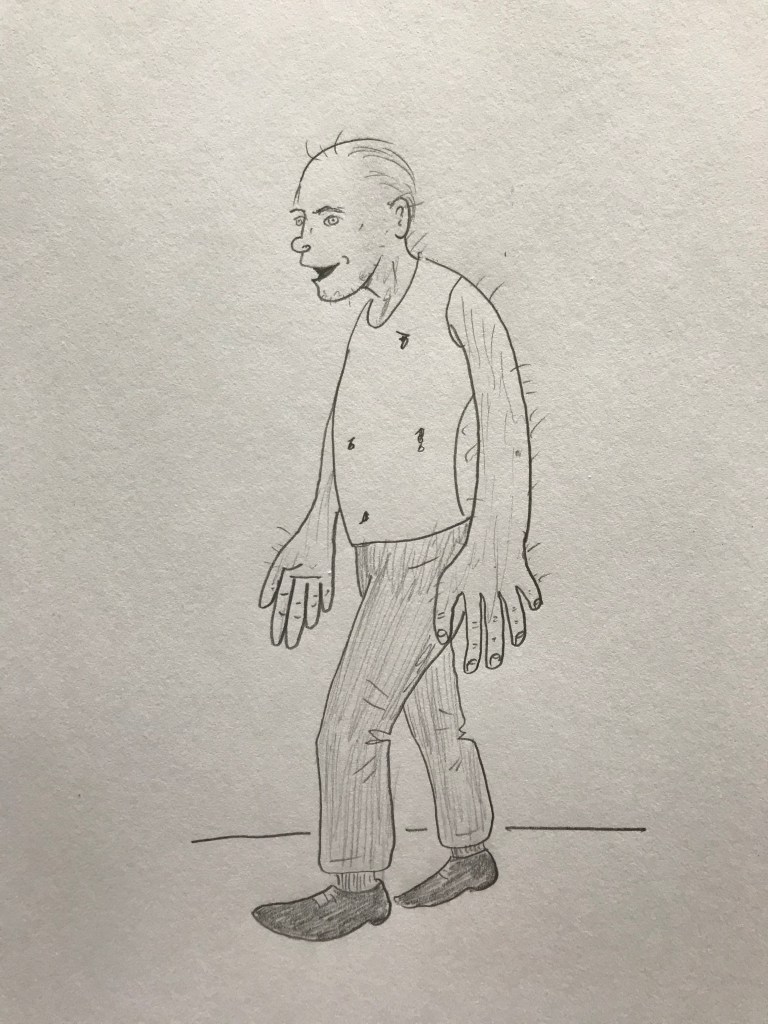
At 6’ he was burly and an ex-boxer. His nose had been repeatedly broken and flat as a pancake. He was an unattractive man. The most notable anatomical feature were his hands. Floyd had what I termed Stupid Hands. They were oversized, the hands of a lummox.

Floyd

The fingers were thick and hairy. The fingernails, especially his one-inch-in-diameter thumbs, were exceptionally wide.  The simian hands were callused from years of ditch digging.  They would never be confused with Chopin’s and they were a metaphor of his personality and demeanor.

Floyd was one of the first persons who sharpened my jeweler’s eye.

Hands weren’t a fixation but after observing Floyd’s ham hocks I began paying closer attention. You had the nail biters. Some persons would chew their nails to the quick. My assessment: they tended to be nervous individuals possessing some neurosis requiring them to utilize fingernails as a pacifier.

Some manifested poor personal hygiene. There’d be black dirt under the fingernails. These individuals were oblivious to physical appearance. Handshaking was not in the cards with these folks.

And there were “strangler’s thumbs. The thumbnails were truncated. Very unattractive. Legend has it persons possessing this abnormality used them to strangle victims. The thumbs were a tool of the trade.

Of course many women regarded manicured fingernails as a fashion statement and manicures and pedicures became de rigueur.  It was a statement of being well groomed.    Some women were cursed with hairy forearms and often wore long-sleeved blouses to hide unwanted hirsutism.

To my astonishment, I noticed men having manicures that were punctuated by an application of clear nail polish. I’ve never understood why some men considered this attractive. Many times those hands were festooned with a pinky ring. The Prince of Wales is the only man who can wear one and get away with it. For me, the word association was pinky ring equals Mafia.

Women can adorn their fingers with multiple rings.  Some add toe rings and create a hygiene/skeeve factor.

Hands can also be an age indicator.  Nancy Pelosi, for example, has pushed the Botox envelope but her 80-year-old hands unfortunately cannot undergo plastic surgery.  They resemble flesh-colored cabbage leaves.  I’m sure both hands possess the age-related brown spots that usually cover an entire body.  She wears long-sleeved dresses to hide the wrinkly skin of her arms.

Observing hands today has an additional factor. Many millennials under age 40 have tattoo festishes and inked fingers and hands have become commonplace. It’s today’s generation that embraces tattoos as “skin art”. Inking is no longer restricted to sailors and motorcycle gang members.

Gay men manifest certain hand characteristics.  Many are fastidious about their physical appearance.  “Immaculate” is a term often used to describe their hands and demonstrate effeminate hand gestures.  They, too, often have manicured fingers and wear gaudy rings. 

Hands can indicate a person’s health.  Among the elderly, you can see changes indicating arthritis.  Fingers become irreversibly calcified.  Such common tasks as opening a bottle become difficult.  The poor souls afflicted with rheumatoid arthritis undergo tragic changes where the fingers become bent, gnarled and resemble a clenched fist.  They lose the ability to flex their fingers.  Their hands become paws.

I spent my professional life as an optometrist. It’s an occupation where doctors are up close and personal with patients. My observational skills became twofold. The more important aspect was assessing the health of a person’s eyes. Internally, I inspected the retina while looking for pathologies – glaucoma, retinal detachments, uncontrolled hypertension and other internal anomalies. Using a microscope known as a slit lamp, I checked for potential external problems: carcinomas, elevated cholesterol, dry eyes or skin lesions.

Using the slit lamp also provided internal chuckles. Women who relied on heavy eye makeup had no idea how bizarre mascara and eyeliner appear under high magnification. Gobs of mascara hideously stuck to eyelashes. I always was reminded of the La Brea tar pits in California. Eye liner and shadow were also not a pretty sight. With a naked eye cosmetics used to improve a woman’s physical appearance have an opposite effect upon close inspection. Under magnification these eyes were other-worldly. All is vanity.

The slit lamp also revealed a condition called blepharitis, condition often associated with dry eye syndrome. Staphylococcus bacteria congregate at the eyelid margin. It irritates the skin and causes 360 degrees of redness. At the base of each eyelash, crusty deposits adhere and cause further irritation. It occurs in males and females and in severe cases unattractive.

Before the era of Covid 19, I could also evaluate a person’s face.  Once again I’d observe closely and discover an anomaly we all have: facial asymmetry.  Many humans have one eye or ear higher.  It many times involves the entire face – one cheekbone higher than the other. 

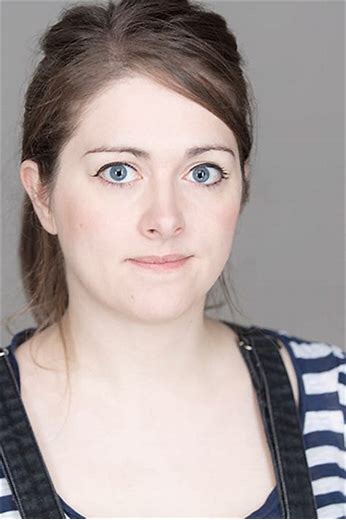
Actress Alison O’Donnell who stars in the Shetland television series has significant asymmetry.  The left side of her mouth, her right eye and ear  are misaligned.  She is nevertheless a beautiful colleen.

Alison O’Donnell
A more dramatic example of facial asymmetry

Men’s hair is a different animal. Baldness is very common and men deal with alopecia in different ways. Many decide upon hide-and-seek and use the traditional comb-over. They live in self delusion. If I can comb my hair it’s there, but, hey, if you look into a 360 degree mirror, there’s more flesh-colored hair, aka, skin than those wisps plastered up front. Then you have these guys with full, thick hair. Bald men, myself included, say, damn, I wish I had that and I think of Elvis Presley or retired pro football player Tedy Bruschi. It’s all in the genetics, fellas. Us bald guys? We have Leonardo da Vinci, Benjamin Franklin and Pablo Picasso. Small consolation.

The classic comb-over

Covid 19 prompted my retirement. Things have changed. I can longer scan patients with my jeweler’s eye. The pandemic has made things more difficult. Health care professionals can no longer assess people’s faces when they’re wearing masks. Doctors and patients rely solely on eye contact. The human face is one of the critical parts of anatomy that reveal the essence of who this person is. The head-to-toe scans provide data but without a face it’s not as much fun and creates too many question marks.

What I’ve learned is most people are not observant of physical appearance or dress. You might want to try scanning. With concentration you can gain clues to the people, places and surroundings. You might bump into another Floyd. Fortunately in this pandemic era, you won’t have to shake his stupid hands or hear “I don’t know nothin’ ’bout it.”

Gym Rat

Gym Rat

By

Leo de Natale

Since March, we’ve been experiencing a nationwide funk. It’s the damned Covid-19 pandemic, a disease that has disrupted every aspect of human life here and around the world. For months, Americans have been in solitary confinement. Men, women, children and their pets were living circumscribed lives. The pandemic has affected us physically, financially and psychologically. Many lost jobs that haven’t been recovered. Others fortunate to retain employment have been working from home. Zoom has become a familiar term. Masks are ubiquitous.

Manufacturers, biomedical companies and especially the healthcare industry were communicating through cyberspace. Now, for example, even physicians are “meeting” their patients from a remote location – usually their homes. Depending in which state you live, many restaurants have closed or survived by offering curbside meals. Although some eateries will never recover, summer weather fortunately provided a temporary fix and outdoor dining resuscitated portions of the restaurant industry.

Numerous news stories have reported another pandemic: depression and irritability none of us has ever experienced. Before this crisis there was an outlet: physical exercise and specifically routine trips to the local gyms, health care centers, Yoga studios and pilates classes.

I have been a gym rat for more than 20 years and have followed a specific regimen. My workout lasted 60 to 90 minutes. This part of my life has been taken away, perhaps forever. My primary care physician made it abundantly clear that, because of my age, exposure to any athletic facility is verboten. I’m in the “high risk” category. I miss the weight machines that stretch my upper body muscles. I miss the free weights that maintained muscle tone and pliability. And I miss the stationary bicycles that provided me with aerobic exercise. Also, I miss the characters I’d routinely see.

There was Clarence O’Brien who huffed and puffed his way through a usual routine.  Of average height, Clarence resembled an aging priest.  His complexion was pallid white.  Bald, he had the typical comb-over with wisps of hair making their feeble attempt at self-delusion.  You’re bald, Clarence.  Get used to it.

Bespectacled, his face was highlighted with a protruding lip. He resembled a pasty-skinned simian.  At least his knuckles weren’t scraping the rubber tread mill.  I regarded him as a beast of burden, padding along, his dirty white tee shirt soaked with perspiration.  He always wore the same faded outfit.

We are creatures of habit.  I would see the same faces during my workouts, a stream of fellow gym rats.  Didn’t know their names but we were in the same time groove.  The gym was crowded but the facility usually reached capacity after 5 pm. The irony was many club members, including Clarence, never changed their physical appearances.  Pot bellies and thunder thighs never disappeared but there was a certain silent camaraderie amongst us.

My activity level has been reduced to one-hour power walking with my wife, calisthenics, sit-ups, and various weight curls with measly eight-pound barbells.  Giant athletic megastores, if they were still opened, sold most of their free weight inventory.  The end result?  Most of us have gained weight that won’t go away — a new definition of sticking to your ribs.  I am now six pounds overweight.  Normally I’d quickly shed those calories.  Not anymore.  That’s one of the most frustrating aspects of the pandemic.  For me, the gym was the perfect solution to weight control and physical and mental health. Many Americans have succumbed to the Land of The Couch Potato.  Many have been reduced to reading books- a good thing-,  becoming more addicted  to the devil box, television, and watching streaming movies on various cable channels.

What to do with ourselves, especially when young children are home?  Television once again becomes the electronic pacifier but this time it for kids and adults. Social media has also been an escape.  More people spend too many hours on Facebook, Twitter, Tik Tok, etc. as an escape.  Much time can be wasted on social media. 

Between checking posts and spending hours deleting individuals  wanting  to be “friends”, Facebook devours days and nights.  I quickly learned the direct correlation with the total number of friends one has and the ongoing flow of new friends requests.  It is social media metastasis.

Some people become Facebook junkies.  They’ll send daily posts or text copies from their cell phones.   Social media make the days tolerable for those of us riding out the quarantine.  It especially benefits those who are restricted to life indoors.

There is hope, however. I have noticed a relaxation of mandatory mask wearing. People are now walking in neighborhoods sans mask. Of course all stores – grocery, pharmacies and restaurants require masking although many restaurants have alfresco seating where patrons can go mask-free. Waiters and waitresses are still required to wear the masks.

I must confess I’m continually tempted to sneak into the gym but the risk outweighs the reward.  Until my physician says yes, I am gym-less.  My workout shirts and shorts lay in a dresser drawer.  My business shoes have been collecting dust since March.  I was semi-retired.  The pandemic forced  permanent retirement.  I miss working and pray a vaccine will be rapidly developed.  And I miss seeing  families, friends, indoor restaurants and shopping without masks and returning to the life transformed in a mere six months. Until then, from under the mask, au revoir.

Time Passages

Time Passages

By

Leo de Natale

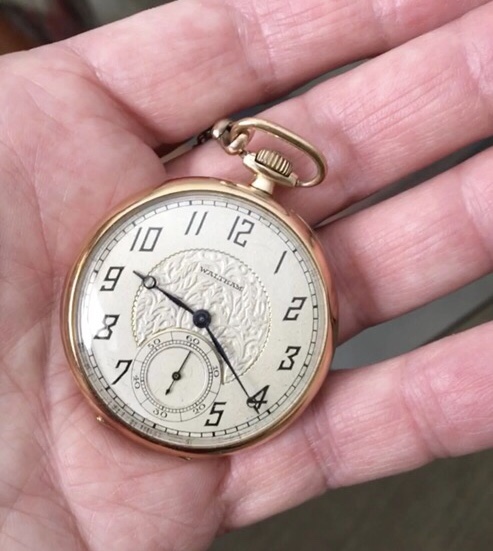
A Waltham Watch, circa 1900

“You see this watch, Moss?” asks actor Alec Baldwin in his tour de force performance in the film Glengarry Glen Ross.

Baldwin, as he verbally emasculates  fellow actor Ed Harris, flashes his Rolex and says, “This watch cost more than your car, pal.  And  you are nothing.”

          When the classic film was released in 1992, owning a $25,000 Rolex meant something and was indeed more expensive than Harris’s Hyundai.  The watch symbolized success, wealth, and a grandeur to which many aspired.  In the film, Baldwin’s coarse, vulgar character had made it.  He was a successful real estate hustler earning  $900,000 per year.  The wrist watch went along with his $80,000 BMW.

And in another movie, Casino Royale, the femme fatale named Vesper Lynd mockingly asks Daniel Craig’s James Bond if he’s wearing a Rolex. “Omega!” sneers Bond in an attempt to show he’s not that predictable with prestige watches or most everything.

Throughout the 20th Century, such baubles did provide status symbols among the rich, famous and parvenus.  Celebrities would model Rolexes in coffee table magazines.  Professional football player Tom Brady endorsed the equally famous Swiss Movado watch.

We, however,  are now in the year 2020 and the landscape of time has changed.  Traditional wrist watches have become passe.  With the new generations of cell phones, fewer men and women wear time pieces.  They merely glance at phones that are glued to their hands.   Rolexes are antediluvian and  have been replaced by  a different time piece: the Apple watch. It is the second coming of comic book character Dick Tracy’s famous radio watch.  Cartoonist Chester Gould was a visionary.  Who knew in 1946 his fictitious character’s timepiece would become a reality?

Digital wrist gadgets have outflanked traditional chronometers. They can send and receive texts, emails, telephone calls, Twitter feeds and other social media information. They also provide weather reports and numerous other features required by the younger generations. Oh, they also tell time. It could be conventional time pieces may be headed towards extinction. This trend was accelerated by the 2020 pandemic. Millions were unemployed and self-quarantined. Why wear any watch when you’re confined?

          Those lucky enough to retain employment are working from home.  Wearing a wristwatch at a work desk or dining room table becomes irrelevant.   The ubiquitous computer includes a clock and the nearby cell phone always displays the correct time. 

Timekeeping devices date back to the 16th Century.   Rudimentary clocks underwent minification and two centuries later the pocket watch evolved.  Design advances continued and men’s  pocket watches followed the Industrial Revolution. Switzerland became the vanguard of watch manufacturing and perfected the design.  As an obsessive/compulsive people, the Swiss are very clever but lacking joie de vivre.  Time and punctuality  are their hallmarks.   They’re not jolly people.  It’s difficult to imagine a Swiss doing stand-up comedy.  The country is divided among French, Italian and German-speaking folk.  The notable movie Bread and Chocolate addresses Swiss xenophobia.  Nevertheless, the Swiss  embraced the concept of watchmaking and developed it into a national industry.

Here in the  United States, The American Watch Company, located in Waltham, Massachusetts began mass producing pocket watches after the Civil War.  Another war, World War I, spelled the death knell for pocket watches.  Trench warfare made them impractical. The wrist watch was popularized during and after the carnage.  Fashion House Cartier’s famous Tank Watch, “The Most Iconic Watch on the Planet”, was inspired by the military vehicle.  After the war, American companies- Hamilton, Bulova et al began competing with the Swiss and produced wrist watches that were well made and affordable.  Some were expensive and prices competed with the Swiss.

After World War II, a company named Timex began manufacturing an  accurate  but inexpensive watch.  It was famous for television pitchman John Cameron Swayze subjecting Timex watches with physical abuse  – mud, dirt, water.  The watches survived with Swayze uttering the slogan, “Timex takes a licking and keeps on ticking!”.

The last half of the 20th Century took a predictable course.   Most American watch manufacturers suffered the fate of cheap overseas labor.  The Japanese first appeared and competed with the Americans. “Made in Japan” once was a pejorative term. The Japanese quality, however, dramatically improved. Seiko watches became world class but  then along came China who sucker-punched everyone.  Most wrist watches from the cheap Timex – the name has survived—to the smart watches are manufactured in Chinese factories.

The genius of Steven Jobs and his Apple Corp. spawned high tech innovations. First computers and, borrowing a page from Sony Corp.’s Walkman, the company changed the way the world listens to music. The iPod vaporized CD players and supplanted the Walkman but Apple wasn’t through. It essentially invented the cell phone and developed numerous generations of now iconic iPhones that transformed how humans communicate—and tell time. And along came the Apple Watch, designed in America but manufactured in – you guessed it – China.

These devices changed the communication industry.  We’re all Apple junkies.  During the first stages of the pandemic, all malls and retail electronics stores were closed.  People panicked because their phones, computers and watches needed replacement or repair.  Today, most malls have reopened.  Except for Apple stores, they are ghost towns.  The junkies are there and lining up with the six-foot social distancing and ready for their fix.

“Like, I needed a new phone, man,” a millennial says while standing on a floor stripe for six-foot separation.  “Like, I’m sooo glad Apple’s open.”

Twenty or thirty years from now – perhaps sooner – younger people, when asked about Rolexes, will say “Like, man, those things are, like, so old.  Why did anyone own one?”  Perhaps someone will create a Rolex museum where Alec Baldwin’s Oyster Perpetual will be displayed.

‘It’s all about time, man,” some dolt will say. “And, man, like, time passages.  Wasn’t there a song about that, man?”.

This essay is dedicated to Dr. Robert J. Connors

A day in the life of a Morning Glory

A Day in the Life of a Morning Glory

By

Leo de Natale

August, 2020

A hot summer sun rises and shines upon the trellis

It is August and the colony of blossoms is about to awaken

They’ve had their roots in the ground since May and it is time.

Each blossom unique, shaped like a bud.  Wake up! Wake up!

Slowly through the early morning hours, the bud expands, energized by King Sol.

Almost imperceptibly, the bud transforms into a Magnificent Heavenly Blue blossom.

By noon there are hundreds of Blossoms standing at attention in The midst of life-giving leaves.

I marvel at the beauty of a sea of blue, the blossoms are trumpets

Blaring with a visual sound.   Look at me!  Look at me in all my

Munificence! For hours the Morning Glories tantalize the human eyes

But by day’s end, the flowers’ edges begin to curl  360 degrees; a darkness that

Travels downward. The blossoms fade and die as quickly as they arrive.

By evening they are shriveled and eventually drop to the earth. There will be more of us tomorrow, they say. We Mirror your human life – birth, glorious beautiful life

And Death over and over again.  And the cycle goes on and on and on but the beauty is remembered.